

Advanced LED LCD Screen Manufacturing: Technologies, Quality Standards, and Industry Applications
In the rapidly evolving display technology landscape, LED LCD screens have become the cornerstone of modern visual solutions, spanning from consumer electronics to industrial applications. With the convergence of cutting-edge materials science, precision manufacturing, and stringent quality control standards, the LED LCD manufacturing process today integrates a range of sophisticated techniques to meet growing demands for performance, durability, and energy efficiency.
This comprehensive article explores the state-of-the-art technologies employed in LED LCD screen manufacturing, delves into technical parameters critical for high-quality displays, and highlights best practices and industry standards that govern production and quality assurance.
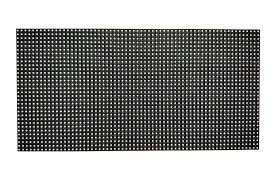
Understanding LED LCD Technology
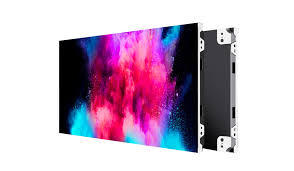
LED LCD screens fundamentally consist of a liquid crystal display (LCD) panel backlit by an array of light-emitting diodes (LEDs). This hybrid design leverages the superior color accuracy and cost advantages of LCDs together with the energy efficiency, slim profile, and extended lifespan of LEDs for backlighting.
The LCD panel uses liquid crystals organized in millions of microscopic cells that modulate light to form images. These crystals do not produce light themselves; hence the backlight is essential. LED backlighting provides uniform, bright illumination with lower power consumption compared to traditional CCFL (cold cathode fluorescent lamp) backlights.
Modern LED LCD displays typically employ edge-lit or direct-lit LED configurations:
- Edge-lit LEDs are placed along the screen’s borders, diffusing light through a light guide panel. This approach enables ultra-thin screens but requires sophisticated light distribution layers to ensure uniformity.
- Direct-lit LEDs locate LEDs directly behind the LCD panel, sometimes segmented into local dimming zones. This configuration enhances contrast ratios and black levels, making it the choice for high-end televisions and professional monitors.
Key Manufacturing Steps and Technologies
The fabrication of LED LCD screens involves several critical stages integrating advanced materials and precision engineering:
1. Substrate Preparation and TFT Array Fabrication
- The LCD panel rests on a glass substrate embedded with thin-film transistors (TFTs) that control individual pixels. TFT fabrication utilizes photolithography techniques adapted from semiconductor manufacturing, enabling precise deposition of amorphous silicon or low-temperature polysilicon layers.
- Achieving high pixel density (up to 400 PPI for mobile devices) demands sub-micron patterning accuracy and stringent defect control.
2. Liquid Crystal Cell Assembly
- Two polarized glass substrates sandwich the liquid crystal material. Alignment layers, typically polyimide films processed through rubbing, orient the liquid crystals uniformly.
- The liquid crystal mixture is injected in a controlled environment to ensure defect-free blending. Cell gap precision is tightly regulated—commonly within ±0.1 micrometers—to guarantee consistent optical performance.
3. Sealing and Edge Processing
- The perimeter is sealed with specialized epoxy resins that must balance hermeticity, flexibility, and thermal resistance.
- Edge black matrices and protective coatings reduce light leakage and enhance contrast.
4. Backlight Module Integration
- LEDs are mounted on rigid printed circuit boards (PCBs) with thermally conductive substrates (usually aluminum or copper-based MCPCBs) to manage heat dissipation.
- Optical films, including diffusers, prism sheets, and brightness enhancement films, are layered to optimize light uniformity, luminance, and viewing angles.
- Advanced direct-lit panels incorporate individually controllable LED zones for dynamic local dimming, yielding contrast ratios exceeding 1,000,000:1.
5. Polarizer Attachment
- High-performance polarizing films, such as those from 3M or Nitto Denko, are laminated with adhesives designed to endure thermal cycling and UV exposure without optical degradation.
6. Module Testing and Calibration
- Precision colorimeters and photometers evaluate parameters such as luminance (cd/m²), color gamut (measured against standards like NTSC, DCI-P3, or Rec.2020), contrast ratio, and response time.
- Automated optical inspection (AOI) systems detect pixel defects and alignment faults.
- Calibration adjusts gamma curves, white balance, and gamma correction to meet display quality requirements.
Crucial Technical Parameters
- Resolution and Pixel Density: Typical FHD (1920×1080) and 4K UHD (3840×2160) resolutions are industry benchmarks. High-end devices push towards 8K and beyond, necessitating sub-5-micron pixel pitches.
- Brightness: Backlight luminance ranges from 300 cd/m² for standard laptops to over 1500 cd/m² in outdoor and HDR-enabled displays.
- Contrast Ratio: Standard LED LCD panels vary from 1000:1 to 5000:1, with local dimming technology pushing up to 1,000,000:1 in premium monitors.
- Color Accuracy: Delta E values below 2 are achievable with factory calibration, suitable for professional image and video editing.
- Response Time: Advanced materials and TFT designs achieve response times as low as 1ms (GtG), crucial for gaming and fast-motion content.
Industry Quality Standards
Manufacturers adhere to global standards to ensure reliability and safety:
- ISO 9241-307: Specifies measurement methods for color, luminance uniformity, and contrast ratio in visualization displays.
- JEITA (Japan Electronics and Information Technology Industries Association) standards: Provide guidelines on durability and environmental testing.
- RoHS and REACH Compliance: Ensures that hazardous substances are restricted, aligning with global environmental regulations.
- MIL-STD-810: For ruggedized displays used in military and industrial applications, tests resistance to shock, vibration, humidity, and temperature extremes.
Case Studies: Innovative Applications
1. Automotive HUDs (Heads-Up Displays)
LED LCD technology integrates with waveguide optics to create transparent, high-brightness displays, combining sharpness and durability under harsh conditions.
2. Large-Format Commercial Displays
Direct-lit LED LCD panels benefit from local dimming to deliver vibrant imagery suitable for digital signage, broadcasting, and control rooms.
3. Medical Imaging
Ultra-high resolution LED LCDs with stringent color calibration provide diagnostic accuracy, essential for modalities such as radiography and pathology.
Manufacturing Challenges and Future Trends
- Yield Optimization remains a key concern given the microscopic pixel architecture and hundreds of millions of LED diodes per panel.
- Material Innovation: Research in quantum dot enhancement films (QDEF) and mini-LED arrays aims to improve color purity and energy efficiency.
- Sustainability: Manufacturers increasingly implement recycling programs for glass substrates and pursue low-power designs to reduce carbon footprint.
- Flexible and Transparent Displays: The next generation integrates flexible substrates and transparent electrodes (like OLED hybrids), expanding form-factor possibilities.
Conclusion
As LED LCD technology continues to underpin a vast spectrum of display applications globally, mastery in manufacturing techniques, rigorous adherence to standards, and innovation in materials ensure high-quality, reliable displays that meet diverse user requirements. The synergy between LED backlighting and LCD modulation opens avenues for brighter, more colorful, and energy-efficient screens. Continued investment in R&D and production excellence positions LED LCD manufacturing at the forefront of display technology for years to come.
References
- International Organization for Standardization (ISO) 9241-307: Ergonomics of Human-System Interaction.
- Japan Electronics and Information Technology Industries Association (JEITA) standards.
- DisplayMate Technologies, Inc. Testing Reports, 2023.
- Society for Information Display (SID), "Advanced Display Technologies," Journal, 2024.
- Rohm Semiconductor, "LED Backlight Technology for Displays," Technical Whitepaper, 2023.













