

High Brightness Panel PC: Key Technologies and Industry Applications
In today’s advanced computing environments, High Brightness Panel PCs have become indispensable for a variety of industrial, commercial, and outdoor applications. These specialized embedded systems offer superior readability under direct sunlight or brightly lit conditions, enabling seamless human-machine interaction in challenging environments. This article examines the critical technological features, manufacturing considerations, and practical deployment scenarios of high brightness panel PCs, drawing upon industry standards and engineering best practices.
At its core, a high brightness panel PC integrates a powerful embedded computing unit with an enhanced brightness display, usually an LED-backlit LCD screen optimized for outdoor visibility. Typical brightness levels for standard indoor panel PCs range from 250 to 500 nits; however, high brightness panel PCs feature luminance levels of 1000 nits and above, often reaching up to 1500–2000 nits to counteract ambient sunlight exceeding 10,000 lux. This brightness threshold ensures that displayed data remains sharp, contrast-rich, and legible under direct solar exposure.
#Key Technical Specifications and Technologies
1. Display Brightness and Contrast:
Brightness in panel PCs is measured in candelas per square meter (cd/m²), commonly referred to as nits. Industry-grade high brightness displays must maintain brightness >1000 nits while preserving high contrast ratios (typically 800:1 to 1200:1). These parameters guarantee clarity in bright environments without color distortion or washed-out images.
2. Transflective and Optical Bonding Technologies:
To enhance sunlight readability, many panel PCs employ transflective LCD technology, which uses partial reflectivity to utilize ambient light for display illumination, thereby reducing backlight power consumption. Complementing this is optical bonding, where the display module is laminated with a transparent adhesive to eliminate the air gap between the LCD and the outer glass, mitigating reflection and improving contrast by up to 30%. Optical bonding also enhances durability by protecting against shock and moisture ingress, an essential feature for industrial and outdoor applications.
3. Anti-Reflective and Anti-Glare Coatings:
High-quality panel PCs are treated with anti-reflective (AR) coatings that reduce specular reflection from the glass surface. These coatings can decrease reflective glare by over 90%, thereby significantly improving visibility in environments with unpredictable lighting, such as transportation terminals or sunlight-exposed kiosks.
4. Backlight Technology and Power Efficiency:
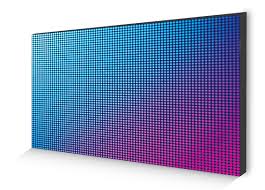
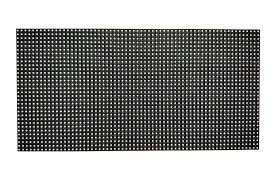
The most commonly used backlighting solution is LED backlighting due to its longevity, efficiency, and ability to support high luminance. Some advanced systems incorporate mini-LED or micro-LED arrays to achieve ultra-high brightness with greater energy efficiency and uniformity. These technologies not only meet bright ambient lighting requirements but also ensure thermal management to avoid overheating and degradation of display components.
5. Touchscreen Integration:
High brightness panel PCs often integrate touch technologies suitable for outdoor use, including projected capacitive (PCAP) touchscreens with chemically strengthened glass. PCAP touch technology allows multi-touch capabilities, glove touch, and optical bonding compatibility, making it ideal for rugged applications such as factory automation, field service terminals, and outdoor digital signage.
#Industry Applications
High brightness panel PCs are widely implemented in sectors where environmental conditions demand robust, legible displays:
- Transportation and Automotive Control: Displaying critical operational data on dashboards and control panels exposed to direct sunlight requires the superior clarity of high brightness screens. Examples include railway signal controllers and vehicle-mounted diagnostic terminals.
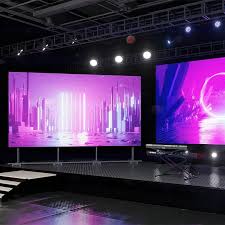
- Outdoor Digital Signage and Kiosks: Advertising and information kiosks located outdoors employ high brightness panels to ensure visibility regardless of weather or daylight conditions, improving user engagement and acceptance.
- Industrial and Manufacturing Environments: Panel PCs in factories often face harsh lighting combined with dust and vibration. High brightness coupled with robust construction ensures continuous operation and accurate data visualization for process control.
- Military and Aerospace: Devices need to function flawlessly in extreme lighting and environmental conditions. High brightness panel PCs with optical bonding and ruggedized cases meet MIL-STD-810 and IP65 standards, ensuring operational integrity.
#Manufacturing Standards and Quality Assurance
To guarantee performance and reliability, manufacturers follow strict standards such as IEC 60068 for environmental testing and ISO 20653 for ingress protection ratings. Panels rated IP65 or above ensure dust tightness and water resistance, critical for outdoor and industrial applications. Additionally, MIL-STD-461 compliance assures electromagnetic compatibility in sensitive operational environments.
Thermal management design is pivotal; excessive heat can degrade backlight performance and cause LCD panel malfunction. Engineers employ heat sinks, conductive thermal pads, and temperature sensors integrated with firmware controls to sustain optimal operating temperatures between -20°C and 60°C or wider ranges depending on use case.
#Conclusion
High brightness panel PCs represent a specialized category of embedded systems tailored to deliver superior visibility, robust operation, and long-term durability under extreme lighting and environmental conditions. Innovations in LED backlighting, optical bonding, touch technology, and rugged design have propelled these devices into critical roles across transportation, industrial automation, outdoor kiosks, and military applications. Adhering to industry standards and employing advanced technologies guarantees that high brightness panel PCs meet and exceed the demanding expectations placed on modern display solutions.
For system integrators and end-users, selecting a high brightness panel PC entails evaluating luminance levels, environmental resistance, touch capabilities, and compliance with relevant certifications to ensure the device’s suitability for its intended operational context.
References:
- International Electrotechnical Commission (IEC) 60068 Environmental Testing Standards
- MIL-STD-810G Environmental Engineering Considerations
- ISO 20653 Road Vehicles — Degrees of Protection (IP code)
- Display Industry Reports, DisplayWeek 2024 Proceedings
- DigiTimes Research on LED Backlight Technologies













