

Advances and Practical Insights in LED LCD Screen Manufacturing Technology
The LED LCD screen manufacturing industry has witnessed significant advancements over the past decade, driven by evolving consumer demands and technological innovations. As a professional engineer with extensive experience in LED LCD display design and production, this article provides a comprehensive overview, covering practical applications, advantages, prevalent challenges, and the latest technological trends shaping the market.
Understanding LED LCD Technology
LED LCD screens combine Liquid Crystal Display (LCD) panels with Light Emitting Diode (LED) backlighting, enabling higher brightness, energy efficiency, and refined color performance compared to traditional CCFL (Cold Cathode Fluorescent Lamp) backlit LCDs. Unlike OLED screens that emit light per pixel, LED LCDs rely on a backlight layer where LEDs illuminate an LCD matrix regulated by thin-film transistor (TFT) technology.
Key technical parameters include:
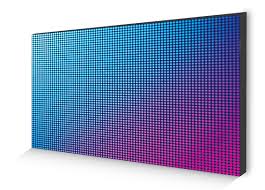
- Resolution: Ranges from Full HD (1920x1080) to 4K UHD (3840x2160), with emerging 8K (7680x4320) models gaining traction for ultra-high-definition applications.
- Refresh Rate: 60Hz is standard; high-end monitors and gaming displays achieve 120Hz–240Hz for smoother motion rendering.
- Contrast Ratio: Typical LED LCD screens offer 1000:1 to 5000:1 contrast ratios, though this varies with local dimming capabilities.
- Color Gamut: Advanced backlighting and quantum dot enhancements allow coverage of up to 99% AdobeRGB and 100% DCI-P3 color spaces.
- Brightness: Can reach up to 1500 nits in HDR-capable displays, which is critical for outdoor visibility and vibrant imaging.
Practical Applications
LED LCD screens are ubiquitous across diverse sectors:
- Consumer Electronics: Smartphones, tablets, laptops, televisions, and wearable devices predominantly use LED LCD panels for their balance of cost, performance, and reliability.
- Medical Imaging: High-resolution LED LCDs enable precise and clear visualization of diagnostic images such as X-rays and MRIs, adhering to stringent medical imaging standards like DICOM (Digital Imaging and Communications in Medicine).
- Automotive Displays: Instrument clusters and infotainment systems leverage LED LCDs for their durability, brightness, and adaptability to varying lighting conditions.
- Industrial and Aviation: Control panels, cockpit displays, and digital signage rely on LED LCDs for their robustness and clarity in critical environments.
- Outdoor and Public Signage: With the integration of high-brightness and anti-reflective coatings, LED LCDs serve in transit displays and public information screens even under direct sunlight.
Advantages of LED LCD Displays
- Energy Efficiency: LED backlights consume significantly less power compared to CCFL, reducing the overall device energy consumption by approximately 30-50%, which aligns with global energy standards.
- Slimmer Form Factor: The compactness of LED backlighting modules enables thinner and lighter device designs, essential for ultrabooks and slim televisions.
- Longer Lifespan: LEDs have an average operational lifespan exceeding 50,000 hours, surpassing older lighting technologies, leading to lower maintenance costs.
- Color Accuracy and Uniformity: With advancements such as quantum dot film integration and local dimming zones, LED LCDs now offer more consistent color reproduction and reduced light bleed.
- Environmental Sustainability: LED backlighting eliminates mercury from displays, simplifying recycling and meeting international eco-friendly guidelines.
Common Problems in LED LCD Manufacturing and Usage
Despite its advantages, LED LCD technology faces certain challenges:
- Backlight Bleeding: Uneven light distribution can cause bright spots around screen edges, compromising image quality. Mitigation requires precise assembly and high-quality diffuser films.
- Color Shift and Viewing Angles: LCD panels have inherent viewing angle limitations compared to OLED, often corrected through In-Plane Switching (IPS) technologies but at increased cost.
- Burn-in Risk: Although significantly less than OLED, static image retention can occur in LED LCDs, particularly on older panels without refreshing techniques.
- Thermal Management: High-brightness LED backlights generate heat that must be managed effectively using heat sinks and thermal conductive materials to ensure panel longevity.
- Manufacturing Yield: Maintaining low defect rates in high-resolution TFT arrays demands stringent process controls and advanced inspection systems.
Latest Trends and Innovations
- Mini-LED and Micro-LED Hybrid Backlighting: Mini-LED technology leverages thousands of tiny LEDs for precise local dimming, yielding contrast ratios approaching OLED levels but with higher peak brightness and lower cost. Industry leaders report Mini-LED backlighting as a breakthrough in display performance, used in premium TVs and monitors.
- Quantum Dot Enhancement: Integration of quantum dot films enhances the spectral purity of LEDs, improving color gamut and brightness efficiency. This technology is becoming mainstream in 4K and 8K displays.
- Flexible and Transparent LED LCDs: Emerging displays allow slight curvature and transparency, opening new applications in automotive heads-up displays and augmented reality devices.
- AI-Based Panel Calibration: Artificial intelligence algorithms are employed during manufacturing and in-use calibration to optimize color balance, brightness uniformity, and response time adaptively, ensuring consistent image quality across diverse usage scenarios.
- Sustainable Manufacturing: Industry initiatives aim at reducing hazardous material use, increasing recycling rates, and optimizing production energy consumption adhering to ISO 14001 environmental management standards.
In conclusion, LED LCD technology remains a cornerstone of modern display manufacturing due to its versatile performance and adaptability. Continuous innovation around mini-LED backlighting, quantum dot enhancement, and AI calibration promises to address existing limitations and expand potential applications. Manufacturers focusing on rigorous quality control and sustainable practices ensure LED LCD displays meet the stringent demands of contemporary users globally.
References:
- Society for Information Display (SID), Display Industry Yearbook, 2023
- International Electrotechnical Commission (IEC) Standards for Display Technologies
- Journal of the Society for Information Display, Advances in Mini-LED Backlight Systems, 2024
- Technical papers from the Display Week Conference, 2023 and 2024













