

Advanced LED Display Technology: Applications, Advantages, Challenges, and Emerging Trends
In the rapidly evolving landscape of display technologies, LED (Light Emitting Diode) displays have established themselves as a dominant force in delivering high-quality visual experiences. As a professional LED display engineer with extensive expertise in LED LCD screen manufacturing, this article delves deeply into the practical applications, advantages, common challenges, and latest trends shaping the LED display industry today.
Practical Applications of LED Displays
LED displays are widely utilized across various sectors due to their flexibility, brightness, and energy efficiency. In commercial advertising, outdoor LED billboards leverage high brightness levels, often exceeding 5,000 nits, to guarantee visibility even under direct sunlight, which is critical for brand messaging and real-time announcements. Indoor environments such as shopping malls, conference rooms, and sports arenas benefit from fine-pitch LED displays (with pixel pitches as low as 0.9mm to 2.5mm) that deliver crisp images and vivid colors for immersive presentations and live event broadcasts.
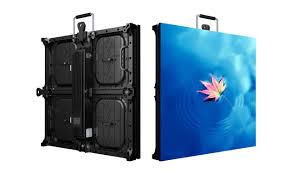
The control rooms in industries such as transportation, utilities, and security heavily rely on large, seamless LED video walls, often assembled from cabinets with resolutions up to 4K or 8K, ensuring detailed data visualization necessary for operational decision-making. Medical and educational sectors also increasingly adopt LED displays because of their superior color accuracy and uniformity essential for precise imaging and instructional content.
Advantages of LED Display Technology
From an engineering perspective, LED displays offer multiple technical advantages:
1. Brightness and Contrast: LEDs provide exceptionally high brightness, compatible with diverse ambient lighting conditions. Contrast ratios often exceed 4000:1, facilitating clear image differentiation. Latest HDR-capable panels further enhance dynamic range.
2. Energy Efficiency and Longevity: Compared to LCDs and other display technologies, LEDs are more energy-efficient, with typical power consumption between 150 to 300 W/m² for outdoor displays, extending up to 600 W/m² in high-brightness environments. LED modules have an average operational lifetime of 50,000 to 100,000 hours, minimizing maintenance costs.
3. Color Reproduction and Viewing Angles: Utilizing RGB sub-pixels, LED displays achieve wide color gamuts conforming to Rec. 709 and DCI-P3 standards, crucial for broadcast and cinema applications. Viewing angles of 140° to 160° horizontally and vertically assure uniform image quality regardless of the viewer’s position.
4. Modularity and Scalability: LED cabinets are designed to be modular, allowing systems to scale from small indoor panels to massive outdoor mega-screens without compromising image continuity or resolution.
Common Challenges and Solutions
Despite these advantages, manufacturers and integrators regularly encounter challenges in LED display deployment:
- Pixel Failure and Uniformity Issues: Over time, dead or stuck pixels can occur, especially in fine-pitch displays. Precise manufacturing processes adhering to IPC standards and consistent quality control are essential to minimize this. Additionally, advanced calibration systems employing photometric tools ensure color and brightness uniformity.
- Thermal Management: High brightness LEDs generate considerable heat, which can degrade performance and reduce lifespan. Effective heat dissipation designs, including integrated heatsinks and active cooling systems, are critical to maintain reliability.
- Environmental Durability: Outdoor displays must comply with IP65 or higher protection ratings to resist moisture, dust, and temperature extremes. Selecting appropriate encapsulation materials and coatings extends operational life under harsh conditions.
- Signal and Power Integrity: Long cable runs in large installations require robust signal amplifiers and power supply designs that conform to IEC and UL safety standards, preventing signal degradation and electrical hazards.
Emerging Trends in LED Display Technology
The LED industry continues to innovate, driven by user demands and technological advancements:
- Mini-LED and Micro-LED Displays: These next-generation LEDs achieve pixel pitches below 0.5mm, delivering superior resolution and contrast for ultra-high-definition applications in consumer electronics, automotive displays, and augmented reality devices. Micro-LED displays also offer lower latency and higher refresh rates.
- Flexible and Transparent LED Panels: Flexible LED modules enable curved or irregular screen shapes, expanding creative possibilities in architectural integration and wearable tech. Transparent LED displays, achieving around 40%-60% transparency, are used in retail storefronts and smart glass applications, merging digital content with real-world views.
- AI and IoT Integration: Incorporating artificial intelligence and Internet of Things enables smart LED displays capable of content adaptation based on audience behavior, ambient light sensors, and environmental data. These advancements optimize power usage and enhance viewer engagement.
- Enhanced Content Management Systems (CMS): Modern LED display networks utilize cloud-based CMS platforms allowing real-time updates, remote diagnostics, and advanced data analytics, crucial for large-scale digital signage ecosystems.
Conclusion
LED display technology combines robust engineering principles with innovative design to meet the diverse and demanding requirements of today's display market. By understanding the practical applications, leveraging inherent advantages, addressing common challenges, and embracing emerging trends such as micro-LED and AI integration, stakeholders can harness the full potential of LED displays for more impactful visual communication.
References and Standards:
- International Electrotechnical Commission (IEC) standards for electronic displays
- IPC-A-610 Acceptability of Electronic Assemblies for LED module manufacturing
- Society of Motion Picture and Television Engineers (SMPTE) for color standards
- U.S. Department of Energy reports on LED efficiency and lifetime
- Case studies from Planar, Samsung LED, and Unilumin on large-scale LED installations
This comprehensive insight into LED display technology aids engineers, designers, and end-users in making informed choices for high-performance visual systems with longevity and innovation at their core.













