

Advanced Techniques and Industry Standards in LED LCD Screen Manufacturing
In the rapidly evolving display technology landscape, LED LCD screens remain a dominant solution for both consumer electronics and professional applications. Their blend of high brightness, color accuracy, energy efficiency, and reliability makes them indispensable in sectors ranging from smartphones and televisions to industrial monitors and digital signage.
Introduction
The manufacturing of LED LCD (Light-Emitting Diode Liquid Crystal Display) screens involves intricate processes combining semiconductor engineering, materials science, and precise assembly techniques. As global demand continues to rise for larger, thinner, and more energy-efficient displays, manufacturers increasingly rely on advanced techniques and stringent industry standards to sustain quality and performance.
Main Body
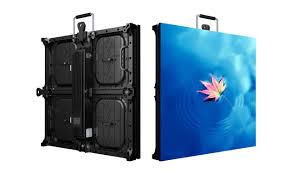
1. Fundamental Structure and Technical Parameters
At the core, an LED LCD is composed of a backlighting system, a liquid crystal layer, polarizers, and color filters. The LED backlight plays a pivotal role in defining screen brightness and color gamut. The industry commonly adopts two main backlight configurations:
- Edge-lit LED: LEDs positioned around the edges of the display panel, directing light through a light guide plate (LGP). This design allows for ultrathin displays but can present challenges in uniform brightness.
- Direct-lit LED: LEDs embedded directly behind the liquid crystal panel, offering superior uniformity and local dimming capabilities, which enhance contrast ratios.
Key technical parameters that shape display quality include:
- Brightness: Typically ranging from 300 to 1000 nits indoors; outdoor displays can exceed 2000 nits for visibility under sunlight. According to IEC 62368-1 safety standards, backlight luminance must remain within safe operation limits to avoid device overheating.
- Contrast Ratio: A critical visual parameter often enhanced through Full Array Local Dimming (FALD) in direct-lit displays, enabling ratios up to 5000:1 or higher.
- Color Gamut: Modern LED LCDs use Quantum Dot (QD) technology or phosphor-enhanced white LEDs to cover wider color spaces, such as DCI-P3 or Rec. 2020, surpassing traditional sRGB coverage.
- Refresh Rate: Standard displays operate at 60Hz, with gaming and professional monitors reaching 120 Hz or more to reduce motion blur.
2. Manufacturing Techniques
Advanced manufacturing incorporates precision automation and rigorous quality control:
- Thin-Film Transistor (TFT) Fabrication: TFT arrays control the orientation of liquid crystal molecules at each pixel. Low-Temperature Polycrystalline Silicon (LTPS) TFTs enhance electron mobility, enabling higher resolution and faster refresh rates, essential for mobile devices.
- Backlight Integration: Uniform LED placement with precise binning ensures color consistency. High-precision light guide plates coupled with diffuser films reduce hotspots.
- Cleanroom Assembly: To maintain defects below 10 ppm (parts per million), assembly occurs in ISO class 7 or better cleanrooms, preventing dust and particle contamination that can cause dead pixels or mura effects.
- Optical Bonding: Advanced bonding reduces internal reflections and improves durability. OCA (Optically Clear Adhesive) or OCF (Optically Clear Film) materials are carefully selected to maintain refractive index matching, device flexibility, and environmental resistance.
3. Quality Assurance and Industry Compliance
Manufacturers adhere to international standards to guarantee product performance and safety:
- ISO 9241-307 defines visual ergonomics requirements for displays, covering luminance uniformity and pixel defect classifications.
- RoHS (Restriction of Hazardous Substances) compliance ensures environmentally safe materials usage.
- JEITA standards provide guidelines for LCD reliability testing under thermal cycling, humidity, and mechanical stress.
4. Innovations and Case Studies
Recent advancements include MicroLED backlighting integration, combining the emissive qualities of LEDs directly with LCD technology for improved brightness and contrast with less power consumption. For instance, Samsung’s implementation of QLED panels leverages quantum dots alongside LED backlighting to push color accuracy and efficiency boundaries.
Huawei’s MateView series incorporates LTPS TFT with a 90Hz refresh rate and DCI-P3 coverage approaching 98%, demonstrating how precise manufacturing can satisfy demanding professional standards.
Conclusion
The manufacturing of LED LCD screens represents a sophisticated balance of cutting-edge materials science, precise engineering, and stringent quality management. As international standards evolve and consumer demand intensifies, manufacturers must continually innovate—from enhancing backlighting architectures and TFT designs to integrating new optical bonding techniques—to deliver displays that meet diverse application needs with superior performance, durability, and sustainability. Maintaining industry compliance and embracing emerging technologies will remain key factors in the ongoing success of LED LCD screen development.













