

Advanced Technologies and Quality Standards in LED Display Manufacturing
In the rapidly evolving world of display technology, LED displays have become the frontrunner for applications ranging from outdoor advertising and sports arenas to control rooms and medical imaging. As a professional LED display engineer with extensive experience in the manufacturing process, this article delves into the essential technical parameters, industry standards, manufacturing techniques, and quality control practices that define state-of-the-art LED display production.
Technical Foundations and Parameters
Modern LED displays rely primarily on Light Emitting Diode (LED) technology, often combined with LCD or micro-LED to optimize brightness, viewing angle, color accuracy, and energy efficiency. Key specifications engineers scrutinize include:
- Pixel Pitch: This is the distance in millimeters between the centers of two adjacent pixels. Smaller pixel pitches (e.g., 0.9mm – 1.5mm) allow for up-close viewing with excellent resolution, ideal for indoor applications, while larger pitches (e.g., 4mm – 10mm or more) suit outdoor visibility from a distance.
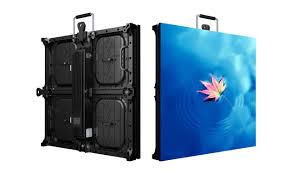
- Brightness: Expressed in nits (cd/m²), outdoor LED displays require brightness levels exceeding 5000 nits to combat daylight glare, while indoor displays typically operate at 800 – 1200 nits.
- Refresh Rate: A high refresh rate (≥1920Hz) is critical for smooth video playback, reducing flicker and eye strain.
- Color Gamut: Wide color gamut using improved phosphor materials and calibration enhances color accuracy, often conforming to standards such as Rec. 709 or Rec. 2020 for applications requiring superior color fidelity.
- Viewing Angle: Displays designed for public viewing must maintain color and brightness integrity across wide horizontal and vertical angles, commonly up to 160° or more.
Manufacturing Technologies
The production of LED displays integrates photolithography, surface mount technology (SMT), solder reflow, and rigorous automated optical inspection (AOI). Crucial steps include:
- LED Chip Selection and Binning: Ensuring brightness uniformity and color consistency by sorting LEDs by luminous intensity and chromaticity coordinates, usually adhering to the CIE 1931 chromaticity standard.
- Module Assembly: Modules are constructed on printed circuit boards (PCBs), typically using high-Tg (glass transition temperature) substrates for thermal stability. This ensures longevity and consistent performance in fluctuating ambient temperatures.
- Encapsulation and Coating: Advanced materials like silicone-based encapsulants protect LEDs from moisture and mechanical damage without compromising luminous output. For outdoor displays, conformal coatings provide UV and weather resistance.
- Calibration and Testing: Each module undergoes grayscale correction, color calibration via spectroradiometers, and pixel-level testing. Final assembly passes burn-in tests under elevated temperatures and continuous operation to detect early failures.
Industry Standards and Quality Control
Adherence to international standards such as IEC 62087 (methods of measurement for power consumption) and IEC 62368 (safety requirements) is mandatory to ensure product reliability and user safety. Beyond regulatory compliance, leading manufacturers implement Six Sigma methodologies to minimize manufacturing defects.
For durability, outdoor LED displays must meet IP65 or higher waterproof/dustproof ratings as specified by the IEC 60529 standard. Shock resistance and vibration tests based on MIL-STD-810G or similar military-grade standards further ensure robustness in harsh environments.
Case Study: Enhancing Outdoor LED Display Longevity
In an urban installation project in Europe, a large 500 square meter outdoor LED wall employed LEDs with a 6mm pixel pitch, brightness levels tuned to 7000 nits, and incorporated double-layered conformal coatings. The maintenance schedule included quarterly inspections, supported by an embedded IoT monitoring system tracking temperature and humidity inside the cabinets. After three years, site data showed less than 0.01% pixel failure rate, demonstrating the effectiveness of meticulous manufacturing and environmental control.
Future Trends and Innovations
Looking forward, the emergence of micro-LED technology offers promising advantages: ultra-high resolution, lower power consumption, and superior longevity. Additionally, advancements in driver IC design, such as integrated sensing for real-time calibration, are improving reliability and reducing maintenance overhead.
Moreover, AI-powered manufacturing controls are being deployed to optimize yield rates and detect microscopic defects pre-assembly, reinforcing quality assurance practices.
Conclusion
The manufacture of LED displays is a complex interplay of precision engineering, materials science, and rigorous testing to meet demanding performance and durability requirements. By applying exacting technical standards, advanced manufacturing techniques, and comprehensive quality assurance procedures, engineers can deliver reliable, high-quality LED displays that excel in diverse environments around the world.
For manufacturers and end-users alike, a keen understanding of these parameters and processes is essential to optimize cost, performance, and longevity in LED display solutions.













