

Advanced LED Display Technologies: Engineering Excellence in Modern Screen Manufacturing
In the rapidly evolving landscape of display technology, LED (Light Emitting Diode) displays have emerged as a dominant solution across various applications, from consumer electronics to large-scale digital signage. As a professional LED display engineer with extensive experience in screen manufacturing, this article delves into the critical technical parameters, manufacturing processes, industry standards, and emerging innovations that define today’s LED display engineering excellence. This comprehensive overview provides valuable insights for industry professionals and international stakeholders seeking to understand and optimize LED display solutions.
Fundamentals of LED Display Technology
LED displays primarily consist of an array of tiny light-emitting diodes that create images through precise control of each diode’s brightness and color. The two main types are Direct-View LED (DV-LED) and LED-backlit Liquid Crystal Displays (LCDs), with DV-LED gaining traction due to superior contrast ratios, brightness, and wider viewing angles.
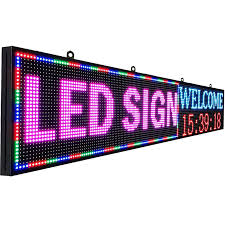
A key technical specification in LED display engineering is pixel pitch—the center-to-center distance between adjacent LEDs—expressed in millimeters. Smaller pixel pitches (e.g., 0.9mm to 1.5mm) enable ultra-high definition (UHD) resolution, crucial for indoor applications demanding sharp, detailed images, such as control rooms and broadcast studios. Outdoor displays typically use larger pitches (3mm to 20mm) to balance cost and visibility at greater viewing distances.
Manufacturing Precision and Quality Control
The manufacturing process demands stringent adherence to quality standards such as the IEC 62368-1 for safety, and ISO 9001:2015 for quality management systems. High-end manufacturing lines utilize surface-mount technology (SMT) for precise LED placement and automated optical inspection (AOI) to ensure near-zero defects.
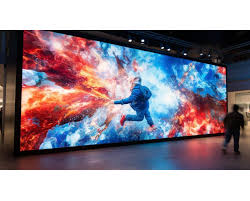
Thermal management represents a critical engineering challenge, as LEDs generate heat that can impair lifespan and performance if not effectively dissipated. Modern designs incorporate aluminum substrates with integrated heat sinks and active cooling solutions to maintain junction temperatures below 85°C, extending LED operational life beyond 100,000 hours, per industry benchmarks.
Color Calibration and Uniformity
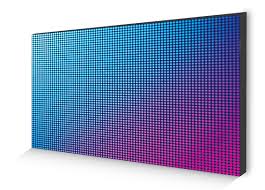
Achieving accurate color representation and uniform luminance are paramount. Advanced color calibration employs spectroradiometers and algorithmic compensation to calibrate each LED chip to industry-recognized standards such as sRGB and Rec. 709 for broadcast environments, or DCI-P3 for cinema-grade applications. Uniformity corrections address manufacturing variances and aging effects that can otherwise lead to brightness and chromaticity inconsistencies across large panels.
Emerging Innovations in LED Display Engineering
MicroLED technology has become a major investigative avenue, offering superior brightness, contrast, and power efficiency compared to traditional LED displays and OLED counterparts. MicroLED’s self-emissive structure eliminates the need for backlighting, and reduces pixel pitch below 0.5mm, enabling seamless UHD displays with flexible form factors. However, manufacturing scalability and mass transfer processes remain significant hurdles.
Additionally, transparent LED displays have gained interest in architectural and automotive sectors. These displays balance light transmittance and display brightness, typically achieving transmittance rates of 25%-70% by using fine-pitch LEDs with transparent substrates, offering new integration possibilities in smart windows and heads-up displays (HUDs).
Industry Standards and Certification
Complying with international standards such as IEC 61000-4-3 for electromagnetic compatibility (EMC) and UL 8750 for LED lighting safety assures product reliability and market acceptance. Certifications from recognized bodies, like CE, FCC, and RoHS, signal adherence to strict quality and environmental protocols.
Practical Design Considerations
Integrating LEDs into displays demands a multidisciplinary approach, including optical engineering, electronics, and software control. Designers must balance brightness with power consumption—high-brightness displays may consume over 200W/m², whereas energy-efficient panels optimize power use without compromising image quality.
Control systems incorporating FPGA (Field Programmable Gate Array) or ASIC (Application Specific Integrated Circuit) technologies manage signal processing, refreshing rates (typically 60 to 120 Hz for flicker-free images), and dynamic contrast. Interface compatibility with standards such as HDMI 2.1 and DisplayPort ensures versatility across multimedia sources.
Conclusion
The manufacture of advanced LED displays combines meticulous engineering, rigorous quality assurance, and innovation-driven design to meet the diverse needs of today’s global markets. Understanding technical parameters—from pixel pitch and color calibration to thermal management and standards compliance—empowers engineers and manufacturers to deliver high-performance, reliable products. As technologies like MicroLED and transparent displays mature, the industry stands on the cusp of even more transformative visual experiences.
By adhering to robust manufacturing protocols and continuously integrating emerging technologies, the LED display industry will continue to lead the evolution of visual media worldwide.













