

Advanced Manufacturing Techniques and Quality Standards in LED LCD Display Production
The LED LCD display industry has witnessed significant advancements in recent years, driven by innovations in fabrication technology, stringent quality protocols, and evolving market demands. As a seasoned professional engineer specializing in LED LCD screen manufacturing, this article aims to elucidate the critical aspects of advanced manufacturing techniques and essential quality standards that define high-performance LED LCD displays today.
LED LCD displays combine the energy efficiency and brightness of Light Emitting Diodes (LEDs) as backlights with Liquid Crystal Display (LCD) technology, delivering superior image quality, color accuracy, and reliability. The intricate process of manufacturing these displays necessitates precision engineering, quality materials, and adherence to rigorous testing standards.
1. Manufacturing Process Overview
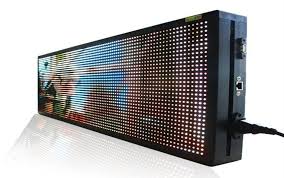
At the core, the manufacturing workflow involves several key stages:
- Substrate Preparation: The production starts with glass substrate cleaning and treatment. Manufacturers utilize ultra-clean rooms with ISO 5 or better classifications to prevent particulate contamination, critical for pixel integrity and display reliability.
- Thin-Film Transistor (TFT) Array Fabrication: Most LED LCD panels employ an IPS (In-Plane Switching) or VA (Vertical Alignment) TFT structure. Precision photolithography and chemical vapor deposition (CVD) techniques form the TFT arrays, ensuring uniform electrical characteristics across the panel. The minimum TFT channel length often ranges from 3 µm to 5 µm depending on panel size and resolution.
- Color Filter and Liquid Crystal Layer Assembly: Color filters created through pigment dispersion or dye technology are added, followed by the liquid crystal layer, which controls light modulation. Quality control involves birefringence measurement and uniformity tests to ensure consistent viewing angles and color fidelity.
- Backlight Unit (BLU) Integration with LED Technology: The LED backlight units, either edge-lit or direct-lit with full-array local dimming, are pivotal in controlling brightness, contrast, and energy efficiency. High-end models use Mini-LED or Micro-LED backlighting with thousands of independently controlled zones, delivering contrast ratios exceeding 1,000,000:1.
- Module Assembly and Encapsulation: Modules are assembled under precise temperature and humidity control to prevent moisture ingress, which can degrade panel longevity. Encapsulation techniques, including sealants with moisture barriers, extend product life cycles to over 50,000 operating hours (typical luminance half-life).
2. Key Quality Standards and Testing Protocols
Manufacturers comply with international standards to guarantee product quality and safety:
- IEC 61747 and ISO 13406-2: These define optical and mechanical characteristics, including viewing angle specifications, luminance uniformity (>85%), and pixel defects (class 1 or class 2 standards).
- UL 8750 and IEC 62031: Standards for LED component safety, ensuring electrical and thermal reliability.
- Environmental and Reliability Testing: Accelerated aging tests (e.g., 65°C at 85% RH for 1000 hours), thermal shock, and vibration testing simulate real-world usage to preempt failures.
- Color Calibration and Gamma Correction: Using spectrophotometers and colorimeters to achieve precise color reproduction as per ITU-R BT.709 or DCI-P3 color standards, critical for broadcast, professional displays, and consumer electronics.
3. Innovations in LED LCD Manufacturing
- Quantum Dot Enhancements: Integration of quantum dot films enhances color gamut up to 99% Rec. 2020, improving visual realism in 4K and 8K panels.
- Flexible and Transparent Displays: Advances in substrate materials allow for curved or transparent LED LCDs, expanding applications into automotive HUDs and signage.
- Automation and AI-Assisted Inspection: Computer vision systems detect pixel defects and contamination with sub-micron accuracy, minimizing yield loss and ensuring consistent quality across mass production.
4. Practical Considerations for Manufacturers and Clients
- Customization: Tailoring panel size, resolution (FHD, QHD, UHD), brightness (up to 1500 nits for HDR), and refresh rates (up to 240Hz in gaming displays) meets diverse application needs.
- Sustainability: Use of RoHS-compliant materials and energy-efficient LEDs aligns with environmental regulations and reduces operational costs.
- Cost-Quality Balance: Selecting optimal materials and process parameters ensures cost-effective production without sacrificing durability or image quality.
In conclusion, modern LED LCD screen manufacturing embodies a delicate balance of sophisticated technology, material science, and process control. Understanding these elements equips engineers and product managers to deliver displays that meet the highest standards of performance, reliability, and visual excellence demanded in today’s global marketplace.
References:
- International Electrotechnical Commission (IEC) Standards, IEC 61747 series on flat panel displays
- ISO 13406-2 ergonomic requirements for flat panel displays
- UL Standards for LED components, UL 8750
- "Display Technologies and Applications," Journal of the Society for Information Display, 2022
- Samsung Display and LG Display Whitepapers, 2023













