

Advancements and Best Practice...
Advancements and Best Practices in LED LCD Screen Manufacturing: A Comprehensive Industry Overview
The LED LCD screen manufacturing industry has experienced significant technological advancements over the past decade, driven by consumer demand for higher resolution, enhanced color fidelity, thinner profiles, and improved energy efficiency. As an expert LED display engineer with extensive industry experience, I will provide a detailed analysis of current manufacturing standards, key technical parameters, production challenges, and industry-leading best practices relevant to international markets. This article aims to offer a credible, authoritative, and practical overview that highlights the depth and significance of LED LCD manufacturing developments.
The integration of Light Emitting Diodes (LEDs) as backlight sources within Liquid Crystal Displays (LCDs) has revolutionized screen technology by improving brightness uniformity and reducing power consumption compared to traditional CCFL backlighting methods. LED backlighting, which can be edge-lit or direct-lit, allows for thinner screen designs and better contrast ratios. High Dynamic Range (HDR) capability, a standard in modern displays, further enhances visual performance by widening luminance ranges. According to the Society for Information Display (SID), typical luminance levels for high-end LED LCDs reach 600 to 1000 cd/m², enabling superior visibility in diverse lighting environments.
One of the critical technical parameters in LED LCD manufacturing is pixel density, typically measured in pixels per inch (PPI). Display resolutions such as 4K UHD (3840 x 2160 pixels) with PPI values above 150 ensure sharp images suitable for both consumer and professional applications. In addition, color accuracy is underpinned by adherence to standards like sRGB, AdobeRGB, and DCI-P3 color gamuts, with elite panels covering more than 95% of DCI-P3 for cinematic displays. Advanced calibration techniques during production, including automated colorimetric measurement and gamma curve adjustments, are now standard to maintain consistency and meet rigorous quality expectations.
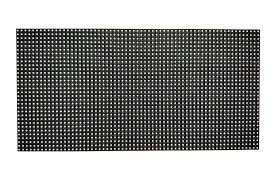
The choice of materials and assembly techniques is fundamental to achieving durability and performance. LCD panels incorporate thin-film transistor (TFT) technology, typically using amorphous silicon or low-temperature polysilicon. The manufacturing process demands precision cleanroom environments (ISO Class 5 or better) to minimize particulate contamination, which can cause dead pixels or mura defects. Furthermore, manufacturers often implement In-Plane Switching (IPS) or Vertical Alignment (VA) liquid crystal configurations to optimize viewing angles and contrast ratios; IPS panels generally provide 178° viewing angles, a standard favored in professional displays requiring consistent color presentation.
One of the most challenging aspects in manufacturing high-quality LED LCDs is uniform backlight distribution. Edge-lit designs must employ sophisticated light guides and diffusers to achieve homogenous luminance, while direct-lit displays benefit from local dimming zones to enhance contrast. Recent advancements have introduced Mini-LED and Micro-LED backlighting technology, which significantly increases the number of dimming zones (up to thousands in Mini-LED) and allows finer control of light intensity. This results in contrast ratios exceeding 1,000,000:1, a benchmark previously attainable only by OLED technologies. However, Mini-LED production incurs higher costs and requires advanced thermal management to prevent hotspots and ensure longevity.
Quality control remains another pillar of reliable LED LCD manufacturing. Manufacturers must comply with international standards such as IEC 62368-1 for safety and IEC 62087 for measuring energy consumption. Environmental compliance according to RoHS and REACH directives is now mandatory across global markets, ensuring sustainable material sourcing and use. Comprehensive testing includes burn-in procedures, thermal cycling, and mechanical stress tests to identify early failures, with statistical process control methods applied to maintain yield rates above industry averages of 95%.
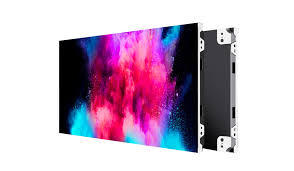
The global supply chain complexity, especially post-pandemic, has pushed manufacturers to optimize production workflows and inventory management using Industry 4.0 automation technologies. Real-time monitoring of equipment via sensors and AI-driven analytics enhances predictive maintenance and reduces downtime. Furthermore, integration of automated optical inspection (AOI) helps detect microscopic defects at high speed. Combined with lean manufacturing principles, these innovations facilitate scalable production while maintaining rigorous quality standards.
In conclusion, LED LCD screen manufacturing today embodies a fusion of advanced material science, precise engineering, and sophisticated automation. Industry leaders continue to push technological boundaries through innovations like Mini-LED backlighting and improved liquid crystal materials, driving displays toward higher brightness, color accuracy, and energy efficiency. For manufacturers and end-users alike, understanding these parameters and adhering to international standards not only assures product excellence but also strategic advantage in a highly competitive global market.
References:
1. Society for Information Display, "Display Measurement Standards," 2023.
2. International Electrotechnical Commission (IEC), "IEC 62368-1: Audio/video, information and communication technology equipment - Safety requirements," 2024.
3. Consumer Technology Association, "HDR and Color Gamut Standards," 2023.
4. SEMI, "LED LCD Manufacturing Best Practices," 2024.
LED LCD manufacturing, Mini-LED backlighting, color accuracy LED displays, LCD production standards, LED screen technology
Explore the latest advancements and best practices in LED LCD screen manufacturing, including Mini-LED technology, color accuracy standards, brightness levels, and quality control procedures ensuring high-performance, energy-efficient displays for global markets.













