

Advanced Technologies and Quality Standards in LED Display Manufacturing for Optimal Performance
The LED display industry has experienced tremendous growth over the last decade, driven by advancements in semiconductor technologies, materials science, and manufacturing processes. As a professional LED display engineer with extensive experience in all facets of LED LCD screen production, this article provides a comprehensive overview of the latest manufacturing technologies, quality control methodologies, and industry standards essential for producing high-performance LED displays. The goal is to equip manufacturers, designers, and technical stakeholders with practical insights rooted in authoritative data and proven engineering principles.
Understanding LED Display Components and Their Impact on Performance
At the core of an LED display lies the Light Emitting Diode (LED), a semiconductor device that emits light when an electric current passes through it. LED displays come in various forms, including direct-view LED (also called micro-LED or large outdoor LED panels) and LED-backlit LCDs, each requiring distinct manufacturing strategies. Critical parameters such as pixel pitch, brightness (measured in nits), color gamut, contrast ratio, and refresh rate define the user experience and application suitability.
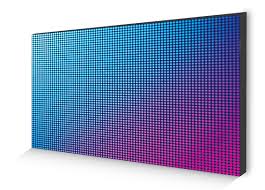
Pixel Pitch and Resolution: Pixel pitch, the distance between the centers of two adjacent LED pixels (usually in millimeters), plays a decisive role in display clarity. For example, a pixel pitch of 1.25 mm or below is considered fine-pitch and is pivotal for indoor LED screens featuring high-resolution content. Miniaturization enabling pixel pitches down to 0.7 mm has transformed indoor displays, enabling seamless 4K or 8K resolution panels.
Brightness and Contrast: Outdoor LED displays demand high brightness levels, often exceeding 5,000 nits, to ensure visibility even under direct sunlight. Contrast ratio, the difference between the darkest black and brightest white, must meet or exceed industry benchmarks—commonly 3,000:1 or higher for indoor LED displays. Establishing proper contrast ensures optimal image depth and color fidelity.
Cutting-edge Manufacturing Processes and Materials
The transition from traditional LED packaging to state-of-the-art chip-scale packaging (CSP) and micro-LED technologies exemplifies the industry's push toward higher efficiency and brightness, along with miniaturized form factors. Precise pick-and-place machines, coupled with automated optical inspection (AOI) systems, guarantee pixel placement accuracy within ±5 microns, crucial for fine-pitch panels.
High-purity sapphire substrates and advanced epitaxial growth techniques (such as MOCVD—Metal-Organic Chemical Vapor Deposition) enable the production of LEDs with superior luminous intensity and color consistency. Additionally, integrating phosphor conversion layers precisely controls color temperature, meeting standards like D65 (6500K) for natural daylight representation.
Thermal management remains one of the most critical engineering challenges. Efficient heat dissipation solutions, including copper heat sinks, advanced thermal interface materials (TIMs), and forced air cooling systems, are integrated within display modules to maintain optimal junction temperatures—typically below 85°C—extending lifetime reliability.
Robust Quality Control and Industry Standards
To ensure reliability in diverse operating environments, LED display manufacturing adheres to strict quality control frameworks based on international standards. For example, IEC 62368 outlines safety requirements for electronic devices, while the ISO 9001 quality management system guides process consistency and continuous improvement.
Electrical testing such as High-Pot (high potential) tests validate insulation between circuitry, while spectral and photometric measurements verify color accuracy and brightness uniformity across the entire panel. Burn-in testing, where displays operate continuously under elevated stress for 72 hours or more, reveals early failures to enhance field reliability.
Case studies from prominent manufacturers reveal that incorporating Six Sigma methodologies and Statistical Process Control (SPC) leads to defect rate reductions below 30 parts per million (ppm), significantly enhancing end-product quality and reducing warranty claims.
Emerging Trends and Future Directions
The LED display industry is poised for further innovation, particularly in the integration of micro-LED arrays for ultra-high resolution, flexible display substrates, and AI-driven production monitoring. Organic LED (OLED) and quantum dot (QD) enhancements are also gaining traction for improved color reproduction.
Moreover, environmental regulations such as RoHS (Restriction of Hazardous Substances) and WEEE (Waste Electrical and Electronic Equipment Directive) have become indispensable components of manufacturing compliance, encouraging the adoption of eco-friendly materials and recycling-focused design.
Conclusion
Producing high-quality LED displays is a complex interplay of advanced component technologies, precision manufacturing processes, and rigorous quality standards. By adhering to industry best practices such as optimal pixel pitch selection, robust thermal management, and comprehensive testing protocols, manufacturers can deliver displays with outstanding brightness, clarity, reliability, and longevity.
Continuous innovation, informed by field data and evolving international standards, remains critical to meeting increasingly demanding application scenarios ranging from outdoor advertising and stadium screens to cutting-edge medical imaging and immersive augmented reality environments.
For engineers and industry professionals, staying abreast of evolving technologies like micro-LED, flexible substrates, and AI-powered QC systems will be pivotal in maintaining competitiveness and delivering exceptional visual experiences that define the future of LED display technology.













