

Advanced Insights into LED Display Technology: Applications, Advantages, Challenges, and Emerging Trends
LED display technology has transformed visual communication across multiple industries, delivering vibrant, energy-efficient, and highly versatile solutions for various applications. As an LED display engineer with years of experience, this article delves into the technical parameters, practical applications, advantages, common challenges, and the emerging trends shaping the future of LED screens.
LED displays utilize light-emitting diodes to form images, with configurations ranging from indoor fine-pitch panels to massive outdoor billboards. Key technical parameters include pixel pitch, brightness, refresh rate, color depth, and viewing angle. Pixel pitch, typically measured in millimeters, defines the distance between the center of two adjacent pixels; fine pixel pitches (e.g., 0.9mm to 2.5mm) enable high-resolution displays suitable for close-viewing environments such as control rooms and broadcast studios. Outdoor LED displays usually have larger pixel pitches (e.g., 6mm to 20mm), allowing visibility from long distances. Brightness levels are crucial, with indoor LED panels averaging between 800–1500 nits, and outdoor displays exceeding 5000 nits to combat ambient light. A refresh rate of 1920Hz or higher is standard to reduce flicker and enhance video quality, especially for broadcast and live events.
Practical applications of LED displays span advertising, sports stadiums, transportation hubs, retail environments, and command centers. For example, in retail, LED walls create immersive digital signage that captivates customers while dynamic content enhances the shopping experience. Similarly, transportation terminals use LED displays for real-time schedule updates and emergency notifications. The architectural sector integrates LED facades to produce striking visual effects, transforming building exteriors into dynamic canvases. According to the Display Industry Association and data from IHS Markit, LED signage represents over 60% of global digital signage revenue, illustrating its market dominance.
The advantages of LED displays over traditional LCD or projection systems are multifaceted. LEDs offer superior brightness and contrast ratios due to their self-emissive nature, allowing true blacks and vivid colors. Energy efficiency is another benefit; LEDs consume up to 40% less power than LCD counterparts in similar applications, contributing to sustainability goals and operational cost savings. Additionally, LED panels boast high durability—commonly rated with IP65 or higher ingress protection for outdoor units—ensuring resistance to dust, moisture, and extreme temperatures. The modularity of LED systems simplifies maintenance and scalability, as damaged modules can be individually replaced without affecting the entire display.
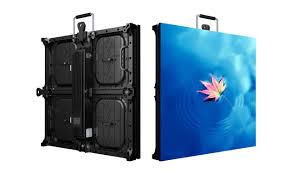
Despite these strengths, LED displays present common challenges. Uniform color calibration and brightness consistency are critical, especially in large video walls composed of multiple modules. Variations can cause visible seams, reducing image quality. Thermal management is vital; inadequate heat dissipation can shorten LED lifespan or cause color shifts. Engineers often incorporate highly efficient heat sinks and intelligent temperature sensors to mitigate these effects. Another pain point involves signal processing and latency—complex video content demands synchrony across all panels to avoid lag or image distortion. Advances in dedicated video controllers and synchronization protocols such as HD-SDI and DVI have addressed many of these issues. Additionally, environmental factors like ambient temperature extremes or humidity pose reliability risks, necessitating robust enclosure design and conformal coatings.
Emerging trends in LED display technology indicate a future focused on microLEDs, miniLED backlighting, and intelligent integration. MicroLED technology promises unprecedented pixel density and energy efficiency by assembling microscopic LEDs individually controlled per pixel, rivaling OLED in contrast while surpassing it in brightness and lifespan. Although still in the development and commercialization phase, microLED displays are expected to revolutionize high-end monitors, augmented reality devices, and large digital signage. MiniLEDs, meanwhile, enhance LCD displays by providing thousands of tiny LEDs as backlights, offering improved contrast and HDR capabilities at a lower cost than microLEDs.
Smart LED displays integrated with IoT and AI technologies are gaining traction. These systems use sensors and data analytics to dynamically adjust content based on context, weather, audience demographics, or time of day. For example, outdoor advertising panels now utilize AI algorithms to target ads effectively or change brightness automatically depending on sunlight. Moreover, flexible and transparent LED displays are expanding design possibilities, enabling curved, foldable screens and see-through digital surfaces that blend seamlessly into architectural elements.
Industry standards such as IEC 62368 for safety, IEC 62087 for video system measurements, and ANSI/CTA-2075 for display performance parameters ensure that LED displays meet quality and safety benchmarks. Compliance with such standards is crucial for manufacturers and engineers to provide reliable, high-performance solutions worldwide.
In conclusion, LED display technology continues to evolve, driven by advances in material science, electronics, and software. With its unmatched brightness, energy efficiency, and versatility, LED remains the preferred choice for diverse display needs—from advertising and entertainment to control rooms and public information systems. Addressing challenges like uniformity and environmental resilience, while embracing innovations such as microLED and AI integration, positions the LED display industry for sustained growth and technological leadership.













