

Comprehensive Guide to LED Display Manufacturing: Technical Insights and Industry Best Practices
The LED display industry has witnessed remarkable technological advancements over the past decade, positioning LED screens as essential components across advertising, entertainment, transportation, and industrial applications. As a professional LED display engineer, this article seeks to deliver an authoritative overview of LED display manufacturing, incorporating technical parameters, industry standards, and empirical insights to guide manufacturers, engineers, and technology enthusiasts in understanding the nuances of LED screen development.
Understanding LED Display Technology
Light Emitting Diode (LED) displays utilize arrays of microscopically sized LEDs to create digital images. Each LED acts as a pixel or a sub-pixel in a matrix that controls color and brightness precisely. The manufacturing process begins with selecting high-quality LED chips, arranged on circuit boards with integrated driving ICs to control individual pixel illumination.
Today's LED displays are classified mainly into Indoor and Outdoor displays, differentiated by brightness, pixel pitch, weatherproofing, and reliability.
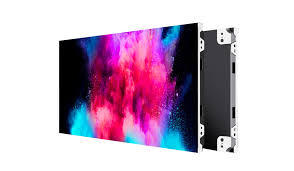
- Indoor LED Displays often feature pixel pitches ranging from 0.8 mm to 4 mm, offering high resolution and superior color fidelity suitable for conference halls, retail environments, and stadium scoreboards.
- Outdoor LED Displays require higher brightness, usually from 5000 to 10,000 nits, with pixel pitches generally between 4 mm and 20 mm, to counteract ambient sunlight and adverse weather conditions.
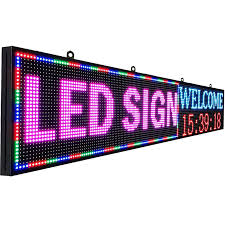
Critical Technical Parameters in LED Display Manufacturing
1. Pixel Pitch: Defined as the distance between the centers of two adjacent pixels, pixel pitch determines the display resolution. Fine pitch LED displays (≤1.5 mm) are complex and cost-intensive to manufacture but deliver exceptional clarity. Research from the Society for Information Display (SID) outlines that pixel pitch inversely correlates with viewing distance, recommending appropriate pitch selection based on application use-cases.
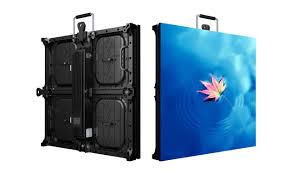
2. Brightness and Contrast Ratio: Brightness affects outdoor legibility, measured in nits (cd/m²). Contrast ratio—the difference between the brightest white and darkest black—impacts image quality. LED displays achieve high contrast ratios often exceeding 3000:1, superior to traditional LCD displays.
3. Color Accuracy & Refresh Rate: High-end displays incorporate fine color calibration technology to achieve a wide color gamut, often approaching or surpassing the Rec. 709 and DCI-P3 color standards. Refresh rates typically range from 120 Hz to 3840 Hz, minimizing flickering, essential for video broadcast and live event applications.
4. Thermal Management: LEDs generate heat affecting longevity and performance. Manufacturing integrates advanced thermal solutions like heat sinks, forced air cooling, or phase-change materials. Industry best practices mandate operating temperatures between -20°C to 50°C to ensure stable function and lifespan exceeding 100,000 hours.
5. Ingress Protection (IP) Rating: Outdoor modules demand robust protection against dust and moisture. Compliance with IP65 to IP67 standards is typical, ensuring operability under rain, dust storms, and humidity.
Manufacturing Process and Quality Assurance
The LED display manufacturing process encompasses several critical stages:
- LED Chip Selection & Testing: Utilizing chips primarily sourced from manufacturers like Nichia, Osram, or Samsung, with binning procedures to categorize LEDs by brightness, wavelength, and voltage characteristics. This step ensures uniformity and consistency in the final product.
- PCB Design and Assembly: Flexible and rigid printed circuit boards (PCBs) host the LEDs and driving ICs. Advanced PCB design incorporates thermal relief paths and signal integrity optimization to support high refresh rates.
- Module Fabrication: LED modules are assembled by placing LEDs onto PCBs, followed by soldering and potting. Potting compounds protect against moisture and mechanical stress, using materials that comply with RoHS directives and UL94 V-0 fire resistance.
- Calibration and Testing: Each module undergoes individual photometric and chromatic calibration using spectroradiometers and automated software. Color uniformity across the display is achieved through gamma correction and color temperature adjustments.
- Cabinet Assembly and Integration: Modules are integrated into aluminum or steel cabinets with precision mounting for seamless visual alignment. Cabinets feature servicing accessibility designed per IEC and TUV certification standards.
- Final System Testing: The assembled display undergoes rigorous testing for durability, color uniformity, frame rate consistency, and environmental stress tests including salt spray, thermal shock, and vibration.
Industry Standards and Certifications
Compliance with international standards ensures reliability and safety:
- ANSI/IES RP-27 for photometric measures.
- IEC 60529 for ingress protection.
- RoHS (Restriction of Hazardous Substances) compliance to prevent harmful material usage.
- CE and FCC certifications to meet electromagnetic compatibility and safety regulations.
Case Studies and Applications
A 2023 deployment of a large-scale outdoor LED billboard in Times Square employed a modular design with 10 mm pixel pitch, 7500 nits peak brightness, and IP67-rated enclosure. The project's success stemmed from meticulous planning of thermal management and rigorous color calibration, resulting in a vibrant, durable display that maintained 99.9% uptime over one year.
In indoor applications, a recent project for a sports arena utilized 0.9 mm fine pitch LED panels that delivered ultra-high resolution and exceptional refresh rates, providing a seamless viewing experience for live broadcasts and instant replays.
Emerging Trends in LED Display Manufacturing
- Mini LED and Micro LED Technologies: Offering enhanced brightness and contrast ratios with lower power consumption, these technologies are positioned to gradually supplant traditional LED displays, especially in premium indoor applications.
- AI-Driven Calibration: Using AI algorithms to optimize color balance and brightness dynamically according to ambient lighting conditions enhances viewing performance while reducing maintenance.
- Sustainable Manufacturing: Increased focus on recyclable materials, energy-efficient production processes, and compliance with environmental standards reflects corporate social responsibility trends.
Conclusion
Manufacturing LED displays is a multifaceted endeavor that balances material science, precision engineering, and rigorous quality controls. By adhering to industry standards, integrating advanced technologies, and applying experiential insights, manufacturers deliver displays that satisfy diverse application demands worldwide. Continuous innovation and adherence to best practices ensure LED display technology remains at the forefront of visual communication technologies.
Authoritative References:
- Society for Information Display (SID) Journal, 2023
- International Electrotechnical Commission (IEC) Standards
- UL Certification Guidelines
- "Thermal Management of LED Displays," IEEE Transactions on Components, Packaging and Manufacturing Technology, 2022
- RoHS Directive EU 2011/65/EU Documentation













