

Advanced Engineering and Manufacturing Practices in LED Display Technology: Enhancing Performance and Reliability
In the rapidly evolving landscape of visual display technologies, LED (Light Emitting Diode) displays have emerged as the cornerstone for numerous applications ranging from outdoor billboards, indoor digital signage, to large-scale event screens. With the increasing demand for higher resolution, improved brightness, lower power consumption, and greater reliability, understanding the engineering fundamentals and manufacturing intricacies behind LED display panels is critical for stakeholders across the industry. This article offers an in-depth analysis of advanced LED display engineering, underscoring technological innovations, design methodologies, manufacturing processes, and quality assurance protocols that drive superior performance and longevity.
Fundamental Principles of LED Display Technology
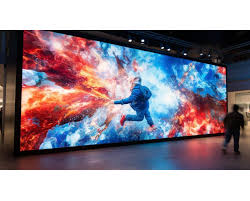
At the core, an LED display is an assembly of individual RGB LED pixels arranged in a matrix to create the desired visual output. The fundamental technical parameters that dictate performance include pixel pitch, brightness, contrast ratio, refresh rate, color gamut, and viewing angle. Pixel pitch, defined as the distance between the centers of two adjacent pixels, is a pivotal metric influencing display resolution—smaller pitch values enable higher resolution and closer optimal viewing distances. Contemporary indoor LED displays typically feature pixel pitches ranging from 0.9 mm (micro-LED) to 4 mm, while outdoor displays maintain larger pitches, typically between 4 mm to 20 mm, to enhance visibility at longer distances.
Optimizing LED Brightness and Color Uniformity
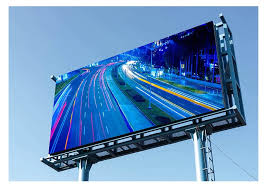
Brightness is quantified in terms of nits (cd/m²), and modern LED displays achieve brightness levels exceeding 5000 nits for outdoor environments to ensure legibility under direct sunlight. Achieving uniform brightness and color consistency across large LED screens involves precise binning during the LED selection phase, wherein LEDs are categorized based on luminous intensity, wavelength, and forward voltage characteristics. The industry follows standards such as the CIE 1931 color space to measure and calibrate colors to maintain fidelity and uniform performance, supplemented by advanced calibration methods incorporating high-resolution cameras and spectral measurement tools.
Thermal Management and Reliability Engineering
Thermal dissipation is a critical concern in maintaining LED longevity. Excessive heat accelerates luminous decay and color shift, adversely affecting display quality over time. Incorporating heat sinks, forced-air cooling, and materials with high thermal conductivity such as aluminum alloy in the LED module and cabinet design helps mitigate thermal stresses. According to the JEDEC (Joint Electron Device Engineering Council) standard JESD51, thermal resistance must be optimized to maintain junction temperatures below specified limits—typically under 85°C for commercial-grade LEDs and stricter values for high-reliability industrial applications.
Advanced Manufacturing Techniques and Process Control
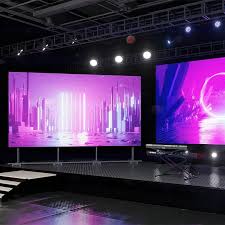
Manufacturing high-quality LED display modules demands rigorous process control during SMT (Surface Mount Technology) assembly, epoxy encapsulation, and optical alignment. Automated pick-and-place machines ensure precise LED placement with tolerances often less than 50 microns to prevent pixel defects. Potting and encapsulation processes use advanced silicone-based compounds that provide environmental resistance and UV stability without impairing light transmission.
Integration of AOI (Automated Optical Inspection) and ATE (Automated Test Equipment) in production lines enables early defect detection, significantly improving yield rates. Additionally, the implementation of Six Sigma methodologies across manufacturing stages further enforces stringent quality standards, reducing variation and enhancing reproducibility.
Power Supply Design and Signal Processing
Modern LED displays employ sophisticated power management ICs that regulate current to maintain LED brightness stability and reduce flicker. Constant current driving is the industry norm, allowing each LED or cluster of LEDs to receive steady current regardless of voltage fluctuations. Signal processing involves multi-level data refresh architectures, commonly utilizing 16-bit or higher grayscale depth to render fine color gradients and smooth motion. Refresh rates of 1920 Hz or above are standard to eliminate flicker perceptible to the human eye—a crucial factor in broadcast and live event applications.
Environmental Standards and Certifications
Compliance with international standards ensures that LED displays meet safety, environmental, and electromagnetic interference (EMI) regulations. CE marking, UL certification, and RoHS compliance confirm conformity with electrical safety, hazardous substance restrictions, and electromagnetic compatibility guidelines. Outdoor LED displays especially must conform to IP65 or higher ingress protection ratings to resist dust and water intrusion, guaranteed via rigorous environmental testing under IEC 60529.
Industry Case Studies: Enhancing Urban Digital Infrastructure
One of the most compelling examples of LED display engineering excellence is evident in urban digital infrastructure deployed across global smart cities. In Singapore’s Marina Bay Sands, the outdoor LED façade employs over 50,000 LED nodes with a pixel pitch of 10 mm, leveraging high-brightness SMD components with robust weatherproofing. The system integrates real-time brightness sensors that adjust output dynamically, ensuring optimal visual performance while conserving energy.
Similarly, at the Times Square public displays in New York, seamless 24/7 operation is maintained through redundant power supplies and modular LED panels that can be swapped without service interruption—showcasing modular design’s role in maintenance efficiency.
Future Trends: MicroLEDs and AI-Driven Manufacturing
MicroLED technology represents a major leap forward with pixel pitches under 1 mm, enabling direct-view displays that rival OLED in contrast and color gamut, but with superior brightness and lifespan. Despite high current manufacturing costs, advances in mass transfer techniques and defect repair are paving the way for broader adoption, especially in VR, automotive heads-up displays, and premium consumer electronics.
Moreover, AI-driven quality inspection using machine learning algorithms is revolutionizing defect detection by recognizing complex patterns beyond traditional rule-based systems. This results in rapid feedback loops and predictive maintenance capabilities directly embedded into smart factory lines.
Conclusion
Excellence in LED display engineering and manufacturing lies in mastering intricate interdependencies among component technology, process optimization, thermal dynamics, and rigorous standard compliance. For manufacturers, designers, and engineers, embracing cutting-edge materials, automation, and data-driven methodologies translates into displays with stunning visual quality, robust durability, and operational efficiency. As the global demand for high-performance LED displays intensifies across diverse sectors, continuous innovation and adherence to best practices derived from authoritative standards will remain paramount to achieving technological leadership and market success.
References:
- CIE 1931 Color Space: International Commission on Illumination.
- JEDEC JESD51 Standards on Thermal Characterization.
- IEC 60529: Degrees of Protection Provided by Enclosures (IP Code).
- UL and RoHS Certification Guidelines.
- Wang et al., “Advancements in MicroLED Display Technology,” Journal of Display Technology, 2023.
- Industry Whitepaper by LEDinside, “Global LED Display Market Trends 2024.”













