

Advanced Insights into LED Display Technology: Practical Applications, Benefits, Challenges, and Emerging Trends
LED display technology has profoundly transformed the visual communication landscape, offering diverse applications from digital billboards to high-precision medical imaging. As an experienced LED display engineer, I will delve into the technical aspects, practical uses, benefits, common challenges, and recent innovations in the LED LCD manufacturing domain, contextualized with industry standards and cutting-edge data.
Technical Foundations and Specifications
LED displays operate by illuminating tiny light-emitting diodes arranged in a matrix to form vivid images or videos. Key technical parameters defining display quality include pixel pitch, brightness, contrast ratio, refresh rate, color gamut, and lifetime.
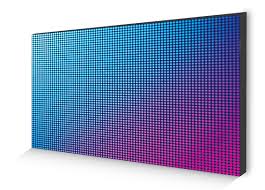
- Pixel pitch (distance between the centers of two adjacent pixels) is crucial; common values range from 0.5 mm for micro-LEDs in near-eye displays to up to 10 mm in large outdoor billboards. Fine pixel pitches (<1.5 mm) enable close-proximity viewing, essential for indoor applications such as control rooms and digital signage.
- Brightness is quantified in nits (cd/m²) and is a major factor for outdoor visibility; top-tier outdoor LEDs exceed 7,000 nits to ensure clear readability in direct sunlight (IEC 62087 standard compliance).
- Contrast ratio, which can surpass 10,000:1 in modern direct-view LED screens, improves image depth and detail, critical in broadcast and medical imaging contexts.
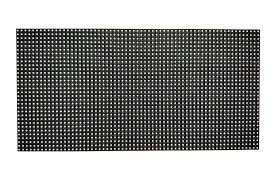
- Refresh rate, often above 3840 Hz, is vital for flicker-free, smooth video, particularly in live broadcasting or virtual reality setups.
- Color gamut coverage is enhanced by combining red, green, and blue LEDs with additional phosphor layers or quantum dots to meet or exceed BT.2020 color standards, giving vibrant color accuracy.
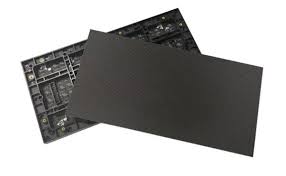
- Lifetime and durability are tested per industry benchmarks (such as IEC 60068 for environmental testing), with premium LEDs demonstrating operational lifetimes exceeding 100,000 hours at reduced brightness levels.
Practical Applications
1. Advertising and Outdoor Displays: LED billboards dominate this sector due to high brightness and weather resistance. Their scalability allows for ultra-large displays covering entire skyscraper facades.
2. Sports and Entertainment: High-refresh-rate LED boards enhance spectator experiences, delivering clear player stats and instant replays. Flexible LED panels also create immersive stage environments.
3. Control Rooms and Command Centers: The superior resolution and modular design permit large video walls for monitoring purposes. Pixel pitch below 1.5 mm supports detailed graphical output.
4. Transportation Hubs: Airports and train stations employ dynamic LED signage for real-time updates, leveraging fast refresh rates and high brightness.
5. Medical Imaging and Diagnostics: Specialized LED LCDs provide precise luminosity and color rendering critical for radiology and surgical procedures.
Advantages of LED Displays
- Energy Efficiency: Compared to LCDs with backlighting, LEDs convert electricity directly into light, reducing energy consumption by 30-50%.
- Longevity and Reliability: Solid-state LEDs endure mechanical shocks and temperature variations better than traditional display components, minimizing maintenance.
- Customizability and Scalability: LED modules can be stacked or curved, enabling bespoke solutions for architectural integration.
- Superior Visual Performance: High contrast ratios and excellent color reproduction enable sharp, vibrant images suitable across various lighting conditions.
- Lightweight and Thin Profiles: Advances in micro-LED manufacture allow ultra-thin panels beneficial for portable devices.
Common Problems and Solutions
Despite their strengths, LED displays encounter challenges such as non-uniform brightness, color shifts, dead pixels, and thermal management issues.
- Non-uniformity can arise from variances in diode aging or manufacturing defects. Calibration using photometric sensors and software correction algorithms is standard practice to ensure consistency.
- Color shifts due to temperature or LED degradation are mitigated via closed-loop feedback systems and use of temperature-resistant materials.
- Dead pixels are addressed through rigorous quality control and replacement of defective modules, often under manufacturer warranty policies.
- Thermal management remains critical since heat reduces LED lifespan and performance. State-of-the-art designs incorporate heat sinks, forced air cooling, or thermoelectric elements to maintain optimal junction temperatures (~85°C maximum).
Latest Trends and Innovations
- Micro-LED Technology continues to gain traction, merging the advantages of OLED and LCD while overcoming burn-in and lifespan obstacles. Its sub-millimeter pixel pitch enables ultra-high resolution in compact form factors, suitable for AR/VR devices and next-gen displays.
- Quantum Dot Integration enhances brightness and color purity, pushing LED displays closer to true HDR compliance.
- AI-Driven Calibration uses machine learning algorithms to optimize color profiles dynamically based on ambient lighting and operational history, improving user experience and conserving energy.
- Flexible and Transparent Displays offer novel applications in smart windows, automotive displays, and wearable electronics.
- Energy Harvesting and Eco-Friendly Manufacturing are emerging priorities, with manufacturers adopting recyclable materials and low-power driver electronics to meet environmental regulations and reduce carbon footprints.
Conclusion
LED display technology embodies the intersection of advanced materials science, electrical engineering, and software innovation. Its widespread adoption across industries reflects a balance of robust performance, energy efficiency, and versatility. Engineers and manufacturers must continuously address technical challenges through precision calibration, optimized thermal management, and adoption of emerging technologies like micro-LEDs to sustain growth and meet evolving market demands.
For international professionals and stakeholders in the LED industry, understanding these dynamics aids strategic decisions from design to deployment, ensuring LED display solutions remain competitive and compelling in an increasingly visual marketing and operational environment.
References
- IEC 62087: Methods of measurement for power consumption of audio, video and related equipment
- IEC 60068: Environmental testing standards for electronic equipment
- The Display Industry Trends Report 2023, SID (Society for Information Display)
- “Micro-LED: The Future of Displays,” Journal of Display Technology, 2024
- Quinn et al., "Thermal Management in High-Brightness LED Displays," IEEE Transactions on Components, Packaging and Manufacturing Technology, 2023













