

Advancements and Best Practices in LED Display Manufacturing for Optimal Performance
The global LED display industry has witnessed remarkable growth over the past decade, driven by rapid advancements in technology and expanding applications across sectors such as advertising, entertainment, transportation, and corporate environments. Achieving high-quality, reliable LED screens requires a deep understanding of the manufacturing process, stringent quality control, and adherence to relevant industry standards. This article explores the critical technical parameters, manufacturing best practices, and innovations that enable LED displays to meet and exceed performance expectations in diverse environments.
LED display manufacturing starts with the selection of LED chips. High-quality gallium nitride (GaN)-based LEDs are preferred for their superior luminous efficacy and longevity. Typical luminous intensity for commercial-grade LEDs ranges from 800 to 2000 mcd, while peak wavelength precision usually maintains within ±2 nm to guarantee color consistency. The efficacy of LEDs can exceed 150 lm/W for the latest models, which translates directly into energy savings for large installations.
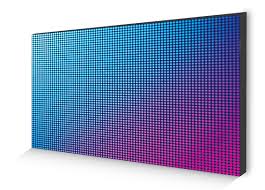
A fundamental parameter in LED displays is pixel pitch, defined as the distance between adjacent LED pixels, usually measured in millimeters. Smaller pixel pitches (e.g., 0.9mm to 1.5mm) deliver high resolution and close viewing distances required for indoor applications such as control rooms or broadcast studios. Conversely, larger pixel pitches (e.g., 4mm to 10mm) are suited for outdoor billboards or stadium screens where viewing distances increase. The market trend has been driven toward ultra-fine pitch displays below 1mm to meet demands for crystal-clear image quality.
Thermal management is another critical aspect that governs LED display reliability. During operation, LEDs dissipate heat that can degrade performance and lifespan if not efficiently managed. Manufacturers employ aluminum-based backplanes, heat sinks, and sometimes active cooling systems. Industry guidelines provided by the International Electrotechnical Commission (IEC 62717) emphasize maintaining junction temperatures below 85°C to avoid accelerated degradation, thereby ensuring over 100,000 hours of operational life for top-tier LEDs.
The assembly process mandates precision placement and soldering of tiny LED packages onto printed circuit boards (PCBs). Surface mount technology (SMT) machines with micron-level accuracy are used, complemented by automated optical inspection (AOI) to detect misaligned or damaged LEDs. Consistency in brightness and color uniformity across the display surface is achieved by binning LEDs – sorting them based on luminous flux and color wavelength to ensure uniformity within a narrow tolerance band. Such meticulous quality control enhances the user’s viewing experience and minimizes issues such as color shifts or dark spots.
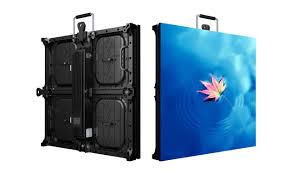
Beyond hardware, modern LED displays integrate smart calibration and processing components. High-performance image processors support real-time correction for color temperature, grayscale linearity, and gamma curves, adapting automatically to ambient lighting. HDR support and high refresh rates (120Hz or higher) are incorporated to reduce motion blur and flicker, critical for live event broadcasting and digital signage. Video Electronics Standards Association (VESA) and Ultra High Definition (UHD) alliance guidelines serve as benchmarks for these functional capabilities.
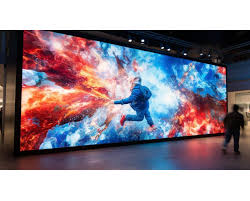
Environmental resilience is paramount for outdoor LED displays that must endure rigorous weather conditions. IP65 or higher ingress protection ratings are standard, ensuring dust-tight and water-resistant performance. Materials used in enclosures are UV-resistant and corrosion-proof to maintain structural integrity and visual quality over years of exposure.
Sustainability considerations have recently become integral to LED display manufacturing. Companies are increasingly optimizing supply chains to reduce carbon footprints and employing recyclable materials during assembly. Energy-efficient driver ICs and power management systems further contribute to lowering operational energy consumption without compromising brightness or color fidelity.
In summary, state-of-the-art LED display manufacturing integrates superior LED chip technologies, tight mechanical tolerances, advanced thermal designs, rigorous quality assurance, and intelligent image processing to produce displays that are visually stunning, reliable, and energy efficient. As international standards evolve and customer expectations rise, manufacturers must continue innovating through materials science, automation, and system integration.
For stakeholders investing in LED display technologies, understanding the interplay of these factors ensures informed decisions yielding maximum ROI and user satisfaction. Industry standards such as IEC 62717 for LED modules, VESA display standards, and environmental certifications provide authoritative benchmarks to guide procurement and design choices. With continuous technological advancements, the future of LED displays promises even greater resolutions, energy efficiencies, and smart capabilities catering to a broad spectrum of applications worldwide.













