

Advanced Insights into LED LCD Screen Manufacturing: Technical Parameters and Industry Best Practices
The LED LCD display industry has experienced significant technological advancement, driven by increasing demands for high-quality, energy-efficient, and durable screens across various sectors such as consumer electronics, automotive, medical, and digital signage. As a seasoned LED display engineer with years of experience in manufacturing and design, this article provides an authoritative overview of LED LCD screen manufacturing, focusing on key technical parameters, quality standards, and practical considerations to optimize performance and reliability.
Understanding LED LCD Display Technology
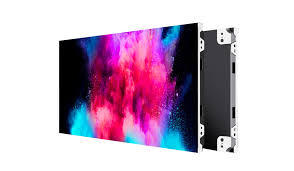
An LED LCD screen integrates an LED (Light Emitting Diode) backlight with an LCD (Liquid Crystal Display) panel. The LCD panel manipulates light to create images, while the LED backlighting provides a more efficient and consistent illumination source compared to traditional CCFL (Cold Cathode Fluorescent Lamp) backlights. This technological fusion improves contrast, color accuracy, and power consumption.
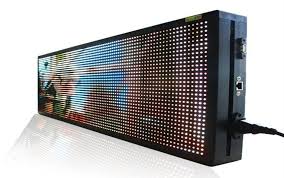
Key technical elements include:
- Backlight Type and Configuration: Edge-lit and direct-lit LEDs are the principal configurations. Edge-lit designs place LEDs along the screen edges, using light guides to distribute brightness evenly. Direct-lit or full-array employs LEDs behind the screen, enabling localized dimming, higher brightness, and better uniformity.
- Resolution and Pixel Density: Typical resolutions range from Full HD (1920x1080) to 4K UHD (3840x2160) and beyond. Pixel density, measured in pixels per inch (PPI), impacts clarity, especially for close viewing distances. High-end monitors reach 200+ PPI, critical for medical imaging and professional-grade applications.
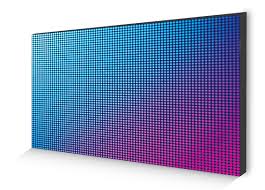
- Color Gamut and Accuracy: Modern LED backlights enhance the display's color gamut, often covering 90% or more of the DCI-P3 color space, which surpasses the standard sRGB gamut. Calibration using industry standards such as ITU-R BT.709 or BT.2020 ensures color fidelity essential for broadcast and cinematic content.
Manufacturing Process and Quality Control
Achieving superior LED LCD displays requires stringent process control and adherence to international standards such as ISO 9241 for ergonomics and ISO 13485 in medical devices manufacturing.
- Assembly Precision: Placement of LEDs and the liquid crystal matrix must ensure pixel alignment within micrometer tolerances. Automated optical inspection and pick-and-place machines enforce this accuracy.
- Backlight Uniformity Testing: Uniformity should ideally surpass 90% across the entire panel. Measurements using a goniophotometer assess luminous intensity and distribution, detecting hotspots or dim areas.
- Thermal Management: Heat dissipation is critical for longevity and consistent performance. Incorporating materials with high thermal conductivity (e.g., aluminum backplates) and designing heat sinks prevents degradation of LED brightness and LCD response time.
- Driver and Circuit Design: High refresh rates (120Hz or more) reduce motion blur in gaming and video applications. Integrating high-quality timing controllers (TCONs) and low-noise drivers is necessary to stabilize voltage and prevent artifacts such as ghosting.
Case Study: Enhancing Outdoor Readability through High Brightness LED LCD Displays
Outdoor LED LCD screens often face challenges from ambient light interference. To overcome this, manufacturers design displays with brightness levels exceeding 1000 nits (cd/m²), compared to the typical indoor display brightness of 250-500 nits. For instance, a commercial digital signage product implemented a direct-lit LED backlight combined with an anti-reflective coating and local dimming, achieving 1500 nits peak brightness while maintaining color accuracy over 95% of DCI-P3. Thermal sensors and adaptive brightness algorithms ensured energy efficiency and prolonged device life.
Industry Trends and Future Directions
With the rise of mini-LED and micro-LED technologies, LED LCD screens are transitioning into hybrid models that combine LED arrays with LCD matrices for superior contrast ratios and deeper blacks, rivaling OLED performance without its burn-in issues. These next-generation displays incorporate thousands of dimming zones, dramatically improving HDR (High Dynamic Range) output, following the HDR10+ and Dolby Vision standards.
Moreover, sustainability has become paramount. Manufacturers are increasingly adopting eco-friendly materials, energy-efficient backlighting, and recycling programs aligned with the EU’s WEEE Directive (Waste Electrical and Electronic Equipment).
Conclusion
The manufacture of high-performance LED LCD screens demands a comprehensive understanding of optical engineering, material science, and electronics integration. Through meticulous control over backlight design, pixel resolution, color calibration, thermal management, and quality assurance aligned with international standards, manufacturers can deliver displays that meet ever-stricter industry requirements.
For engineers and product designers, staying abreast of emerging technologies like mini-LED and micro-LED, as well as sustainable manufacturing practices, will be critical to shaping the future of LED LCD displays. A rigorous approach to testing, calibration, and validation remains the foundation of reliability and user satisfaction in this competitive and evolving market.
References:
1. International Electrotechnical Commission. IEC 62715: "Performance Standards for Flat Panel Displays" (2022).
2. Society for Information Display (SID). "Display Week Technical Digest" (2023).
3. ITU-R BT.2020, "Parameter values for ultra-high definition television systems for production and international programme exchange" (2015).
4. WEEE Directive, European Parliament (2012).
5. Manufacturer datasheets and in-house test reports from leading LED LCD panel suppliers.













