

Advanced LED Display Technologies: Applications, Advantages, and Emerging Trends in 2024
The LED display industry has witnessed remarkable advancements in recent years, driven by innovations in semiconductor technology, miniaturization, and dynamic content delivery. As of 2024, LED (Light Emitting Diode) displays remain the cornerstone of modern visual communication, spanning diverse sectors such as digital signage, broadcast, transportation, sports venues, and immersive entertainment. This article delves into the practical applications, advantages, prevalent challenges, and latest trends shaping the LED display landscape, supported by technical parameters and industry standards.
Practical Applications of LED Displays
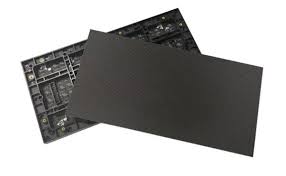
LED displays are widely leveraged across indoor and outdoor environments, tailored specifically through pixel pitch, brightness, and panel design to meet application demands:
- Retail and Advertising: Outdoor LED billboards with pixel pitches as fine as 2.5mm enable crisp imagery, even under direct sunlight, by achieving brightness levels exceeding 7,000 nits (cd/m²). Indoor narrow-pitch LED walls, with pitches as small as 0.9mm, offer high-resolution visuals for immersive brand storytelling.
- Broadcast and Studio: LED video walls replace traditional green screens by delivering realistic backgrounds with refresh rates up to 3840Hz, preventing flicker under slow-motion camera operation, per SMPTE ST 2110 standards.
- Transportation and Public Information: LED screens at airports and train stations provide dynamic scheduling data, leveraging ultra-high brightness modules (>5,500 nits) and robust IP65-rated enclosures for weather resistance.
- Sports and Entertainment: Massive stadium displays with modular LED panels employ pixel pitches ranging from 3.9mm to 10mm, supporting HDR content and 16-bit grayscale for lifelike spectator experiences.
- Corporate and Conference Solutions: Seamless LED video walls have become essential for presentations and video conferencing, benefiting from LED models with ultra-thin designs and refresh rates above 3000Hz to ensure smooth visuals.
Advantages of LED Display Technology
LED displays outperform many conventional display technologies, such as LCD and projection, for several reasons:
- High Brightness and Contrast Ratios: With brightness capabilities exceeding 10,000 nits for outdoor models, LED panels display vibrant content even in direct sunlight. Contrast ratios can reach up to 100,000:1 due to the direct light emission from individual diodes.
- Wide Viewing Angles: Typically greater than 160°, LED displays maintain consistent color and luminance across broad viewing zones, enhancing audience engagement.
- Energy Efficiency and Longevity: Advances in gallium nitride (GaN) LEDs have improved power efficiency by up to 30% over legacy products. High-quality diodes boast lifespans of 100,000 hours or more at reduced brightness levels, minimizing operational costs.
- Modularity and Scalability: LED panels are inherently modular, allowing custom installation sizes from small retail displays to expansive stadium walls without visible seams, as specified in industry standards such as IEC 62471 for photobiological safety.
- Fast Refresh Rates and Color Accuracy: Refresh rates frequently surpass 3000Hz to eliminate flicker, indispensable for broadcast applications, enabling compelling dynamic content display.
Common Challenges and Solutions
While LED display technology has matured significantly, several issues warrant attention:
- Thermal Management: High brightness levels generate substantial heat, potentially reducing component lifespan. Implementing efficient heat dissipation strategies, such as aluminum heat sinks and active ventilation, is crucial.
- Calibration and Uniformity: Achieving uniform brightness and color across large video walls often requires sophisticated calibration systems using spectrometers and photodiodes to balance intensity and color temperature.
- Pixel Failure and Maintenance: Dead or stuck pixels can degrade display quality. Advanced maintenance protocols including remote diagnostics and hot-swap module replacements minimize downtime.
- Ambient Light Interference: Despite high brightness, reflections and environmental conditions may impair visibility. Anti-glare coatings and customized optical films help mitigate these effects.
- Cost Considerations: Initial investment remains significant, especially for microLED and ultra-fine pitch displays, although total cost of ownership decreases with advancements in durability and energy savings.
Emerging Trends in LED Display Technology
The industry is rapidly evolving, influenced by innovations and market demands:
- MicroLED Displays: Offering pixel sizes below 100 microns, microLED technology promises unrivaled resolution, brightness, and energy efficiency. Major manufacturers are commercializing microLED panels for premium home cinema and augmented reality (AR) applications.
- Flexible and Transparent LEDs: Flexible substrates enable curved and wearable LED screens, while transparent LED panels facilitate see-through advertising in retail storefronts without obstructing natural light.
- AI-Driven Content and Maintenance: Integration of artificial intelligence (AI) enhances real-time content optimization based on audience demographics and automates fault detection, extending operational uptime.
- Sustainability Focus: Eco-friendly materials, recyclability, and energy-saving algorithms align LED manufacturing with global environmental standards such as RoHS and REACH.
- Higher Dynamic Range and Color Volume: New materials and driver ICs enable HDR content with wider color gamuts compliant with BT.2020 standards, delivering enriched visual experiences.
Conclusion
LED display technology continues to redefine the boundaries of visual media, combining high performance, adaptability, and innovative features tailored for diverse applications. By addressing inherent challenges and embracing emerging trends like microLEDs and AI-enabled systems, manufacturers and integrators are enhancing user experience and sustainability. Adhering to international standards such as IEC 60598 (lighting) and SMPTE ensures safety and interoperability, fostering trust and widespread adoption. Professionals seeking to harness the power of LED displays must consider specific use-case requirements, balancing cost, technical specifications, and maintenance strategies to achieve optimal outcomes.
Authoritative References:
- International Electrotechnical Commission (IEC) standards: IEC 62471 for photobiological safety, IEC 60598 for lighting equipment
- Society of Motion Picture and Television Engineers (SMPTE) ST 2110 standards
- "Light Emitting Diode Display Technology" by Wood and Ahearn, IEEE Spectrum, 2023
- MarketsandMarkets LED Display Market reports, 2024
- Recent whitepapers from industry leaders like Samsung, LG Display, and Nichia Corporation
These combined factors reinforce LED displays as a fundamental pillar of modern digital communication, poised to evolve with next-generation technology well beyond 2024.













