

Advanced Insights into LED LCD Screen Manufacturing: Technology, Standards, and Best Practices
The LED LCD screen manufacturing industry has evolved exceptionally in recent years, driven by advances in display technology, stringent quality standards, and increasing demand for high-performance visual solutions. As a professional LED display engineer, this article delves deeply into the technical parameters, manufacturing processes, and industry best practices, imparting authoritative insights valuable for professionals, manufacturers, and technology enthusiasts worldwide.
Introduction
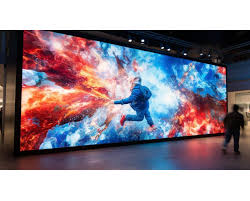
LED LCD (Light Emitting Diode Liquid Crystal Display) technology is widely utilized in various sectors—ranging from consumer electronics such as smartphones, TVs, and monitors, to industrial applications such as digital signage and medical imaging. Unlike traditional LCDs, which use cold cathode fluorescent lamps (CCFLs) for backlighting, LED LCDs employ LEDs, offering higher brightness, improved energy efficiency, and enhanced color accuracy. In the competitive global market, adhering to precise manufacturing standards and optimizing key parameters are pivotal for achieving superior display performance and long-term reliability.
Main Body
1. Fundamental Technology Overview
LED LCD panels consist of two main components: the liquid crystal layer, responsible for controlling light polarization, and the LED backlight system, which illuminates the display. There are two dominant LED backlighting methods—edge-lit and direct-lit (full-array)—each with advantages:
- Edge-lit designs embed LEDs around the panel's perimeter, allowing ultra-thin form factors but challenging uniform brightness control.
- Direct-lit systems place LEDs uniformly behind the panel, delivering superior brightness and contrast, though at increased thickness and cost.
The LED backlight directly influences parameters such as luminance (typically 200–1000 nits for consumer displays; up to 2000 nits for professional-grade displays), color gamut (measured as a percentage of NTSC or DCI-P3 standards), and energy efficiency (quantified by power consumption metrics related to luminance output).
2. Critical Manufacturing Parameters and Quality Control
Manufacturing LED LCD displays demands stringent control over multiple parameters:
- Pixel Pitch and Resolution: Pixel density, measured in pixels per inch (PPI), impacts clarity and image sharpness. For example, 4K UHD panels have pixel pitches as low as 0.15mm, requiring precision alignment during assembly.
- Color Accuracy and Calibration: Applying International Electrotechnical Commission (IEC) standards (IEC 61966-2-1 sRGB), manufacturers conduct factory calibration for color temperature (6500K target), gamma curves (2.2 standard), and gamut coverage exceeding 90% AdobeRGB or DCI-P3 for high-end displays.
- Response Time and Refresh Rates: LCD liquid crystal response times generally range from 1ms (for gaming monitors) to tens of milliseconds (for general displays). Refresh rates commonly are 60Hz to 240Hz depending on application, with higher rates increasingly supported by advanced driving electronics.
- Defect Detection: Automated Optical Inspection (AOI) and Electroluminescent (EL) testing identify defects such as dead pixels, mura (uneven brightness), and backlight leakage. The Acceptable Quality Limit (AQL) for pixel defects typically follows international standards like ISO 2859-1.
3. Industry Standards and Certifications
Adherence to international standards ensures reliability and customer confidence:
- ISO 9241-307: Ergonomic requirements related to visual display terminals, focusing on resolving power, low flicker, and glare reduction.
- RoHS and REACH: Environmental directives restricting hazardous substances and ensuring sustainability in manufacturing processes.
- DisplayHDR: VESA’s certification validating high dynamic range performance in LED LCD displays, with levels ranging from DisplayHDR 400 to DisplayHDR 1400 and beyond, indicating peak brightness, black level, and color fidelity capabilities.
4. Emerging Trends and Innovations
The industry is witnessing ongoing research targeting higher dynamic range, flexible displays, and mini-LED as a backlighting improvement. Mini-LED technology, involving densely packed small LEDs, enhances local dimming precision and contrast, often rivaling OLED displays in visual performance while maintaining longevity and cost-effectiveness.
Conclusion
Manufacturing high-quality LED LCD screens represents a complex symbiosis of advanced technology, meticulous process control, and adherence to global standards. Success in this space demands not only mastering core technical parameters such as brightness, color accuracy, resolution, and reliability but also embracing innovations like mini-LED backlighting to meet ever-growing consumer and industrial demands. As the display market continues to expand and diversify, engineers and manufacturers must remain vigilant and adaptable, employing rigorous testing and adopting evolving standards to maintain excellence and credibility in their products.
References:
- VESA DisplayHDR Standard, https://vesa.org/
- IEC 61966-2-1:1999, Multimedia systems and equipment – Colour measurement and management
- ISO 9241-307, Ergonomics of human-system interaction – Part 307: Analysis and compliance test methods for pixel defects
- RoHS Directive 2011/65/EU
- Barten, P.G.J., "Contrast Sensitivity of the Human Eye and Its Effects on Image Quality," SPIE Optical Engineering Press, 1999.













