

Advanced LED Display Manufacturing: Technical Insights and Industry Standards for Optimal Performance
In the dynamic field of LED display manufacturing, understanding the intricate balance between design, technology, and production standards is essential for delivering high-quality, durable, and visually compelling products. As an experienced LED display engineer, I aim to provide a comprehensive overview grounded in industry best practices, technical parameters, and authoritative standards that shape the manufacture of LED LCD screens globally.
Materials and Component Selection
The choice of materials significantly affects the performance and longevity of LED displays. High-grade Gallium Nitride (GaN) LEDs remain the preferred choice for red, green, and blue emitters due to their superior luminous efficiency and longevity, often exceeding 100,000 operational hours under optimal conditions. For the LCD backlighting layer, manufacturers use LED edge-lit or direct-lit configurations depending on the application – direct-lit exhibits higher brightness (up to 1500 nits for commercial displays) and superior uniformity, whereas edge-lit maximizes thinness and energy efficiency.
Pixel Pitch and Resolution
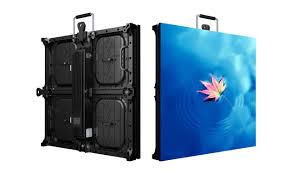
Pixel pitch, the distance between the centers of adjacent pixels, is a critical parameter impacting image clarity and viewing distance. Displays intended for close proximity viewing typically utilize fine pixel pitches ranging from 0.8mm to 2.5mm, while large-scale outdoor displays employ pitches exceeding 6mm to achieve sufficient visibility over long distances. For instance, a fine-pitch display intended for indoor use may use a pixel pitch of 1.2mm to render ultra-high-definition content with superior color reproduction and image sharpness.
Thermal Management Strategies
Effective heat dissipation remains paramount, as excessive temperatures degrade LED lifespan and performance. Industry-standard practices incorporate aluminum heat sinks with thermally conductive adhesives and incorporate PCB design with high thermal conductivity substrates such as metal core PCBs (MCPCBs). Passive cooling methods are augmented with active ventilations in high-brightness applications, maintaining operating temperatures within 25-35°C to ensure reliability.
Panel Calibration and Color Accuracy
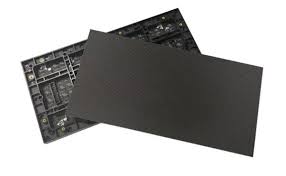
Uniformity and color accuracy are achieved through meticulous panel calibration using colorimeters and advanced software tools. Accurate calibration conforming to color standards such as Rec. 709 for HD content or Rec. 2020 for UHD HDR displays ensures consistent performance across displays. Calibration adjusts parameters like gamma correction, white balance, and luminance to meet demanding visual criteria. The utilization of quantum dot enhancement films (QDEF) in LCD backlighting improves color gamut significantly, enabling up to 90% coverage of DCI-P3 color space, a standard in cinematic displays.
Standards and Compliance
Manufacturers adhere to international standards such as IEC 62471 for photobiological safety and ISO 9241 for ergonomics of visual display terminals to ensure user safety and comfort. Additionally, compliance with RoHS directives and REACH regulations guarantees environmental safety in material composition. For outdoor displays, IP rating (commonly IP65 or higher) certifies protection against dust and water ingress, crucial for long-term field deployment.
Advances in Display Drivers and Signal Processing
Modern LED displays integrate specialized System-on-Chip (SoC) drivers that optimize refresh rates (commonly 3840Hz or higher) to mitigate flicker and enhance display smoothness. Signal processing algorithms compensate for ambient light variations and improve contrast ratio—often exceeding 5000:1 in modern panels, contributing to vivid, lifelike imagery.
Quality Assurance and Testing Protocols
Comprehensive testing throughout production ensures mechanical integrity, optical performance, and electrical safety. Tests include high-temperature and humidity endurance, vibration, and shock resistance, utilizing industry-grade environmental chambers. Optical tests measure luminance uniformity, color consistency, and pixel defect rates, with acceptable limits set by standards such as JEITA CP-4702 for defect classification.
By applying these advanced manufacturing techniques and adhering to rigorous standards, LED displays achieve exceptional quality, longevity, and energy efficiency. The result is a versatile range of LED-based displays catering to various industries from advertising, broadcasting, to control rooms and immersive digital environments.
As LED technology evolves, manufacturers continue to push innovation frontiers focusing on miniaturization, power optimization, and enhanced image fidelity, ultimately contributing to the global demand for more immersive and reliable display solutions.













