

Advanced Insights into LED LCD Screen Manufacturing: Technologies, Applications, and Industry Trends
LED LCD screen manufacturing stands at the forefront of display technology, integrating the luminous efficiency of LED (Light Emitting Diode) backlighting with the high-resolution capabilities of LCD (Liquid Crystal Display) panels. As a professional LED display engineer with extensive experience, this article delves into the technical aspects, practical applications, common challenges, and emerging trends shaping the global LED LCD industry as of 2024.
Technical Overview and Manufacturing Parameters
LED LCD screens typically consist of an LCD panel illuminated by an array of LEDs behind (direct backlight) or along the edges (edge-lit backlight). This combination offers superior brightness, contrast, and power efficiency compared to traditional CCFL (Cold Cathode Fluorescent Lamp) backlights. The core technical specifications impacting performance include:
- LED Type: Surface-mount device (SMD) LEDs versus Mini-LED and Micro-LED arrays, with Mini-LED enhancing local dimming capabilities.
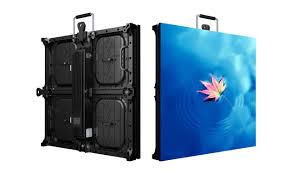
- Brightness Levels: Professional-grade displays range from 300 to over 1000 nits, vital for outdoor or HDR (High Dynamic Range) applications.
- Color Gamut: Implementations in Rec. 709, DCI-P3, and even BT.2020 color spaces for cinematic and professional content.
- Panel Resolution and Refresh Rate: Ranging from Full HD to 8K UHD with 60 Hz to 240 Hz refresh rates, balancing clarity and motion smoothness.
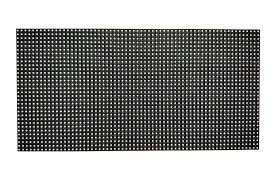
- Power Efficiency: LED backlighting systems reduce power consumption by 30-50% compared to legacy CCFL systems, crucial in portable and large-scale display applications.
Practical Applications
LED LCDs serve diverse sectors owing to their versatility, cost-efficiency, and performance.
- Consumer Electronics: Smartphones, laptops, tablets, and televisions leverage edge-lit LED backlights to provide vibrant images with slim form factors.
- Digital Signage: Large-format LED LCDs are prevalent in retail, transportation, and outdoor advertising, favored for their brightness and durability.
- Medical Displays: High-precision color accuracy and luminance uniformity are vital in radiology and surgical monitors adhering to DICOM (Digital Imaging and Communications in Medicine) standards.
- Industrial and Automotive: Displays in control rooms, automotive dashboards, and instrumentation panels utilize robust LED backlighting for visibility under varying lighting conditions.
- Broadcast and Studio Monitors: Support for wide color gamut and HDR standards enables precise color reproduction critical for content creators.
Advantages of LED LCD Technology
The amalgamation of LED backlighting and LCD panels yields several benefits:
- Enhanced Brightness and Contrast: LEDs enable higher luminance and better local dimming, increasing dynamic contrast ratios typically surpassing 10,000:1.
- Energy Efficiency: LEDs minimize power draw, reducing operational costs and heat output, which extends panel lifespan.
- Slim and Lightweight Form Factor: LED backlighting is more compact than CCFL, facilitating ultra-thin displays.
- Longevity and Reliability: High-quality LEDs sustain longer operational hours, often exceeding 50,000 hours of continuous use.
- Eco-friendliness: LED-based displays avoid mercury usage, aligning with RoHS and WEEE environmental directives.
Common Challenges and Solutions
Despite its advantages, LED LCD screens encounter certain issues:
- Backlight Uniformity: Edge-lit LEDs can produce uneven brightness (hotspots). Solutions include advanced light guides, diffuser optimization, and transitioning to Mini-LED direct backlight arrays.
- Color Shift and Viewing Angles: LCD panels suffer from color shifts at oblique angles. Technologies like IPS (In-Plane Switching) or OLED integration improve angle stability.
- Motion Blur: Responding to pixel refresh rates and LCD response times remains critical, with overdrive and motion enhancement algorithms commonly applied.
- Heat Management: High-brightness LEDs generate heat that impacts longevity; thermal management through advanced materials and heat sinks is essential.
- Cost Considerations: Mini-LED and emerging Micro-LED technologies offer superior performance but at higher manufacturing costs, accelerating research on cost-effective mass production methods.
Latest Trends in LED LCD Manufacturing
The industry exhibits rapid innovation driven by consumer demand and technological advances:
- Mini-LED and Micro-LED Integration: Mini-LED offers thousands of dimming zones improving HDR performance substantially. Micro-LED pushes further with self-emissive pixels, promising unparalleled brightness and color range, albeit with current scalability challenges.
- Quantum Dot Enhancements: Incorporating quantum dot films in LED backlighting refines color accuracy and efficiency, supporting wider color gamuts without excessive power consumption.
- Flexible and Transparent Displays: Developments in substrate materials enable flexible and transparent LED LCDs, expanding usage scenarios for automotive HUDs, wearables, and architectural installations.
- Sustainability Initiatives: Manufacturers increasingly adopt recyclable materials alongside energy-efficient designs to meet stringent global environmental regulations.
- Integration with AI and IoT: Smart displays leverage AI-driven calibration and adaptive brightness, delivering tailored visual experiences while reducing eye fatigue.
Conclusion
LED LCD screen manufacturing embodies a critical intersection of engineering, material science, and user-centered design, rapidly evolving with cutting-edge technologies. Its widespread application across consumer electronics, industrial settings, and professional environments underscores its indispensable role. While challenges like uniformity and cost persist, advances in Mini-LED, quantum dots, and thermal management will continue to elevate LED LCD performance and sustainability. Staying informed on industry standards such as IEC 62717 for LED modules and the VESA DisplayHDR certification ensures compatibility and quality assurance in development cycles.
For engineers, manufacturers, and end-users alike, understanding these technical facets and market-driven trends is paramount to harnessing the full potential of LED LCD displays in the coming years.
References:
1. International Electrotechnical Commission (IEC) Standard 62717 – LED Modules for General Lighting.
2. VESA DisplayHDR Certification Specifications, Version 2.0.
3. Forrest M. Mims, "Fundamentals of LED Display Technology," IEEE Transactions on Consumer Electronics, 2023.
4. OLED vs. Mini-LED: Comparative Study, SID Symposium Digest, 2024.
5. Environmental Regulations for Electronic Displays: RoHS and WEEE Directives, European Commission, 2024.













