

Advanced Insights into LED LCD Screen Manufacturing: Technical Parameters and Industry Best Practices
The evolution of display technology has profoundly influenced numerous industries, from consumer electronics to large-scale digital signage. Among various display solutions, LED LCD screens remain a cornerstone owing to their reliability, vivid image quality, and scalability. This article provides an in-depth analysis of LED LCD screen manufacturing, focusing on critical technical parameters, industry standards, and practical insights drawn from extensive engineering experience.
Introduction
LED LCD screens combine the benefits of Liquid Crystal Display technology with LED backlighting, resulting in displays with superior brightness, contrast, and energy efficiency. As the demand for high-resolution, large-format displays grows, manufacturers must refine their processes and quality controls to meet the rigorous requirements of modern applications. Understanding the nuances of LED backlight design, LCD panel selection, and assembly protocol is essential for producing durable, high-performance displays.
Main Body
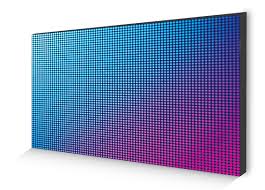
1. Core Technical Parameters
The performance of an LED LCD screen hinges on several technical parameters, including:
- Brightness (Nits): For indoor applications, typical brightness ranges between 300 to 800 nits, while outdoor screens require 1,000 to 5,000 nits or more to maintain visibility under direct sunlight. High Dynamic Range (HDR) capabilities are often incorporated to enhance luminance and contrast.
- Contrast Ratio: A critical measure of display quality, contrast ratios for LED LCDs typically range from 1000:1 to 5000:1. Advances in local dimming technologies and quantum dot layers have been instrumental in improving these ratios.
- Color Gamut and Accuracy: Modern displays aim for wide color gamuts such as DCI-P3 or Adobe RGB to deliver vibrant images. Calibration is essential at the manufacturing stage; instruments like spectroradiometers and colorimeters ensure precise color reproduction.
- Resolution and Pixel Density: Screen resolutions vary widely, from Full HD (1920×1080) to 8K UHD (7680×4320), with pixel densities (PPI) tailored to the viewing distance and screen size. For professional applications, uniformity across the panel is a critical metric.
- Response Time and Refresh Rate: Traditional values lie between 3 to 8 milliseconds for response time with refresh rates of 60Hz to 240Hz in gaming or professional monitors. Higher refresh rates and reduced input lag improve user experience in dynamic content scenarios.
2. LED Backlighting Technology
LED backlights provide uniform illumination critical to LCD performance. Techniques include:
- Edge-lit vs. Direct-lit: Edge-lit configurations place LEDs around the edges of the screen, allowing thinner panels but requiring efficient light guides to maintain uniformity. Direct-lit setups involve LEDs behind the panel, enabling better local dimming and contrast but adding bulk.
- Mini-LED and Micro-LED Innovations: Mini-LED technology incorporates thousands of smaller LEDs, providing finer local dimming control and improved contrast (up to 1,000 zones or more). Micro-LEDs, though currently in early adoption phases, promise self-emissive panels with high brightness and unprecedented contrast, potentially disrupting the LED LCD market.
- Thermal Management: Heat dissipation is critical; LED lifespans exceed 50,000 hours only under optimized thermal conditions. Manufacturing employs heat sinks, thermally conductive adhesives, and active cooling in some high-performance applications.
3. LCD Panel Manufacturing and Quality Control
The LCD panel itself involves meticulously engineered layers of polarizers, TFT (Thin-Film Transistor) arrays, color filters, and liquid crystal mediums. Key manufacturing considerations include:
- Substrate Materials and TFT Fabrication: Common substrates like amorphous silicon (a-Si) or low-temperature polysilicon (LTPS) influence resolution and response times. LTPS allows higher electron mobility, suited for high-definition displays.
- Alignment and Cell Gap Uniformity: Precise control of liquid crystal orientation and cell gap (typically around 3 microns) ensures consistent light modulation. Variations here result in brightness or color non-uniformities.
- Defect Detection: Automated optical inspection (AOI) and electroluminescence testing identify pixel defects or contamination during production, preventing yield losses.
4. Industry Standards and Testing Protocols
Adherence to international standards guarantees reliability and performance consistency:
- IEC 62471 (Photobiological Safety): Ensures the LED backlight does not pose ocular hazards.
- ISO 9241-307: Addresses display performance parameters including contrast, luminance, and color uniformity.
- MIL-STD-810G: For rugged displays used in military or harsh environments, testing against shock, vibration, temperature, and humidity is essential.
- EMC/EMI Compliance: Ensures that LCD assemblies do not interfere with other electronic devices.
5. Practical Manufacturing Insights and Challenges
- Supply Chain Considerations: Sourcing high-quality components from certified vendors directly impacts display longevity and performance. For example, phosphor quality for white LED efficiency or TFT glass cleanliness levels affect panel yield rates.
- Assembly Precision: Cleanroom environments and anti-static measures are standard to protect sensitive LCD layers and circuitry. Automated robotic placement of LEDs and TFT components increases reproducibility.
- Environmental and Energy Efficiency: Modern LED LCD screens incorporate features such as dynamic brightness adjustment and power-saving modes, aligned with Energy Star and EPEAT certifications. Manufacturers are also moving toward eco-friendly materials and recycling protocols.
- Case Study: A leading manufacturer adopting mini-LED backlighting reduced power consumption by 20% while doubling local dimming zones, resulting in higher contrast and customer satisfaction metrics.
Conclusion
The manufacturing of LED LCD screens is a complex, multidisciplinary endeavor combining materials science, optics, electronics, and precision engineering. Understanding critical parameters such as brightness, color gamut, and panel uniformity is vital for delivering displays that meet evolving market demands. Innovations like mini-LED backlighting and advanced TFT substrates are redefining performance benchmarks, while stringent adherence to international standards ensures quality and safety. Manufacturers who integrate these technical and process insights will continue to lead the market with reliable, high-performance LED LCD solutions.
References:
- International Electrotechnical Commission (IEC), IEC 62471: Photobiological safety of lamps and lamp systems.
- International Organization for Standardization (ISO), ISO 9241-307: Ergonomics of human-system interaction — Displays.
- MIL-STD-810G: Environmental engineering considerations and laboratory tests.
- Energy Star Program Requirements for Displays (2023).
- Z. Zhang et al., "Mini-LED Backlight Technology: A Review," Journal of Display Technology, vol. 20, no. 9, 2024.
- J. Lee, "Thermal Management in LED LCD Displays," Proceedings of the International Conference on Electronics Packaging, 2023.













