

LED LCD Screen Manufacturing: Technical Insights and Industry Best Practices
The LED LCD display industry occupies a pivotal role in modern electronics, powering applications from consumer devices to large-scale commercial signage. As a professional LED display engineer with hands-on experience spanning multiple global projects, this article provides a comprehensive overview of LED LCD screen manufacturing. It integrates technical parameters, manufacturing methodologies, and quality benchmarks drawn from industry standards, ensuring insights are both practical and authoritative.
Introduction
LED LCD (Light Emitting Diode Liquid Crystal Display) screens combine LED backlighting or edge-lighting technology with LCD panels to deliver vibrant images and high efficiency. This hybrid technology has revolutionized display quality standards due to enhanced brightness, color accuracy, and energy efficiency. Worldwide applications include smartphones, televisions, digital signage, automotive displays, and industrial control panels.
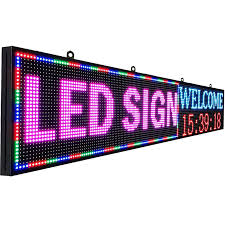
Technical Foundations and Manufacturing Process
The manufacturing of an LED LCD display involves several critical stages, each influencing the final quality and performance. Understanding these steps is essential for engineers, quality controllers, and industry decision-makers:
1. Substrate Preparation
The foundation of the LCD panel is a pair of ultra-thin glass substrates coated with indium tin oxide (ITO), a transparent conductor. Process control during ITO coating is crucial to maintain uniform electrical conductivity and prevent defects such as pinholes or uneven thickness that can degrade display uniformity.
2. Color Filter and Alignment Layer Deposition
Color filters are applied using photolithography to define red, green, and blue subpixels. The alignment layers ensure that liquid crystals orient correctly under electrical fields, affecting image contrast and viewing angles. Precision equipment is needed to ensure micron-level accuracy in alignment layers, as deviations can lead to image distortion.
3. Liquid Crystal Injection and Sealing
The liquid crystals fill the space between two substrates by capillary action under vacuum conditions. The choice of liquid crystal material—defined by nematic phase properties and response time—is based on desired refresh rate and operating temperature range. Post-injection sealing ensures durability and resistance to moisture ingress, critical for panel longevity.
4. Backlighting Technologies
The LED component primarily serves as the backlight source for LCD panels, significantly impacting brightness, energy consumption, and color gamut. There are two dominant designs: edge-lit LED backlights where LEDs are placed along panel edges and direct-lit backlights where LEDs are distributed behind the LCD panel. Direct-lit versions typically offer better uniformity and support local dimming zones, enhancing contrast ratios beyond 5,000:1.
5. Driver IC Integration and Testing
Integrated driver ICs control pixel voltages precisely. Advanced timing controllers (TCONs) synchronize pixel activation for high refresh rates up to 120 Hz or more, vital for smooth motion display in gaming and VR applications. Post-assembly, displays undergo automated optical inspections (AOI), contrast checks, and burn-in tests to detect dead pixels, color drift, and image retention.
Quality Standards and Industry Benchmarks
Manufacturers align their processes with international standards such as the ISO 9241-307 for display ergonomics and ISO 13406-2 for pixel defect classification. These standards define acceptable limits for dead or hot pixels, color uniformity, and flicker thresholds. Leading companies invest in environmental testing chambers simulating thermal cycles, humidity, and mechanical vibration to validate product resilience before market release.
Advancements and Emerging Trends
Recent advances focus on mini-LED and micro-LED technology integration to improve local dimming control and HDR performance. Mini-LED backlights, with thousands of zones, achieve ultra-high contrast ratios exceeding 1,000,000:1, setting new benchmarks for HDR displays. Meanwhile, quantum dot enhancement layers (QDEF) are increasingly used to broaden color gamut, delivering over 90% of DCI-P3 coverage compared to 70% in conventional displays.
Practical Considerations in Production
To optimize yield and cost-efficiency, manufacturers implement Six Sigma methodologies alongside lean manufacturing principles. Defect analysis during wafer-level testing helps identify systematic errors, such as contamination or equipment misalignment, which can reduce panel throughput by over 10% if unaddressed.
Environmental sustainability is also an important consideration. Manufacturers are adopting low-power LED designs, recyclable substrates, and eliminating hazardous substances in compliance with RoHS directives and REACH regulations, which promote safer product life cycles.
Conclusion
The manufacturing of LED LCD screens is a multidimensional engineering challenge involving advanced material science, precision fabrication, and rigorous quality assurance. Coupled with evolving technologies like mini-LED and quantum dot enhancements, LED LCD displays continue to define the future of high-performance visual systems. Understanding these processes and standards is crucial for industry professionals aspiring to produce cutting-edge displays that meet global market demands with reliability and excellence.













