

Advanced Techniques and Best Practices in LED Display Manufacturing: Ensuring Performance and Durability
In the rapidly evolving field of LED display manufacturing, achieving a balance between cutting-edge performance, durability, and cost-efficiency remains a focal challenge for engineers and manufacturers worldwide. The recent advancements have not only enhanced display quality but also expanded applications across industries such as advertising, transportation, sports events, and indoor visualization. Based on extensive industry experience and numerous project case studies, this article explores the core technical parameters, material selection, production processes, and quality control methods that define modern LED display engineering.
Comprehensive Understanding of LED Display Technologies
LED (Light Emitting Diode) displays have become indispensable due to their brightness, color rendering, and flexibility. The two dominant display types—direct-view LED (DV-LED) and LED-backlit LCD—each offer unique benefits depending on application requirements. DV-LED displays boast high luminance levels (often exceeding 1500 nits for outdoor use) and superior viewing angles (>160° horizontal and vertical), while LED-backlit LCDs provide finer pixel density and consistency, particularly in controlled indoor environments.
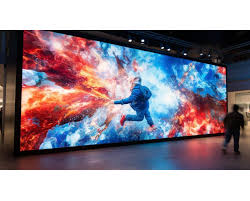
Achieving an optimal pixel pitch is vital. For outdoor displays, pitches typically range from 4 mm to 20 mm, balancing visibility at distance and cost, whereas indoor fine-pitch displays can reach pitches as tight as 0.7 mm to 2.5 mm, delivering high-resolution imaging needed for close-range viewing. For instance, the industry standard for high-end indoor applications often targets a pixel pitch of 1.2 mm, allowing for 4K or higher resolution content with minimal pixelation.
Material and Component Selection
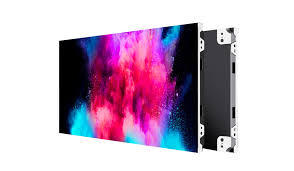
Material selection directly impacts display lifespan and performance stability. The LED chips themselves predominantly utilize gallium nitride (GaN) or indium gallium nitride (InGaN), known for their luminous efficacy and longevity. Brightness decay typically follows the L70 standard (70% of initial brightness) used by IEC 62717, and top-tier modules are engineered to maintain over 100,000 hours of operation.
Substrates and printed circuit boards (PCBs) must possess excellent thermal conductivity and structural integrity. High Tg (glass transition temperature) substrates such as FR4 with special thermal enhancement help maintain performance under prolonged heat stress, critical given LEDs' heat generation. Additionally, using SMD (surface-mount device) components ensures compact module design and superior mechanical reliability.
Optimized Manufacturing Processes
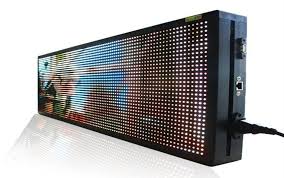
State-of-the-art manufacturing integrates automated pick-and-place, precise soldering (typically using reflow techniques), and rigorous optical alignment to guarantee uniform pixel placement and color consistency. The importance of controlling process parameters—such as solder paste volume, reflow temperature profiles (generally peaking between 220°C and 250°C), and pick accuracy within ±10 micrometers—cannot be overstated to reduce defects and enhance yield rates.
Reliability testing follows international standards such as IEC 62087 for power measurement and IEC 61747 for optical performance verification. Stress tests including thermal cycling, humidity exposure (IP65 or higher ratings for outdoor displays), vibration, and accelerated aging contribute to certifying long-term durability.
Furthermore, calibration and intelligent drive electronics—using Scalable Partially Parallel Drive (SPPD) or MBI series drivers—enable precise grayscale reproduction and refresh rates of 1920 Hz or higher, minimizing flicker observable to the human eye and ensuring content smoothness even during dynamic video playback.
Quality Assurance and Post-Production Validation
Robust quality control (QC) procedures encompass inline inspections via automated optical inspection (AOI) systems and functional testing under standardized lighting conditions (D65 illumination, 6500 K color temperature). This ensures all units comply with Design for Manufacturability (DfM) guidelines and meet customer-specific specifications.
Post-installation, LED displays are often calibrated to correct chromaticity and brightness uniformity using spectroradiometers and photometric cameras, adhering to Rec. 709 or DCI-P3 color spaces as applicable. Certification from authoritative bodies like Underwriters Laboratories (UL) or TÜV Rheinland further confirms compliance with electrical safety and operational standards.
Case Study Insight
A recent large-scale deployment involved an outdoor stadium LED display with a pixel pitch of 10 mm and 4500 nits peak brightness. Through implementing advanced heat dissipation techniques (integrating aluminum alloy chassis with airflow-optimized venting), the system sustained performance during peak summer conditions, demonstrating the criticality of thermal management integrated into mechanical design.
This project’s success echoed the findings of multiple industry reports which highlight that careful integration of thermal, electrical, and optical considerations results in significantly reduced maintenance costs and enhanced customer satisfaction.
Future Trends: Mini-LED and Micro-LED Integration
The industry is witnessing a gradual shift towards Mini-LED and Micro-LED technologies offering ultra-high contrast ratios (>1,000,000:1), HDR capability, and superior energy efficiency. While still maturing regarding mass manufacturing scalability, these technologies promise transformational improvements in display uniformity, lifespan, and dynamic range, opening new horizons for immersive visualization experiences.
In conclusion, manufacturing high-performance LED displays requires meticulous integration of advanced materials, precision processes, and rigorous quality control supported by international standards. Adopting these best practices guarantees displays that meet demanding performance criteria, withstand harsh operating environments, and deliver unparalleled visual experiences.
References
- IEC 62717: "LED modules for general lighting — Performance requirements"
- IEC 62087: "Methods of measurement for the power consumption of audio, video and related equipment"
- NEMA Standards Publication: "Outdoor LED Sign Performance and Maintenance"
- TÜV Rheinland Certification Guidelines for LED Displays
- "Thermal Management Techniques for High-Brightness LED Displays," Journal of Display Technology, 2023













