

Advanced Insights into LED LCD Screen Manufacturing: Techniques, Parameters, and Industry Standards
The LED LCD screen manufacturing industry has witnessed significant advancements over the past decade, combining cutting-edge technology with refined production techniques to meet the growing demand for high-quality displays worldwide. As an expert with extensive experience in LED and LCD technologies, this article provides a comprehensive overview of the manufacturing processes, technical parameters, and relevant industry standards that define today’s state-of-the-art LED LCD display systems.
Fundamentals of LED LCD Screen Technology
LED LCD screens are primarily liquid crystal displays (LCD) illuminated by light-emitting diodes (LEDs) instead of traditional cold cathode fluorescent lamps (CCFLs). This backlighting shift has notable advantages including energy efficiency, thinner panels, better uniformity, and enhanced color gamut, essential for applications spanning from consumer electronics to commercial signage.
Critical Manufacturing Processes
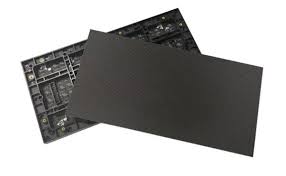
Manufacturing LED LCD screens involves several precise stages, starting from substrate preparation, thin film transistor (TFT) array fabrication, liquid crystal alignment, backlight unit (BLU) assembly, and final module integration.
- TFT Substrate Fabrication: The TFT layer controls individual pixels by regulating voltages to liquid crystal cells. Precision photolithography defines the semiconductor and conductive pathways on glass substrates. Industry norms typically call for pixel sizes ranging from 10–150 micrometers depending on resolution and screen size, with a standard aperture ratio exceeding 80% to optimize light transmission (SID – Society for Information Display Standards).
- Liquid Crystal Cell Assembly: Accurate spacers maintain a uniform cell gap, commonly between 3 to 6 micrometers, ensuring consistent optical response. Alignment layers made of polyimide polymers are rubbed to orient liquid crystal molecules consistently. Cleanroom environments (class 1000 or better) guarantee contamination mitigation, which is critical as particle defects can degrade display quality or cause dead pixels.
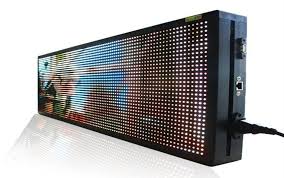
- Backlight Unit (BLU) Design: Modern LED LCD screens typically utilize either edge-lit or direct-lit backlight structures. Edge-lit designs use LEDs mounted along the panel edges, employing light guides to distribute illumination, advantageous for ultra-thin displays. Direct-lit units feature arrays of LEDs behind the panel, enabling local dimming applications for enhanced contrast ratios. The choice affects parameters such as brightness (measured in nits), uniformity, and color rendering index (CRI).
Key Technical Parameters and Performance Metrics
- Resolution and Pixel Density: Resolutions vary widely, with 4K UHD (3840×2160 pixels) becoming standard for premium monitors and TVs. Pixel density (PPI - pixels per inch) affects image sharpness; for handheld devices, values may surpass 400 PPI, while large-format displays prioritize resolution over PPI.
- Brightness and Contrast Ratio: Typical LED LCD panels achieve brightness levels from 300 to 1000 nits, with professional-grade displays exceeding this, especially in HDR contexts. Contrast ratios usually range from 1000:1 to 3000:1 in conventional LCDs; however, FALD (Full Array Local Dimming) systems with LED backlights can push this much higher.
- Color Accuracy and Gamut: LED backlights suit wide color gamut displays, often covering 90-100% of the DCI-P3 color space or higher. Calibration techniques and IC control algorithms ensure precise RGB subpixel rendering, crucial for broadcast and medical applications.
Industry Standards and Quality Assurance
Manufacturing processes adhere to internationally recognized standards such as ISO 9241 for visual ergonomics and IEC 62368-1 for product safety. Quality management follows procedures under ISO 9001 and, in certain cases, environmental compliance like RoHS and REACH. Moreover, display manufacturers align with vendor-independent test methodologies like VESA’s DisplayHDR certification, providing transparent evaluation of HDR performance.
Challenges and Innovations
Recent trends focus on minimizing power consumption, improving flexibility, and enhancing environmental sustainability. Innovations include the use of quantum dot enhancement films (QDEF) to boost color performance, advanced driver ICs for higher refresh rates (up to 240 Hz), and integration of mini-LED backlights enabling significantly improved dynamic range and local dimming precision.
Another critical advancement is the shift towards OLED and micro-LED alternatives for certain display segments, yet LED LCD remains dominant due to cost-efficiency and mature manufacturing ecosystems.
Conclusion
The LED LCD screen manufacturing industry combines meticulous engineering with evolving technological breakthroughs to produce displays that balance quality, efficiency, and cost. By adhering to stringent parameters and industry standards, manufacturers continuously elevate display performance to meet diverse market needs from large-scale digital signage to precision medical imaging. Understanding these technical details and trends empowers professionals and stakeholders to make informed decisions in product development and procurement, ensuring displays that offer superior user experiences globally.













