

Advanced Technical Insights into LED LCD Screen Manufacturing: Standards, Innovations, and Quality Control
The manufacturing of LED LCD screens represents a sophisticated blend of electronics engineering, materials science, and precision manufacturing processes. As display technology advances, understanding the technical parameters and industry standards becomes essential for professionals driving innovation and ensuring product reliability on a global scale.
At the core of LED LCD screen manufacturing lies the Liquid Crystal Display (LCD) panel integrated with LED backlighting. Unlike traditional cold cathode fluorescent lamp (CCFL) backlight modules, LED backlights offer superior brightness, energy efficiency, and color performance. The fundamental technical parameters that define LED LCD screens include pixel pitch, brightness (cd/m²), contrast ratio, color gamut (typically covering sRGB or AdobeRGB standards), response time, refresh rate, and viewing angle.
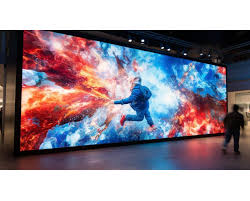
Pixel Pitch and Resolution
Pixel pitch, measured in millimeters, indicates the distance between individual pixels and directly correlates with resolution and sharpness. High-definition screens for professional applications often feature pixel pitches ranging from 0.3mm to 0.9mm. Achieving smaller pixel pitches requires precision placement of the Thin-Film Transistor (TFT) array and color filter manufacturing, executed in cleanroom environments compliant with ISO 14644 standards to prevent contamination.
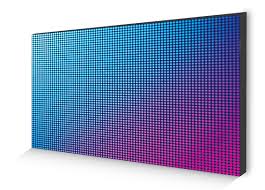
Backlighting Technology and Uniformity
The shift from CCFL to LED backlighting has been pivotal, offering enhanced brightness levels up to 1000 cd/m² or more for outdoor displays, and enabling features like local dimming which improves contrast ratios beyond 5000:1. LED backlight units utilize edge-lit or direct-lit configurations; direct-lit with full-array LEDs is preferred in high-end displays for superior uniformity and reduced halo effects. Quality control employs spectroradiometers and goniophotometers to assess luminance uniformity and color consistency in accordance with IEC 62717 standards.
Color Accuracy and Gamut
Color reproduction is critical, especially in applications such as medical imaging and graphic design. Manufacturers target wide color gamuts covering 95%-100% of the AdobeRGB or DCI-P3 color spaces. Calibration is performed using colorimeters and spectrophotometers adhering to CIE 1931 color space models, ensuring Delta E values remain below 2 for near-perfect color accuracy. Advanced LED LCD panels incorporate quantum dot technology to enhance color saturation and brightness further.
Response Time and Refresh Rate
Response times below 5 milliseconds help reduce motion blur, pivotal for gaming and video applications. Refresh rates of 60Hz are standard, but niche markets demand higher rates of 120Hz or even 240Hz. These parameters directly impact perceived smoothness of motion and are governed by the integrated timing controller (TCON) chip precision and the LCD’s liquid crystal material properties.
Viewing Angle and Optical Layers
Achieving wide viewing angles (typically 178° horizontally and vertically) involves using in-plane switching (IPS) or multi-domain vertical alignment (MVA) technologies. Optical films, such as anti-reflective coatings and brightness enhancement films, optimize light transmission and reduce glare, guided by standards like ASTM D4824.
Industrial Standards and Quality Assurance
Manufacturing LED LCD screens follows strict adherence to international quality standards including ISO 9001 for quality management systems and ISO 14001 for environmental management. Reliability testing encompasses thermal cycling, humidity exposure, and mechanical vibration tests per IEC 60068 series standards to ensure durability.
Industry Case Studies and Trends
Leading manufacturers such as Samsung Display and LG Display continually invest in next-generation processes like oxide TFT technology, which yields improved electron mobility and energy efficiency. Case studies reveal that incorporating artificial intelligence-driven optical calibration during production can reduce color variance by 30%. Additionally, mini and micro-LED backlighting technologies are breaking ground for next-step enhancements, offering unparalleled brightness control and lifespan.
In conclusion, the manufacturing of LED LCD screens is an intricate discipline requiring meticulous control over each stage—from material selection and photolithography to backlight engineering and final assembly. Continuous innovation aligned with stringent industrial standards ensures that LED LCD displays meet the diverse demands of global markets, delivering optimal performance in a wide range of applications including consumer electronics, medical visualization, aerospace, and digital signage.













