

Advancements and Practical Insights in LED LCD Screen Manufacturing: Applications, Challenges, and Emerging Trends
The global display technology landscape has witnessed significant transformations over the past decade, driven predominantly by the advancements in LED LCD (Light Emitting Diode Liquid Crystal Display) screens. As an experienced LED display engineer, this article aims to provide an in-depth analysis of LED LCD manufacturing processes, practical applications, advantages, common issues encountered in the industry, and the latest technological trends shaping its future.
Understanding LED LCD Technology
LED LCD screens combine liquid crystal displays with LED backlighting, distinguishing them from traditional LCDs that used CCFL (Cold Cathode Fluorescent Lamps). In LED LCD manufacturing, the liquid crystal layer modulates light, while LEDs provide the illumination source, either as edge-lit or direct-lit arrays. Key parameters influencing performance include:
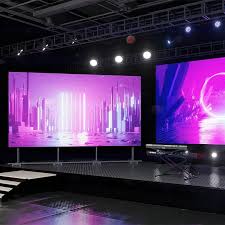
- Brightness: Typical LED LCD screens range from 250 to 1000 nits, enabling clear visibility across various lighting conditions.
- Contrast Ratio: Modern LED LCDs achieve ratios of 1000:1 to 5000:1, providing sharper differentiation between whites and blacks.
- Color Gamut: Using quantum dot enhancement films (QDEF), some LED LCDs cover up to 90% Rec. 2020, crucial for color-sensitive professional applications.
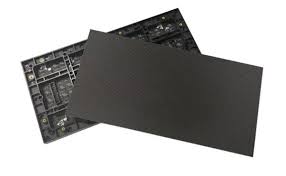
- Response Time: Typically 3-8 milliseconds, suitable for fast-motion video and gaming.
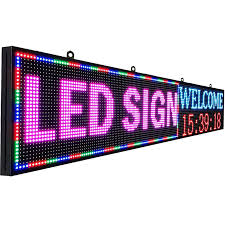
These technical specifications have steadily improved, enabling LED LCD screens to be deployed across multiple domains.
Practical Applications
LED LCD displays have vast applicability due to their balance of performance, cost, and durability:
1. Consumer Electronics: Smartphones, laptops, and large-format TVs frequently utilize LED LCDs for their high brightness, excellent color accuracy, and energy efficiency.
2. Industrial Displays: Outdoor monitoring systems and control panels leverage rugged LED LCDs with high brightness (above 1000 nits) to ensure visibility in sunlight.
3. Medical Imaging: Clinical-grade LED LCDs are designed to meet DICOM standards, ensuring high grayscale accuracy and low latency essential for diagnostic imaging.
4. Digital Signage and Advertising: High-brightness, large-size LED LCDs enable effective visual communication in retail, transport hubs, and public spaces.
5. Automotive Displays: Instrument clusters and infotainment systems rely on LED LCDs for their compact design, reliability, and sunlight readability.
Advantages of LED LCD Technology
Compared with OLED and traditional LCDs, LED LCDs present several benefits:
- Energy Efficiency: LED backlighting consumes less power and generates less heat, extending device longevity.
- Longevity & Stability: LED LCD panels maintain consistent luminance for over 50,000 hours, outperforming OLED counterparts in terms of burn-in resistance and lifespan.
- Cost-Effectiveness: Mass production and mature manufacturing processes lower costs while maintaining quality.
- Scalability: LED LCD technology adapts efficiently from small mobile screens to ultra-large video walls.
- Wide Operating Temperatures: Performance remains stable between -20°C to 60°C, suitable for diverse environments.
Common Problems and Mitigation Techniques
Despite their advantages, LED LCD screens face certain technical and operational challenges:
- Backlight Uniformity Issues: Local dimming zones may cause uneven brightness or “blooming.” Incorporating mini-LEDs with finer dimming zones helps reduce this effect.
- Light Leakage and Contrast Limitations: Despite improvements, black levels cannot always match OLED’s perfect blacks. Using advanced local dimming algorithms and higher contrast VA (Vertical Alignment) panels mitigate this.
- Color Shifts at Angles: TN (Twisted Nematic) panels exhibit color distortion when viewed off-axis, which IPS (In-Plane Switching) panels have largely resolved at some cost to response time.
- Temperature Sensitivity: Extreme temperature variations may affect LCD performance; therefore, manufacturers incorporate enhanced backlight modules and temperature compensation circuits.
- Blue Light Emission: Prolonged exposure poses eye strain; solutions include blue light filtering coatings and software-based reduction modes complying with IEC 62471 standards.
Latest Trends in LED LCD Manufacturing
As the industry advances rapidly, several promising innovations are influencing LED LCD technology’s trajectory:
- Mini-LED and Micro-LED Integration: Mini-LED backlighting, with thousands of local dimming zones, achieves superior contrast ratios and HDR (High Dynamic Range) performance, edging closer to OLED quality. Micro-LEDs, although costly currently, promise self-emissive benefits without burn-in, ideal for future hybrid LCDs.
- Quantum Dot Enhancement Films (QDEF): Embedding quantum dots within screen layers has revolutionized color accuracy and brightness, offering wider gamuts and energy savings.
- AI-Assisted Display Calibration: Machine learning algorithms optimize color, brightness, and contrast dynamically based on ambient conditions, improving viewer experience.
- Flexible and Curved LED LCDs: Enhanced substrate materials allow manufacturing bendable screens, expanding form factors for automotive and wearable applications.
- Sustainability and Eco-Friendly Materials: Industry standards (ISO 14001) are driving manufacturers to adopt recycle-friendly components and reduce hazardous substances, aligning with global environmental mandates such as RoHS and REACH.
Conclusion
LED LCD technology stands at the crossroads of performance, affordability, and versatility. While challenges such as uniformity and contrast limitations remain, ongoing innovations in mini-LED backlighting, quantum dot films, and AI integration continually elevate its capabilities. Across consumer electronics, industrial applications, medical devices, and automotive displays, LED LCDs demonstrate exceptional adaptability and reliability.
Manufacturing excellence today follows strict standards such as IEC 60598 for lighting and ISO 9241 for ergonomic display quality, ensuring LEDs are optimized for human use. Industry cooperation alongside government environmental regulations underscores a sustainable future.
As an engineer with over 15 years in LED display design and production, seeing these layered improvements firsthand reinforces the optimism for LED LCDs to remain a pivotal display technology well into the future.
References:
1. International Electrotechnical Commission (IEC) Standards - IEC 62471 (Photobiological safety of lamps and lamp systems), IEC 60598 (Luminaires).
2. Society for Information Display – Technical Reports on LCD/LED Technology.
3. U.S. Department of Energy – Energy Efficiency Standards for Displays.
4. SID (Society for Information Display) Journal, recent volumes (2022-2024).
5. Industry reports: DSCC (Display Supply Chain Consultants) – LED LCD market analysis.













