

Advanced Technologies and Manufacturing Processes in LED LCD Screen Production
In the dynamic world of display technology, LED LCD screens stand as a pivotal synthesis of light-emitting diode (LED) backlighting and liquid crystal display (LCD) panels. These hybrid displays have revolutionized numerous industries ranging from consumer electronics and automotive dashboards to medical imaging and large-scale public displays. This article dives into the state-of-the-art technologies, manufacturing processes, and quality standards that govern LED LCD screen production, providing insights for engineers, manufacturers, and technology enthusiasts alike.
Introduction
LED LCD screens combine the energy efficiency and brightness advantages of LED backlighting with the sharp image rendering capabilities of LCD technology. Over the last decade, continuous innovations have propelled these screens toward superior image quality, lower power consumption, and greater durability. With the global LED display market projected to surpass USD 20 billion by 2027 (MarketsandMarkets, 2023), understanding the manufacturing intricacies and technical details is crucial for stakeholders aiming to maintain competitive advantages and ensure high product reliability.
Main Body
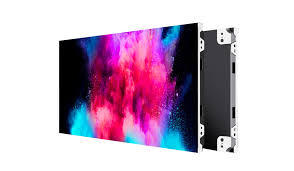
1. Core Manufacturing Technologies
The production of LED LCD screens involves integrating micro-LED or edge-lit LED backlights with multiple layers of LCD components. The key manufacturing technologies include:
- Backlight Unit (BLU) Assembly: The BLU is the heart of any LED LCD screen, providing uniform illumination for the LCD panel. Commonly, either direct-lit (full-array) or edge-lit LEDs are used. Direct-lit BLUs consist of an LED matrix directly behind the LCD panel, facilitating local dimming and improved contrast ratios. Edge-lit configurations, conversely, place LEDs along the edges with light guides distributing brightness. The choice impacts thickness, brightness uniformity, and cost.
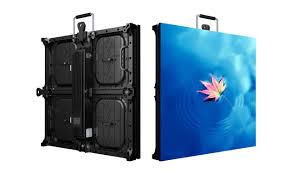
- Photolithography and Thin-Film Transistor (TFT) Array Fabrication: The LCD panel uses thin-film transistors for pixel control. TFT fabrication involves multiple photolithography steps on glass substrates, typically using amorphous silicon or low-temperature polysilicon, optimized for high resolution and response time.
- Color Filter and Liquid Crystal Layer Application: Precise alignment and deposition of color filters (RGB) and liquid crystal material are essential for accurate color reproduction and image clarity. Advanced vacuum-filling methods ensure minimal bubble presence and uniform cell gaps, often in the range of 3-5 micrometers for optimized viewing angles and contrast.
- Integration and Encapsulation: After assembling the LCD panel and BLU, the components are laminated with polarizers and protective glass. High-precision robotic systems ensure layer uniformity and adhesion, which are critical for durability and optical performance.
2. Technical Parameters and Quality Control
Several key technical parameters define the performance of LED LCD screens:
- Brightness: Modern LED LCDs typically achieve brightness levels from 300 to 1000 nits, with specialized displays reaching up to 1500 nits for outdoor use. High brightness is crucial for readability under ambient light conditions.
- Contrast Ratio: Direct-lit LED LCDs with local dimming can achieve contrast ratios exceeding 100,000:1. This parameter ensures deep blacks and vibrant images, approaching OLED display quality in selected applications.
- Color Gamut: Adherence to standards such as DCI-P3 and sRGB is common, with high-end LED LCD screens covering up to 95% DCI-P3, which enhances color fidelity for professional use.
- Response Time: Low response times (typically under 8 ms) minimize ghosting effects, essential for gaming, medical imaging, and fast-motion video.
- Durability: LED LCD screens are engineered for freshness and minimal brightness degradation throughout their life spans, commonly designed for 50,000 hours or more of continuous operation.
Strict quality control measures follow international standards such as the ISO 9241 (ergonomics of visual display terminals) and IEC 62368-1 (safety for audio/video equipment). Optical inspections detect dead pixels, uniformity tests verify illumination consistency, and environmental stress tests ensure resilience against humidity, temperature, and mechanical shocks.
3. Industry Case Study: Automotive Dashboard Displays
Automotive applications exemplify the convergence of demands on LED LCD screen manufacturing. These displays require exceptional brightness (up to 800 nits) to remain visible under direct sunlight, wide operating temperature ranges (-40°C to +85°C), and adherence to automotive standards such as AEC-Q100 for component reliability. Manufacturers employ bonding techniques such as optical clear adhesive (OCA) lamination to reduce reflections and improve durability, along with specialized anti-glare coatings. This case highlights how manufacturing innovations are tailored to rigorous use cases, enhancing safety and driver experience.
Conclusion
The manufacturing of LED LCD screens exemplifies a finely balanced integration of advanced materials science, semiconductor fabrication, optical engineering, and precision assembly. By leveraging cutting-edge backlight technologies, high-precision TFT fabrication, and stringent quality controls, manufacturers produce displays that meet and exceed modern consumer and industrial demands. With ongoing research focusing on mini-LED and micro-LED integration and flexible substrates, the future of LED LCD technology promises even greater image quality, energy efficiency, and form factor versatility. Industry professionals must stay updated on evolving international standards and emerging manufacturing innovations to maintain competitive excellence in this fast-growing market segment.
References:
- MarketsandMarkets. (2023). LED Display Market by Type, Application, and Geography - Global Forecast to 2027.
- International Organization for Standardization (ISO). ISO 9241-307:2019 Ergonomics of human-system interaction - Part 307: Analysis and compliance test methods for display electronic visual displays.
- International Electrotechnical Commission (IEC). IEC 62368-1:2020 Audio/video, information and communication technology equipment - Part 1: Safety requirements.













