

Advanced Manufacturing Techniques and Quality Control in LED Display Production
The LED display industry has witnessed remarkable growth over recent years, driven by advances in semiconductor technology and increasing demand for high-quality visual experiences. As an LED display engineer with extensive experience in manufacturing processes, quality assurance, and technical optimization, I will explore the critical aspects of modern LED LCD screen production, focusing on manufacturing techniques, technical parameters, and quality control measures that ensure industry-leading performance.
Cutting-Edge Manufacturing Process
Manufacturing high-resolution LED displays requires precision at every stage. The foundation begins with LED chip selection — companies increasingly adopt gallium nitride (GaN)-based LED chips due to their superior brightness, longevity, and energy efficiency. The chip's drive current typically ranges between 10 to 20 mA, with forward voltage around 2.8–3.2 V for red and green LEDs, and slightly higher for blue LEDs.
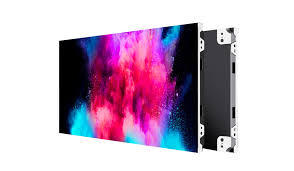
The next key stage is the PCB mounting and soldering process. Surface-mount technology (SMT) is used to accurately place LED packages on printed circuit boards designed with multiple layers to facilitate heat dissipation and electrical reliability. Modern SMT lines incorporate automated optical inspection (AOI) systems to detect placement errors immediately.
Encapsulation and Pixel Configuration
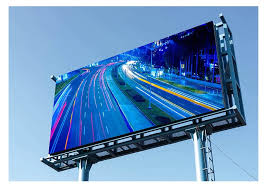
Encapsulation protects the LED chip and affects color accuracy and viewing angles. High-quality LED displays utilize silicone or epoxy resin for encapsulation, balancing durability with light transmission properties. Common pixel configurations include SMD (Surface Mount Device) pixels arranged in 3-in-1 or 2-in-1 formats, with pixel pitches ranging from 0.9 mm to 10 mm depending on application—smaller pitches provide higher resolution, ideal for indoor screens.
Thermal Management and Durability Considerations
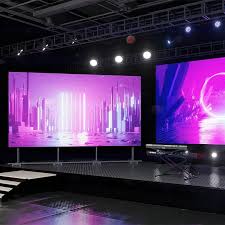
One of the most challenging aspects in LED manufacturing is efficient thermal management. Excessive heat reduces LED lifespan and brightness consistency. The integration of aluminum substrates and active cooling systems in critical outdoor displays ensures reliable performance at operating temperatures usually rated between -40°C and +85°C, conforming to international standards like IEC 60529 for ingress protection.
Quality Control and Testing Standards
Global LED display manufacturers follow rigorous testing protocols, including:
- Electro-Optical Parameter Testing: Measuring luminance (typically ≥1000 cd/m² for indoor and ≥5000 cd/m² for outdoor), color uniformity (Δu’v’< 0.01), and refresh rates (minimum 1920 Hz) to prevent flicker.
- Reliability Testing: Thermal cycling, vibration, humidity, and shock tests per MIL-STD-810G or equivalent standards ensure resistance to environmental stresses.
- Lifetime Assessment: Utilizing accelerated aging tests to verify 50,000+ hours of operation at 70% initial brightness, aligning with Telcordia GR-468-CORE guidelines.
Implementing Six Sigma and Lean Manufacturing philosophies also helps optimize yield and minimize defects during production.
Emerging Trends: Mini LED and Micro LED Technologies
The industry is pivoting towards Mini LED and Micro LED displays, offering improved contrast ratios, wider color gamuts (Rec. 2020 compliance), and lower power consumption. Manufacturing these displays challenges engineers to innovate ultra-precise pick-and-place techniques, sub-millimeter pixel pitch alignment, and photolithography-based mass transfer processes.
Sustainability and Environmental Compliance
LED manufacturers are adopting RoHS and REACH compliance for hazardous substances and promoting eco-friendly packaging to reduce environmental impact. Energy efficiency standards such as ENERGY STAR are also integrated into product design.
In conclusion, the future of LED display manufacturing rests on meticulous engineering that combines advanced materials, cutting-edge production lines, and stringent quality control, ensuring robust, high-performance displays that meet growing market demands globally. By adhering to international standards and embracing innovative technologies, manufacturers can deliver durable, vibrant, and energy-efficient LED displays for a broad spectrum of applications—from digital signage to large-scale broadcasts.













