

Advanced Insights into LED LCD Screen Manufacturing: Technical Parameters and Industry Standards
LED LCD screen manufacturing represents a critical segment in the display technology industry, merging the benefits of Liquid Crystal Display (LCD) backlighting with Light Emitting Diode (LED) technology to achieve superior brightness, contrast, and energy efficiency. As of October 2024, the integration of LED backlighting with LCD panels remains the industry standard for a wide variety of applications, ranging from televisions, computer monitors, to large-format digital signage.
Technical Foundations of LED LCD Displays
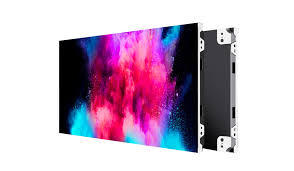
At the heart of an LED LCD screen lies the LCD panel that manipulates light through liquid crystals controlled by electrical signals. This panel itself is non-illuminative, necessitating a backlight source. Traditional CCFL (Cold Cathode Fluorescent Lamp) backlights have largely been replaced by LED backlighting systems, enabling thinner form factors, improved color rendering, and reduced energy consumption.
LED backlights come primarily in two configurations: edge-lit and direct-lit (or full-array).
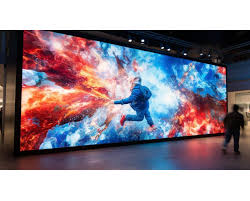
- Edge-lit LED screens place LEDs along the perimeter of the panel, channeling light via light guide plates. This design is cost-effective and allows for ultra-thin displays but can sometimes present challenges in achieving uniform brightness.
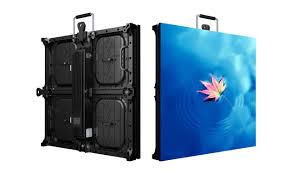
- Full-array LED backlighting distributes LEDs evenly behind the entire LCD panel, permitting advanced local dimming techniques that contribute to improved contrast ratios by selectively dimming or brightening LEDs in different zones.
According to the International Electrotechnical Commission (IEC 62500), advanced LED LCDs can achieve contrast ratios exceeding 5000:1 through local dimming, a significant improvement over typical static CCFL-backlit LCDs, which average around 1000:1.
Critical Parameters in Manufacturing
Several parameters dictate the performance and quality of LED LCD displays:
- Brightness (cd/m²):
Typically, consumer-grade displays achieve brightness levels between 250–500 cd/m². Professional and outdoor-grade displays often reach 1000 cd/m² or higher, ensuring visibility under direct sunlight conditions.
- Color Gamut and Accuracy:
Color reproduction is measured against standards such as sRGB, AdobeRGB, or DCI-P3. High-end LED LCDs cover 95-99% of DCI-P3, allowing vibrant and accurate color representation, crucial for medical imaging or design industries.
- Response Time and Refresh Rate:
Response times below 5 ms and refresh rates of 60 Hz are standard, whereas gaming or industrial monitors may push refresh rates upwards of 240 Hz with response times under 1 ms, facilitated by LCD panel improvements despite LED backlight constraints.
- Energy Efficiency:
LED backlighting reduces power consumption by approximately 30-50% compared to CCFL backlights. This is further supported by dynamic backlight dimming and adaptive brightness technologies.
Industry Standards and Quality Control
Conformance to international standards such as ISO 9241-307 for ergonomic requirements and IEC 62471 on photobiological safety ensures LED LCD displays are safe for prolonged human use and meet ergonomic viewing comfort.
Additionally, manufacturing processes embrace Six Sigma quality control and Implementations of Statistical Process Control (SPC) to maintain pixel defects below Grade 1 (as defined by ISO 13406-2), essential for maintaining visual uniformity.
Recent case studies from global manufacturers, such as Samsung Display and LG Display, demonstrate that integrating Quantum Dot enhancement films (QDEF) with LED LCDs elevates both color fidelity and brightness, enhancing performance while keeping the cost below that of OLED panels.
Future Trends and Challenges
The rise of MicroLED and OLED technologies presents competitive pressure on LED LCD manufacturing; however, LED LCDs remain dominant in markets demanding large displays at affordable prices with long lifespans and lower susceptibility to burn-in. Manufacturers are innovating in adaptive local dimming algorithms, mini-LED arrays, and advanced backlight uniformity to prolong relevance.
In conclusion, the LED LCD screen manufacturing industry is characterized by continuous optimization of backlight technologies, panel enhancements, and stringent quality control measures leveraging international standards. Understanding and applying these core technical parameters and standards ensures the production of displays that meet diverse global market demands with efficiency, reliability, and cutting-edge visual performance.













