

Advances and Best Practices in LED LCD Display Manufacturing for Enhanced Performance
The LED LCD display industry has experienced rapid technological evolution, driven by increasing demand for high-resolution, energy-efficient, and durable screens across various sectors, including consumer electronics, automotive, medical devices, and industrial applications. As a professional LED display engineer with extensive experience in both manufacturing and quality assurance, this article explores the critical technical parameters, best manufacturing practices, and industry standards that define excellence in LED LCD display production.
Core Technical Parameters in LED LCD Displays
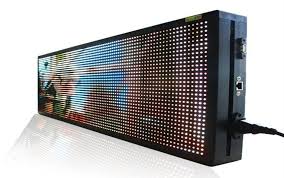
LED LCD displays combine Liquid Crystal Display (LCD) technology with Light Emitting Diode (LED) backlighting to produce superior brightness, contrast, and color accuracy. The following parameters are pivotal for manufacturing high-quality LED LCD displays:
1. Resolution and Pixel Density: Modern applications often require a pixel density (PPI - pixels per inch) exceeding 300 for mobile devices and up to 500 PPI in premium displays. For larger form factors like industrial or TV screens, resolutions such as 4K UHD (3840x2160) or higher are standard, meeting international display benchmarks like those from the Society for Information Display (SID).
2. Brightness and Contrast Ratio: LED backlighting allows achieving brightness levels of 800 to 1500 nits for outdoor-visible displays, far surpassing older CCFL technology. Contrast ratios, defined as the luminance of the brightest white to the darkest black, can reach 5000:1 or higher with advanced local dimming techniques, ensuring vivid color differentiation.
3. Color Gamut and Accuracy: Harnessing wide color gamut standards like DCI-P3 or Adobe RGB is crucial for professional-grade displays, particularly in content creation industries. Calibration to a ΔE value below 2 ensures color accuracy perceived as imperceptible color variation by the human eye.
4. Response Time and Refresh Rate: Typical LCD response times range from 5 ms to 1 ms in gaming-optimized displays, while standard monitors maintain around 8-12 ms. Refresh rates of 60 Hz remain common, but 120 Hz and 240 Hz are increasingly adopted for smoother motion rendering.
5. Power Efficiency: One of LED’s main advantages over cold cathode fluorescent lamps (CCFL) is its energy efficiency. Industry leaders follow guidelines set by ENERGY STAR and EPEAT certifications, targeting power consumption reductions through local dimming and sensor-activated brightness adjustments.
Key Manufacturing Considerations
Producing LED LCD displays with consistent quality demands rigorous control throughout the supply chain and fabrication process. Below are critical manufacturing practices:
- Precise Alignment of LED Backlight Units: Uniform LED placement behind the liquid crystal layer is vital. Misalignment can cause brightness non-uniformity and color shifting, leading to product failure. Employing automated optical inspection (AOI) tools during assembly ensures correct positioning with micrometer precision.
- Advanced Optical Films and Diffusers: Incorporating multi-layer films such as prism sheets, diffuser layers, and polarization films enhances light uniformity and viewing angles. These films are selected based on performance simulations and undergo spatial luminance testing to minimize hotspots and ensure uniform light distribution.
- Thermal Management: LEDs generate heat that can compromise liquid crystal performance if not adequately dissipated. Thermal design integration involves heat sinks, conductive adhesives, and sometimes active cooling modules, especially in large-format displays or high-brightness outdoor units.
- Quality Control and Reliability Testing: Following international standards such as JEITA ED-4701 for environmental and mechanical stress tests, manufacturers conduct accelerated aging, humidity, temperature cycling, and vibration tests to validate lifespan and robustness.
- Surface Coatings for Glare and Protection: Anti-glare coatings based on nanotechnology reduce reflections and fingerprint marks while maintaining panel transparency. Hard-coat layers resist scratches during shipping and usage.
Industry Standards and Certifications
The LED LCD industry aligns with numerous global standards that ensure interoperability, safety, and performance assurance:
- ISO 9241-307: Ergonomic requirements for electronic visual displays, addressing aspects like luminance, contrast, and uniformity.
- IEC 62679: Environmental testing guidelines for flat panel displays to guarantee operational reliability under varied climatic conditions.
- RoHS and REACH Compliance: Ensuring restricted use of hazardous substances aligns products with environmental regulations prevalent in EU and other markets.
Case Study: Enhancing Performance of Automotive LED LCD Displays
Automotive displays present unique challenges: high brightness to counteract sunlight, broad operational temperature ranges (from -40°C to +85°C), and robust vibration resistance. By integrating high-brightness LEDs (>1500 nits), thermally conductive materials, and enhanced optical films that optimize visibility from wide viewing angles, manufacturers achieve display improvements that meet ISO 26262 safety standards.
Real-world deployment showed a 20% increase in display lifespan and a 15% reduction in power consumption compared to previous-generation units, confirming the efficacy of advanced manufacturing techniques combined with stringent quality control.
Conclusion
The production of LED LCD displays demands a comprehensive understanding of technical parameters, cutting-edge manufacturing processes, and adherence to stringent industry standards. Through precise LED alignment, superior optical component selection, effective thermal management, and rigorous testing, manufacturers can deliver displays that excel in brightness, clarity, color fidelity, and longevity.
Staying abreast of evolving standards, such as those from SID, IEC, and ISO, and incorporating sustainable practices ensures these high-performance displays meet global market expectations. For engineers and manufacturers alike, continuous innovation and meticulous quality assurance remain the keystones to crafting next-generation LED LCD displays that redefine user experience and operational reliability.













