

Advanced LED Display Manufacturing: Technical Insights and Industry Best Practices
In the rapidly evolving landscape of visual display technology, LED (Light Emitting Diode) displays have emerged as a cornerstone in various applications ranging from consumer electronics to large-scale digital signage. With market demands for higher resolution, improved energy efficiency, and reliable longevity, understanding the intricacies of LED display manufacturing is critical for engineers, designers, and businesses invested in deploying state-of-the-art display solutions.
Fundamentals of LED Display Technology
LED displays function by illuminating arrays of red, green, and blue diodes to produce a full-color image. These displays are categorized primarily into Direct View LED (DV-LED) and LED-backlit LCD screens. DV-LED displays rely on individual LEDs as pixels capable of emitting light independently, offering superior brightness and contrast, especially suitable for outdoor and large format installations. In contrast, LED-backlit LCDs employ LEDs as backlighting sources behind liquid crystal panels, balancing image quality and cost efficiency for consumer devices such as TVs and monitors.
Manufacturing Processes and Critical Parameters
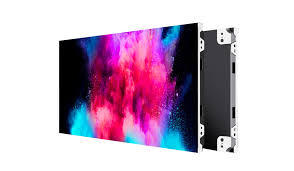
The LED display manufacturing process involves multiple stages: wafer fabrication, LED chip assembly, phosphor application for white light conversion, packaging, module assembly, and quality testing. Key technical parameters to monitor include pixel pitch, refresh rate, luminance, contrast ratio, color gamut, and viewing angle.
Pixel Pitch is the center-to-center distance between adjacent pixels and defines the display’s resolution and viewing distance. Smaller pixel pitches, such as 0.9mm or 1.2mm, are crucial for close-up viewing applications like indoor retail signage and command centers, enabling resolutions up to 4K. For outdoor displays, larger pitches (e.g., 4mm to 10mm) suffice due to longer typical viewing distances.
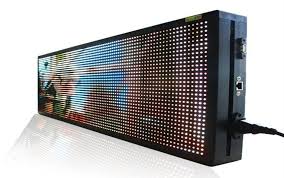
Refresh Rate determines the smoothness of motion rendering and flicker perception. Industry-standard refresh rates for high-end displays are between 1920 Hz to 3840 Hz, ensuring flicker-free performance under varied lighting conditions and camera filming (important for broadcast environments).
Luminance (brightness) is usually specified in nits (cd/m²). Outdoor LED displays require luminance levels from 5000 to 10,000 nits to maintain visibility under direct sunlight, while indoor displays operate effectively at around 800 to 1500 nits to prevent eye strain and conserve power.
Materials and Reliability Enhancements
Advanced materials have improved LED display durability and color accuracy. High-quality epitaxial wafers, sapphire substrates, and ceramic packaging increase heat dissipation and device longevity. The integration of quantum dot technology and nano-phosphors enhances color gamut, achieving over 90% coverage of NTSC or Rec. 2020 standards, which are vital for professional applications such as medical imaging and digital cinemas.
Quality Assurance and Standards Compliance
Industry standards such as IEC 62368-1 for safety, IEC 61000 series for electromagnetic compatibility, and ISO 9001 quality management underpin reliable manufacturing and product performance. Testing protocols include accelerated aging, thermal cycling, moisture resistance, and pixel uniformity.
A case study from a leading manufacturer demonstrates that optimizing thermal management systems and integrating real-time diagnostic software reduced failure rates by 30%, while improving energy efficiency by approximately 15%. These developments parallel the global shift toward sustainability and eco-friendly technology practices.
Practical Considerations for LED Display Deployment
From the engineering perspective, system integrators must consider installation environments, ambient lighting, viewing angles, maintenance access, and power supply stability. Modular design facilitates easier servicing and scalability. Emerging trends involve incorporating AI-driven calibration tools that automatically adjust display parameters in response to changing environmental conditions.
Future Directions
Innovations such as MicroLED and Mini-LED technologies promise to redefine displays with even higher pixel densities, improved contrast ratios, and reduced power consumption. The gradual transition toward these technologies will further challenge current manufacturing techniques, demanding precision at the microscopic scale and advanced material science applications.
In conclusion, the precision manufacture of LED displays necessitates a comprehensive understanding of semiconductor physics, optical engineering, and rigorous quality practices. Upholding these standards ensures displays that meet the diverse requirements of global markets, from advertising billboards to advanced medical visualization, reflecting the continuous evolution and growing sophistication of LED display technology.













