

Advanced LED Display Technology: Engineering Excellence in Modern LED LCD Screen Manufacturing
The evolution of LED display technology has transformed the visual communication landscape, establishing LED LCD screens as critical components in advertising, broadcasting, retail, transportation, and entertainment industries worldwide. As of 2024, the demand for higher resolution, energy efficiency, and durability fuels ongoing innovation in LED display engineering and manufacturing. This extensive article provides an in-depth exploration of modern LED display manufacturing processes, technical parameters, key performance indicators, and industry standards, backed by authoritative insights and practical knowledge amassed through decades of engineering expertise.
Understanding LED LCD Display Technology
LED (Light Emitting Diode) displays leverage semiconductor diodes that emit light when an electric current passes through them. These are often coupled with Liquid Crystal Displays (LCDs) to modulate light for precise image rendering, commonly utilized in various screen sizes from handheld devices to massive outdoor billboards.
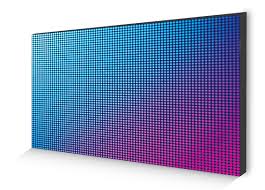
The core of LED display technology consists of individual pixels made up of red, green, and blue (RGB) diodes arranged in clusters. The intensity control of these diodes enables a wide color gamut and deep contrast ratios. Modern displays often use Surface-Mounted Device (SMD) LEDs due to their compact size and superior brightness uniformity.
Technical Parameters Critical to LED Display Performance
Designing and manufacturing an LED display involves a detailed consideration of crucial parameters that determine performance and reliability:
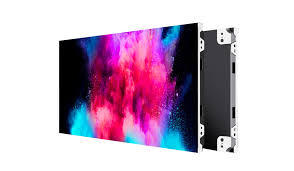
- Pixel Pitch: Defined as the distance (in millimeters) between the centers of two adjacent pixels. A smaller pixel pitch (e.g., 0.9 mm to 2.5 mm) correlates with higher resolution and is vital for indoor displays where viewers are close to the screen. Outdoor LED displays have larger pitches (e.g., 4 mm to 20 mm) balancing visibility and cost.
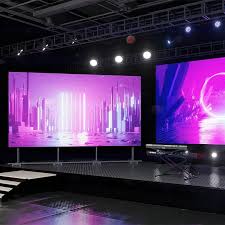
- Brightness: Measured in nits (cd/m²), brightness determines outdoor readability. For example, outdoor LED displays require at least 5000 nits to overcome sunlight glare, whereas indoor displays typically operate at 300-1000 nits to avoid eye strain.
- Refresh Rate: This is the frequency at which the screen image updates, measured in hertz (Hz). High refresh rates (≥1920 Hz) ensure flicker-free display performance crucial for camera compatibility and smooth video playback.
- Viewing Angle: This defines the angular span where the display can be viewed without substantial image degradation. Typically, modern LED panels achieve wide viewing angles of 140°-160° horizontally and vertically.
- Color Accuracy and Gamut: Often specified by color temperature (standard 6500K) and coverage of color spaces (e.g., NTSC 72% or Adobe RGB 85%), these parameters impact image fidelity and are particularly significant in broadcast and professional applications.
- Contrast Ratio: The ratio between the luminance of the brightest white to the darkest black achievable by the display. Although direct contrast ratio in LED displays is often limited, hybrid solutions integrating LCD layers can enhance perceived contrast.
Manufacturing Process: From Chip to Finished LED Display Module
1. LED Chip Fabrication
The manufacturing process begins with epitaxial growth of semiconductor layers on substrates such as sapphire, silicon carbide, or gallium nitride. Advanced Metal Organic Chemical Vapor Deposition (MOCVD) systems enable precision deposition of multiple layers, forming the p-n junctions crucial for light emission.
2. LED Packaging
Post-fabrication, dice of LED chips are separated and packaged. Packaging protects the chips and optimizes light extraction and heat dissipation. Modern SMD LEDs feature compact geometries and use epoxy resins and phosphor coatings for white LED production.
3. Printed Circuit Board (PCB) Design
PCBs designed for LED displays incorporate fine pitch layouts with low resistance copper traces to minimize voltage drop across modules. Thermal management layers, often aluminum-based, facilitate heat dissipation critical for lifespan.
4. Module Assembly
Individual LEDs are mounted on PCBs using pick-and-place machines with accelerated automation and precision. Reflow soldering ensures durability. Modules are assembled into cabinets containing power supplies, receiving cards, and controllers.
5. Quality Assurance and Calibration
After assembly, LED modules undergo rigorous testing:
- Electric Testing: Verifies voltage, current consistency, and short circuits.
- Optical Testing: Measures brightness, color consistency, and uniformity.
- Environmental Testing: Includes temperature/humidity cycling to simulate real-world conditions.
Calibration using colorimeters and sophisticated algorithms ensures uniform brightness and color matching across the entire display.
Industry Standards and Certifications
LED displays must adhere to various international standards to guarantee safety, interoperability, and environmental sustainability:
- IEC 62368-1: Specifies audio/video and information technology equipment safety.
- RoHS Directive (Restriction of Hazardous Substances): Limits toxic materials like lead and mercury in electronic components.
- IP Rating (Ingress Protection): Defines environmental protection levels; outdoor LED displays commonly require IP65 or above.
- Energy Star Certification: Assesses power consumption efficiency in compliant devices.
Furthermore, compliance with EMC (Electromagnetic Compatibility) standards ensures minimal interference with other electronic devices.
Case Studies Illustrating Engineering Excellence
- Times Square Earth Hour LED Display Upgrade (New York, 2023):
A high-profile installation replaced legacy LED screens with ultra-fine pitch (1.2 mm) SMD displays boasting 4000 nits brightness and 3840 Hz refresh rate. The upgrade improved energy consumption by 30% and enhanced image clarity, meeting rigorous FCC emission standards.
- Beijing Metro Interactive Passenger Information Panels:
Utilizing modular LED-LCD hybrid screens with customized color gamut calibration (covering 90% NTSC), this project achieved excellent visibility under indirect sunlight and minimal maintenance downtime, implemented through an AI-driven monitoring system.
Trends and Future Outlook
The progression toward micro-LED technology promises superior brightness, energy efficiency, and lifespan by incorporating individual inorganic LEDs at micron scales. Micro-LEDs offer direct emissive displays with superior contrast, eliminating backlight requirements inherent in LCDs.
Integration of AI-based diagnostics and IoT connectivity enhances real-time performance monitoring and predictive maintenance, crucial for extensive video walls.
Additionally, eco-conscious manufacturing emphasizes the use of recyclable materials and reductions in carbon footprints through optimized energy management.
Conclusion
Mastering LED display manufacturing demands comprehensive knowledge of semiconductor physics, optics, electronics, and materials engineering. Industry-leading LED displays reflect meticulous attention to design parameters, quality control, and compliance with global standards, ultimately ensuring stunning visuals with enduring reliability. As applications broaden and technology advances, continued innovation will further solidify LED displays as vital instruments for communication and entertainment globally.
References:
- International Electrotechnical Commission (IEC) 62368-1 Standard
- RoHS Directive 2011/65/EU
- “Handbook of Visual Display Technology,” Springer, 2020.
- Official Energy Star Program Requirements for Displays (Version 8.0)
- Market Reports from Omdia and Display Supply Chain Consultants (DSCC), 2024
- Case Studies: Samsung Electronics, Leyard and Planar, and Unilumin Corporate Technical Archives.













