

Advanced LED Display Technology: Applications, Advantages, Challenges, and Emerging Trends
LED display technology has rapidly evolved into a cornerstone of modern visual communication, reshaping industries ranging from advertising and entertainment to transportation and healthcare. As a professional LED display engineer with extensive expertise in LED LCD manufacturing, this article delves into the practical applications, intrinsic advantages, common challenges, and the latest technological trends that define today’s LED display landscape.
Practical Applications
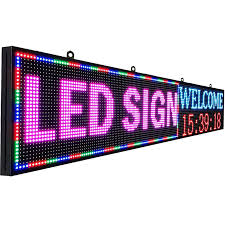
LED displays serve diverse environments due to their scalability, brightness, and flexibility. Outdoor digital billboards utilize high-brightness LED panels capable of exceeding 5,000 nits luminance to ensure visibility under direct sunlight. In stadiums and arenas, modular LED displays provide seamless large-scale visuals with resolutions often reaching 4K or higher, supported by pixel pitches as fine as 2.5 mm for near-field viewing.
In retail and corporate sectors, indoor LED displays with pixel pitches ranging from 0.9 mm to 1.5 mm create vivid, immersive experiences for customers and stakeholders. Transportation signage, such as airport information boards and highway message centers, benefit from LED displays’ quick refresh rates (typically ≥1920 Hz) preventing flicker, contributing to clear legibility.
Advanced healthcare facilities integrate LED displays in diagnostic machines and surgical environments, where precision and clarity enhance operational accuracy. Industrial plants also deploy rugged LED matrices for status monitoring and safety alerts, emphasizing durability with IP65/IP67 weatherproof ratings.
Advantages of LED Displays
LED technology offers superior brightness and contrast ratios over traditional LCDs and projection-based systems. With contrast ratios often exceeding 5,000:1, LEDs deliver deeper blacks and vibrant colors. The absence of a backlight, as in emissive LED displays, results in faster response times (sub-millisecond range), enabling smooth video playback and reducing motion blur.
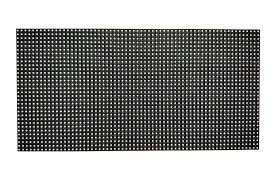
Energy efficiency is another hallmark; modern LEDs consume 30%-50% less power than comparable LCD displays, influenced by advances like Mini-LED and MicroLED architectures. LED panels boast remarkable longevity, with typical lifespans surpassing 100,000 hours of continuous operation, significantly lowering total cost of ownership.
Modularity enables custom sizes and aspect ratios, from handheld devices to sprawling wall-sized screens. Additionally, LED displays’ wide viewing angles — often >160 degrees horizontally and vertically — maintain consistent image quality regardless of audience positioning.
Common Challenges and Solutions
Despite these strengths, LED displays encounter challenges. Pixel failure and color uniformity issues can arise due to manufacturing variations or aging. Industry-standard calibration protocols, such as those outlined in the International Electrotechnical Commission’s IEC 62717 for LED package performance, guide defect detection and color correction.
Heat dissipation remains critical; inefficient thermal management risks accelerated component degradation. Employing high-quality materials like aluminum heat sinks and integrating active cooling systems mitigate thermal stress. Moreover, environmental factors like moisture penetration are addressed through conformal coating and IP-rated enclosures.
Electromagnetic interference (EMI) can cause flickering or data corruption. Careful PCB layout design and shielding conform to FCC and CE standards to minimize EMI, ensuring stable operation even in electrically noisy environments.
Latest Trends in LED Display Technology
The LED display industry is witnessing transformative innovations. MicroLED technology, featuring self-emissive inorganic LEDs as small as 10 µm, promises unparalleled brightness, efficiency, and pixel density, with pixel pitches achievable below 0.1 mm. This innovation enables true seamless displays for applications including augmented reality (AR) and high-end smartphones.
Mini-LED backlighting in LCD panels enhances contrast and local dimming capabilities, narrowing the performance gap between LCD and emissive LED displays while maintaining affordability. Flexible and transparent LED displays are gaining traction in automotive HUDs and architectural design, expanding design possibilities.
AI-driven content management systems optimize brightness and color dynamically based on ambient lighting conditions and viewer distance, improving visual comfort and reducing power consumption. Additionally, 5G connectivity integration facilitates real-time content updates, critical for smart city applications and digital out-of-home (DOOH) networks.
Conclusion
LED display technology stands as a mature yet continuously innovative field that marries high technical performance with versatile practical applications. By understanding its advantages, confronting challenges head-on, and embracing emerging trends such as MicroLED and AI integration, stakeholders can leverage LED displays to create compelling, reliable visual solutions across global industries.
For engineers and decision-makers, adhering to industry standards like IEC 62717 and ensuring rigorous calibration, thermal management, and EMI safeguards is vital to sustaining performance and extending product lifecycle. As LED displays continue to evolve, their impact on communication, entertainment, and information dissemination will only deepen, heralding a vibrant future for this dynamic technology.













