

Advances and Best Practices in LED LCD Screen Manufacturing for High-Quality Displays
LED LCD screen manufacturing has evolved significantly over the past decade, driven by advancements in display technologies and increasing demand for vibrant, energy-efficient, and durable screens. As a professional LED display engineer with extensive experience in the industry, this article delves into the core aspects of LED LCD production, focusing on the integration of LED backlighting with LCD panels to create high-performance displays.
1. Understanding LED LCD Technology
An LED LCD screen combines a liquid crystal display (LCD) panel with light-emitting diode (LED) backlighting. Unlike traditional cold cathode fluorescent lamp (CCFL) backlights, LEDs offer superior brightness, color uniformity, thinner profiles, and enhanced energy efficiency. According to the Society for Information Display (SID) standards, LED backlighting contributes to improved color gamut and contrast ratios, reaching up to 1000:1 or higher in premium models.
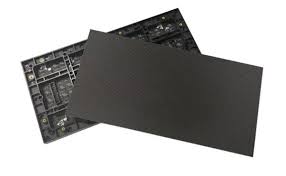
2. Key Manufacturing Process Steps
The manufacturing of LED LCD screens involves multiple precision stages:
- Panel Fabrication: Starting with a high-quality TFT (thin-film transistor) LCD panel, manufacturers ensure pixel alignment accuracy down to micrometers to guarantee sharp image reproduction. TFT array fabrication adheres to ISO 9001 quality management systems to minimize defects.
- LED Backlight Assembly: LED backlights are arranged in either edge-lit or direct-lit layouts. Edge-lit designs use light guides for even illumination and enable ultra-thin displays, while direct-lit (full-array) provides superior local dimming capabilities for enhanced contrast. Each LED module must undergo binning to sort by luminance and color temperature, typically around 6500K for standard white light.
- Optical Film Integration: To optimize brightness and viewing angles, the backlight system incorporates diffusers, prism sheets, and polarization films. Precise layering reduces light loss, increasing luminance efficiency to approximately 300–400 nits for mid-range commercial displays.
- Assembly and Calibration: After assembly, each screen undergoes rigorous calibration to adjust gamma curves, color temperatures, and uniformity. Calibration instruments such as spectroradiometers compliant with CIE 1931 colorimetry standards ensure accurate color reproduction, vital for applications in graphic design and medical imaging.
- Quality Testing: Manufacturers implement stringent testing protocols, including Mura detection to identify non-uniformity, response time measurement (typically aiming for 5–8 ms for commercial displays), color accuracy (Delta E< 3 considered excellent), and durability tests for thermal cycling and humidity resistance.
3. Industry Standards and Quality Benchmarks
Adhering to international standards such as IEC 62368-1 for safety and RoHS directives for hazardous substances is mandatory. For display performance, VESA DisplayHDR certification provides a benchmark for brightness and contrast quality, especially as HDR content becomes common. Emerging standards like UHD Alliance’s Ultra HD Premium also influence manufacturing specifications.
4. Innovations Driving Industry Evolution
Recent innovations include mini-LED and microLED technologies replacing traditional LED backlights, offering significantly higher local dimming zones (up to several thousand) and unprecedented contrast ratios exceeding 5000:1. These advances support HDR10+ and Dolby Vision standards, meeting demands for cinematic-quality visuals on consumer and professional displays alike.
Integration of AI-driven manufacturing processes enables real-time defect detection and adjustment, improving yield rates beyond 90% in high-volume production environments. Moreover, advances in flexible and transparent LED LCD screens are expanding applications in automotive dashboards, wearable devices, and immersive augmented reality environments.
5. Practical Considerations for Manufacturers and OEMs
For manufacturers and original equipment manufacturers (OEMs), balancing cost with performance is critical. Utilizing high binning LED components and maintaining strict environmental controls during assembly mitigate risks of yellowing or color shift over the product lifespan. Supply chain certification and traceability ensure compliance with sustainability initiatives, which are increasingly demanded by global markets.
Consistent R&D investment and collaboration with component suppliers also facilitate rapid integration of new technologies while maintaining reliability. For example, leveraging LED driver ICs with intelligent dimming control can optimize power consumption, extending device longevity and reducing thermal load.
6. Case Studies: Industry Successes
Leading display manufacturers such as Samsung and LG have set benchmarks by producing LED LCD panels with ultra-high definition (UHD) resolutions, quantum dot enhancement layers, and HDR capabilities. In commercial signage, companies like Leyard have utilized direct-lit LED LCDs for large-format video walls that demonstrate superior brightness uniformity and minimal maintenance downtime.
Conclusion
The manufacture of LED LCD screens is a complex synergy of materials science, precision engineering, and adherence to performance standards. By embracing advanced backlighting technologies, thorough calibration methods, and rigorous quality control, manufacturers can produce displays that meet evolving global demands for clarity, efficiency, and durability. Continuous innovation and adherence to international standards will remain pivotal in maintaining leadership in this competitive industry.
References:
- Society for Information Display (SID), Display Technology Reports, 2023
- VESA DisplayHDR Specifications, 2022
- IEC 62368-1 Standard on Audio/Video and ICT Equipment Safety
- UHD Alliance Technical Briefings, 2023













