

Advancements and Best Practices in LED Display Manufacturing: A Comprehensive Guide for Industry Professionals
The LED display industry has witnessed remarkable technological progress over the past decade, driven by increasing demand for high-brightness, energy-efficient, and durable screen solutions across diverse applications ranging from consumer electronics to large-scale outdoor installations. As a professional LED display engineer with hands-on experience in manufacturing, design optimization, and quality control, this article presents an authoritative overview of core manufacturing principles, technical parameters, and emerging trends relevant to contemporary LED display production.
At its foundation, an LED display integrates millions of tiny light-emitting diodes organized into pixels, transforming electrical signals into vibrant images. The key performance indicators for LED screens include brightness, color accuracy, refresh rate, viewing angle, pixel pitch, and lifetime. Understanding and controlling these parameters is critical for producing displays that meet market expectations and comply with international standards such as the IEC 62368-1 for safety and IEC 60950-1 for electronic component compatibility.
Technical Parameters and Their Impact
1. Pixel Pitch: Defined as the center-to-center distance between adjacent LEDs, pixel pitch determines resolution and viewing distance suitability. For instance, fine pixel pitches below 1.2mm are typical in indoor applications requiring close viewing, whereas outdoor displays favor pitches above 3mm to optimize cost and visibility.
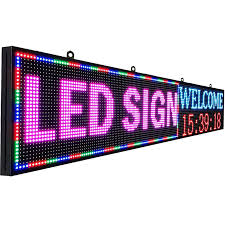
2. Brightness: Measured in nits (cd/m²), LED display brightness significantly influences readability under various ambient light conditions. Outdoor LED displays often require brightness levels between 5,000 to 10,000 nits for clear visibility in direct sunlight, whereas indoor screens generally operate at 800 to 1500 nits for comfortable viewing environments.
3. Color Rendering and Calibration: Accurate color reproduction depends on the quality of phosphor materials, LED binning, and real-time calibration. Industry-grade LED manufacturers employ automated color calibration systems which adhere to standards like Rec. 709 and Rec. 2020, ensuring consistency throughout production batches.
4. Refresh Rate and Response Time: For dynamic content and minimizing motion blur, modern LED modules support refresh rates exceeding 1920Hz with response times under 2ms. This is especially critical in sports arenas and broadcast applications, preventing image flicker and latency.
5. Lifetime and Reliability: High-quality LED displays average a lifespan of over 100,000 hours at 50% brightness levels. Factors such as heat dissipation design, quality of electronic drivers, moisture resistance (conforming to IP65 or higher for outdoor), and robust mechanical structures contribute significantly to operational durability.
Manufacturing Best Practices
Achieving optimal LED display performance starts with component selection. Utilizing semiconductor-grade InGaN LEDs with tight chromaticity binning ensures minimal brightness deviation and color shifts over time. Surface-mount technology (SMT) precision and automated optical inspection (AOI) during PCB assembly reduce manufacturing defects and improve yield.
Thermal management remains a paramount concern. Efficient heat sinks, convection-enhanced housings, and materials with high thermal conductivity, such as aluminum alloys, maintain junction temperatures below 85°C, prolonging LED longevity and reliability.
Furthermore, modular design architecture facilitates easier maintenance and repairs in large-scale displays without causing prolonged downtime. Incorporating redundant power supplies and signal management safeguards against partial system failures, enhancing overall robustness.
Emerging Technologies and Trends
Recent advances include the integration of mini-LED and micro-LED technologies, which boast higher pixel densities and superior color gamuts compared to traditional LEDs. Micro-LED displays achieve near-OLED-quality contrast ratios without organic degradation issues, promising longer lifespans and increased outdoor-readiness.
In addition, artificial intelligence (AI)-driven calibration and diagnostics systems are improving production efficiency by enabling real-time parameter adjustments and predictive maintenance. Manufacturers adopting Industry 4.0 principles benefit from intelligent automation, reducing costs and elevating product consistency.
Standards Compliance and Quality Assurance
Adherence to international quality and environmental standards such as RoHS (Restriction of Hazardous Substances), CE marking, and ISO 9001 ensures that manufactured LED displays meet global market regulations and customer expectations. Rigorous testing protocols encompassing environmental resistance (temperature, humidity), electrical safety, and electromagnetic compatibility (EMC) underpin the reliability of the final product.
Industry case studies demonstrate that manufacturers investing in quality control and cutting-edge R&D enjoy competitive advantages through higher customer satisfaction and reduced warranty costs. For example, integrating comprehensive in-line testing reduces failure rates from over 5% to less than 1%, significantly improving operational efficiency.
Conclusion
The manufacturing of LED displays requires a multidimensional approach integrating advanced semiconductor technology, precision engineering, rigorous quality control, and adherence to evolving standards. Professionals in the field must stay abreast of emerging innovations such as micro-LED integration and AI-enabled calibration to maintain competitiveness.
By focusing on critical technical parameters including pixel pitch, brightness, color accuracy, and thermal management, manufacturers can deliver high-performance LED display solutions tailored to diverse market needs. Implementing best practices and compliance measures enhances product longevity and supports sustainable business growth in a rapidly advancing global industry.













