

Advances and Best Practices in LED Display Manufacturing for Optimal Performance
The evolution of LED display technology has dramatically transformed visual communication across industries, from digital signage and broadcast studios to outdoor advertising and control rooms. As a seasoned LED display engineer, I have witnessed firsthand how advancements in manufacturing processes, material sciences, and quality control have pushed the boundaries of performance, reliability, and visual fidelity.
At the core of LED display manufacturing lies the precision assembly of light-emitting diodes into modules and eventually into large-scale panels. Critical parameters such as pixel pitch, brightness, color gamut, refresh rate, and contrast ratio define the display’s quality and suitability for different applications.
Pixel Pitch and Resolution
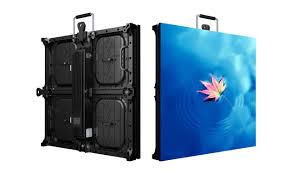
Pixel pitch refers to the distance between the centers of two adjacent pixels, typically measured in millimeters. Smaller pixel pitches, such as 0.9mm to 1.2mm, are favored for indoor displays requiring high resolution and close viewing distances. Conversely, outdoor displays generally employ larger pitches from 4mm up to 20mm to balance visibility over longer distances and cost efficiency. Industry-leading companies implement rigorous alignment and soldering protocols during module fabrication to ensure uniform pixel placement, minimizing undesirable artifacts such as moiré patterns and ensuring sharp image reproduction.
Material Quality and LED Chip Technology
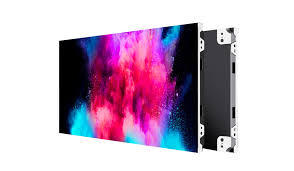
Modern LED displays use high-brightness, long-life SMD (Surface-Mount Device) LEDs with superior luminous efficacy and color stability. Notably, the use of InGaN (Indium Gallium Nitride) LEDs for blue and green light and AlInGaP (Aluminum Indium Gallium Phosphide) for red has become standard, resulting in enhanced color accuracy and energy efficiency. Electronics manufacturers employ automated die-bonding and precision wire bonding techniques to secure LED chips on printed circuit boards (PCBs), which are engineered with multilayer designs to optimize heat dissipation.
Brightness and Contrast Optimization
A typical indoor LED panel can achieve brightness levels ranging from 600 to 1500 nits, suitable for ambient lighting environments. Outdoor units sustain brightness up to 6000 nits or higher, ensuring image visibility even under direct sunlight. Achieving such luminosity demands high-quality LED components, advanced driver ICs capable of precise current regulation, and integration of effective cooling systems. Thermal management remains critical as excessive heat can drastically reduce LED lifespan and color stability. Ingenious heat sinks and fans integrated into the display chassis alongside smart temperature sensors enable dynamic adjustments to brightness and power consumption, prolonging operational reliability.
Refresh Rate and Color Processing
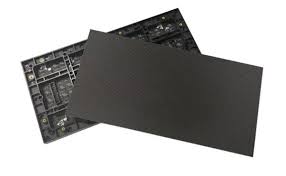
To deliver smooth video playback, modern LED displays support refresh rates of 1920Hz or higher, minimizing flicker and eye strain. Advanced processing ICs and FPGA-based controllers perform real-time color calibration, gamma correction, and grayscale rendering. Calibration tools compliant with industry standards such as ISO 12233 ensure color uniformity across extensive video walls and curved displays. High end manufacturers also adopt HDR (High Dynamic Range) techniques to enhance the visual depth and realism, crucial for broadcast-grade LED installations.
Quality Assurance and Industry Standards
Adherence to standards like IEC 62368 for safety and RoHS for environmental compliance is mandatory. In addition, ISO 9001 certified manufacturing facilities implement stringent quality control cycles including Automated Optical Inspection (AOI), burn-in tests exceeding 72 hours, and environmental stress screening (ESS). These protocols guarantee defect-free modules free from dead pixels and ensure color consistency throughout the product lifecycle. Data from customer installations worldwide affirm that these quality practices reduce maintenance costs and downtime substantially.
Challenges and Future Directions
Despite remarkable progress, LED display manufacturing faces challenges including supply chain volatility of raw materials, increasing demand for ultra-high definition and flexible screens, and the necessity for lower power consumption. Research initiatives focus on mini-LED and micro-LED technologies, promising even higher pixel density with improved energy efficiency. Integration of AI-driven predictive maintenance and remote diagnostics tools further enhances long-term operational stability.
In conclusion, achieving optimal LED display performance depends on a synergistic approach combining cutting-edge semiconductor technology, advanced manufacturing processes, and robust quality management systems. As these technologies evolve, LED displays will continue to revolutionize visual experiences worldwide, offering unparalleled brightness, color accuracy, and reliability across diverse applications.













