

Advanced Engineering Principles and Practices in LED LCD Display Manufacturing
The manufacturing of LED LCD displays is a sophisticated process demanding comprehensive expertise in materials science, electronics, optics, and precision engineering. As global demand for high-resolution, energy-efficient, and reliable displays surges across industries such as consumer electronics, automotive, healthcare, and advertising, understanding the technical underpinnings and best practices of LED LCD fabrication is paramount.
Fundamentals of LED LCD Display Technology
LED LCDs combine Liquid Crystal Display technology with Light Emitting Diode backlighting to produce vibrant images with improved power efficiency and contrast. Unlike traditional CCFL (Cold Cathode Fluorescent Lamp) backlights, LEDs offer benefits including longer lifespan, faster response times, and superior dimming capabilities.
A typical LED LCD comprises several key layers:
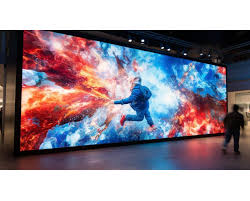
- Liquid Crystal Layer: Contains liquid crystals whose orientation modulates light passage.
- Polarizers: Positioned to selectively permit light waves, essential for image formation.
- Color Filters: Define pixel colors (red, green, blue) by filtering light.
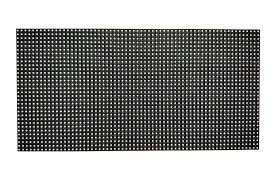
- LED Backlight: Supplies uniform illumination behind the LCD panel.
- Thin Film Transistor (TFT) Array: Controls individual pixels’ states electrically.
Materials and Components Specifications
High-performance LED LCDs utilize advanced polycrystalline silicon TFT backplanes for enhanced switching speeds and reduced parasitic leakage currents. The choice of liquid crystal compound significantly influences response time and viewing angle, with advanced formulations achieving sub-10ms response times essential for video displays.
LED backlighting employs arrays typically based on InGaN blue LEDs combined with phosphor layers for white light generation. Industry standards dictate luminous efficacy in the range of 70–100 lm/W, ensuring brightness levels from 250 to 1000 nits depending on application—consumer-grade displays usually target 300–500 nits, while professional monitors and outdoor signage demand upwards of 1000 nits.
Manufacturing Processes and Quality Controls
The manufacturing life cycle includes substrate preparation, TFT array deposition via photolithography, liquid crystal cell assembly, backlight module integration, and encapsulation. Precision in submicron-scale alignment between the TFT arrays and color filter glass substrates is critical to prevent pixel defect rates.
Automated Optical Inspection (AOI) systems employing machine vision ensure detection of manufacturing defects such as dead pixels, line defects, or color inconsistencies. Statistical Process Control (SPC) frameworks monitor parameters like thin film uniformity and LED luminance distribution continuously to maintain yield rates above 95% in top-tier plants.
Encapsulation and sealing techniques, often enhanced by UV-curable epoxies and moisture barrier coatings, preserve liquid crystal integrity against environmental ingress. Strict adherence to industry standards such as JEITA CP-2402B for LCD reliability and ISO 9241-307 for visual ergonomics guarantee product durability and user comfort.
Advancements in Backlighting and Energy Efficiency
Trends in LED arrangement—edge-lit versus direct-lit configurations—impact display thickness, brightness uniformity, and power consumption. Direct-lit arrays, featuring behind-panel LEDs, provide superior brightness uniformity but at higher cost and thickness. Conversely, ultra-thin edge-lit designs prevail in mobile devices prioritizing slender form factors.
Continuous development of Mini-LED and Micro-LED technologies marks the cutting edge of display backlighting. Mini-LEDs, comprising thousands of small LEDs per panel, enable local dimming zones exceeding hundreds, dramatically enhancing contrast ratios beyond 500,000:1 and pushing dynamic range capabilities. These are already validated in premium consumer displays from brands such as Apple and Samsung.
Application-Driven Customizations
Custom LED LCDs for specialized fields incorporate additional engineering to address unique challenges:
- Medical Displays: Enforce stringent color accuracy standards conforming to DICOM Part 14 calibration for diagnostic imaging.
- Automotive: Must operate reliably across -40°C to +85°C temperature ranges, with anti-reflective and anti-glare coatings tailored for sunlight readability.
- Outdoor Signage: Utilize robust IP65 or higher rated enclosures and employ high-brightness LEDs (up to 7,000 nits) to resist environmental stressors.
Sustainability and Regulatory Compliance
Sustainable manufacturing practices have become an industry imperative. Incorporation of RoHS (Restriction of Hazardous Substances) compliant materials, adoption of lead-free soldering processes, and design for recyclability reduce environmental impact. Energy Star certification is frequently sought to attest to products' energy efficiency.
Life cycle assessments (LCA) inform material selection and manufacturing changes to minimize carbon footprint while maintaining performance. Manufacturers are increasingly investing in closed-loop recycling for LED modules to reclaim rare earth phosphors and semiconductor materials.
Conclusion
Leading LED LCD display manufacturing demands integrated expertise spanning materials engineering, optical design, electronics fabrication, and quality assurance within rigorous international standards frameworks. Cutting-edge innovations such as Mini-LED backlighting and enhanced TFT materials are pushing visual performance boundaries while reinforcing energy efficiency and reliability.
For enterprises operating globally, adherence to standards like JEITA, IEC 60068 for environmental testing, and ISO 9241 ensures products meet the sophisticated demands of diverse applications—ranging from consumer handheld devices to critical medical instrumentation. Manufacturers who combine deep technical knowledge with sustainable practices position themselves at the forefront of the evolving display technology landscape.
References:
- JEITA CP-2402B: LCD Reliability Test Standard
- IEC 60068: Environmental Testing
- ISO 9241-307: Ergonomics — Evaluation of Visual Display Terminals
- Energy Star Program Requirements for Displays (Version 8.0)
- Yole Development, “Mini-LED Display Market Forecast,” 2023













