

Advanced Technologies and Best Practices in LED Display Manufacturing for Optimal Performance and Reliability
In the rapidly evolving landscape of visual display technology, LED (Light Emitting Diode) displays have become the gold standard for a wide range of applications—from stadium screens and outdoor billboards to indoor advertising panels, control rooms, and digital signage. Their superior brightness, energy efficiency, and longevity make them indispensable. However, engineering a high-performance LED display that meets the rigorous demands of modern applications requires a deep understanding of materials science, electronics, thermal management, and manufacturing precision.
This article provides an in-depth exploration of LED display manufacturing, outlining the critical technical parameters, industry practices, and emerging innovations that ensure optimal performance and reliability. Drawing upon authoritative sources such as the International Electrotechnical Commission (IEC) standards, industry white papers, and case studies from leading display manufacturers, we highlight essential techniques and quality controls that govern the production and deployment of LED screens.
Core Components and Key Technical Parameters
1. LED Chip and Package:
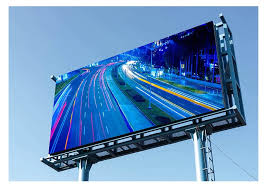
At the heart of every LED display lies the LED chip itself, which determines color accuracy, brightness, and efficiency. High-quality LED chips, typically based on gallium nitride (GaN) for blue and green LEDs and AlGaInP for red LEDs, exhibit luminous intensities in the range of 800–1200 mcd at 20 mA forward current. The binning process ensures uniform brightness and color temperature across chips, typically tight within a 3-step MacAdam ellipse for consistent visual output.
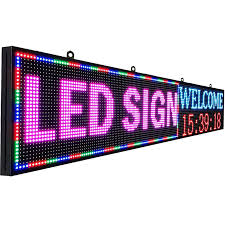
The package design influences heat dissipation and reliability. Surface-mount device (SMD) packages with three-in-one designs enable small pixel pitches (down to 0.7 mm), essential for indoor high-resolution applications.
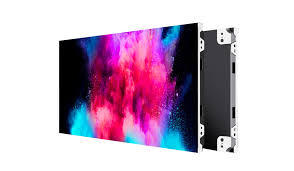
2. Pixel Pitch and Resolution:
Pixel pitch, the distance between the centers of adjacent pixels, is crucial for defining display resolution and viewing distance. Typical LED display pixel pitches vary from 0.7 mm (fine pitch, for indoor close-range use) to 10 mm or more (outdoor large-format screens). According to best practices, the recommended minimum viewing distance (in meters) approximately equals the pixel pitch (in mm) multiplied by 1.5. For example, a 2.5 mm pitch panel is optimal for viewing distances above 3.75 m.
3. Brightness and Contrast Ratio:
Brightness requirements differ between indoor and outdoor environments. Outdoor LED displays typically need brightness levels exceeding 5,000 cd/m² to combat sunlight glare, whereas indoor displays operate well between 300 and 1,000 cd/m². High dynamic contrast ratios (>3,000:1) improve legibility and color depth, achieved through optimized LED drive currents and black surface treatments on LED modules.
Advanced Manufacturing Processes
The manufacturing of LED display units involves several precision processes designed to ensure consistent quality:
- Autonomous SMT Assembly: Surface-mount technology lines with automated pick-and-place machines guarantee exact LED placement. High throughput SMT lines can position thousands of LEDs per hour with ±0.02 mm accuracy, ensuring pixel alignment critical in fine-pitch panels.
- Automated Optical Inspection (AOI): After assembly, AOI systems capture high-resolution images to detect missing or misaligned LEDs, solder defects, and color deviations. AOI reduces post-production defects by up to 90%, which is essential for maintaining warranty guarantees and reliability.
- Thermal Management Optimization: Effective dissipation of heat generated by LED chips extends lifespan and prevents color shift. Precision aluminum substrates combined with thermally conductive adhesives and ventilation design according to IEC 60950 thermal guidelines keep junction temperatures below 85°C, even under maximum drive current.
Quality Assurance and Reliability Standards
Ensuring the long-term performance of LED displays demands adherence to international reliability standards including:
- IEC 62368-1: Safety requirements for audio/video and information technology equipment, encompassing electrical safety and fire hazard prevention in LED systems.
- MIL-STD-810G: Environmental testing for displays operating outdoors or in harsh industrial environments. This includes vibration, shock, humidity, and temperature cycling tests.
- IP Rating: Outdoor LED modules require at least IP65 or IP67 ratings for water and dust ingress protection. Sealants and protective coatings further enhance durability.
Color Calibration and Uniformity
Uniform color reproduction across large LED screens is vital, especially in broadcast and control room applications. Advanced color calibration tools employ spectroradiometers and colorimeters to adjust each module’s drive currents iteratively, reducing color deviation to below ΔE 2—a threshold barely perceptible to the human eye.
Case studies from companies like Leyard and Unilumin demonstrate calibration workflows relying on software controlled via cloud servers for efficient management of multi-module displays with millions of pixels.
Emerging Trends and Innovations
1. Mini-LED and Micro-LED Technology: Industrial adoption of mini-LED (chip sizes ~100–200 microns) and micro-LED (<50 microns) technologies are pushing pixel pitches below 1 mm while improving contrast and color gamut significantly. These technologies, though costlier, represent the next frontier in LED displays for premium commercial and consumer markets.
2. Energy Efficient Drivers and Dynamic Dimming: Incorporating digital driver ICs with pulse width modulation (PWM) techniques allows for dynamic brightness adjustment, reducing power consumption by up to 30% compared to constant current driving.
3. Flexible and Transparent LED Displays: Recent advancements enable displays embedded into glass façades or curved surfaces, opening new use cases in architecture and retail signage.
Conclusion
Producing LED displays that combine superior image quality, durability, and cost-effectiveness requires rigorous attention to every phase of design and manufacturing. Embracing international standards, leveraging automated inspection systems, optimizing thermal management, and implementing precise calibration protocols are foundational elements.
As LED technology continues to evolve with innovations such as mini-LED and micro-LED, manufacturers and engineers with thorough technical knowledge and practical expertise will be instrumental in delivering display solutions that meet the increasing demands of modern commercial, industrial, and public applications.
References:
- IEC 62368-1 Audio/video, information and communication technology equipment - Safety requirements, IEC, 2020.
- MIL-STD-810G Environmental Engineering Considerations and Laboratory Tests, U.S. Department of Defense, 2008.
- Leyard and Unilumin Technical White Papers (2022-2024).
- “Advances in LED Display Technology,” Journal of Display Technology, IEEE, 2023.
- “Thermal Management in LED Displays,” Electronic Cooling Magazine, 2022.













