

Fine Pitch LED Touchscreen Technology: Advancements, Specifications, and Industry Applications
Fine pitch LED touchscreen technology represents a critical convergence of high-definition display capabilities with interactive touch functionality, increasingly becoming a cornerstone in both commercial and industrial applications. As an experienced LED display engineer with extensive expertise in LED and LCD manufacturing, I provide a comprehensive review of fine pitch LED touchscreens, emphasizing their technical parameters, industry standards, and real-world application insights to help manufacturers, engineers, and end-users make informed decisions.
Understanding Fine Pitch LED Touchscreen Technology
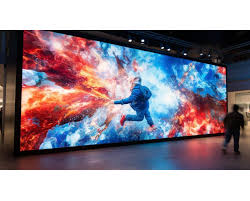
Fine pitch LED displays feature pixel pitches (the center-to-center distance between adjacent LEDs) typically below 1.5mm, with some advanced models pushing below 0.8mm. This minute pixel spacing enables ultra-high resolution, delivering sharp images and detailed graphics even at close viewing distances. When integrated with capacitive or infrared touch technology, these displays become interactive, providing users with responsive, multi-touch experiences suitable for control rooms, digital signage, broadcast studios, medical imaging, and collaborative environments.
Technical Parameters and Specifications
1. Pixel Pitch: Ranging from 0.7mm to 1.5mm — The smaller the pitch, the higher the pixel density and display resolution. For instance, a 0.9mm fine pitch LED panel typically supports resolutions above 4K on relatively compact screen sizes (~55 inches to 110 inches).
2. Brightness: Fine pitch LED touchscreens deliver luminance levels between 600 to 1500 nits, depending on the display environment. High brightness ensures clear visibility even under challenging ambient lighting conditions such as sunlight or brightly lit indoor settings.
3. Contrast Ratio: Typically exceeding 3000:1, offering vibrant colors and deep blacks due to the emissive nature of LEDs, which outperforms traditional LCDs, especially in terms of viewing angles and color uniformity.
4. Refresh Rate: High refresh rates of 3840Hz or higher are common in professional fine pitch LED screens to support flicker-free visuals on camera and smooth video playback, an essential feature for broadcast applications.
5. Touch Integration: Capacitive touch solutions employing PCAP (Projected Capacitive) sensors provide multi-touch capabilities (up to 10 or more simultaneous points), fast responsiveness (within 10-20 milliseconds), and high durability (over 60 million touches lifespan). Infrared touch frames are also used where glass thickness or environmental conditions demand.
6. Viewing Angle: Wide viewing angles of 160° horizontally and vertically ensure consistent image quality across expansive spaces, critical for meetings, collaboration tools, and display walls.
7. Color Accuracy: Fine pitch LED touchscreens are calibrated to deliver high color accuracy (typically Delta E< 2), essential in medical imaging, graphic design, and professional presentation setups.
Industry Standards and Quality Assurance
Adherence to international standards, such as IEC 62368 (Safety requirements for audio/video and information technology equipment) and RoHS compliance (restriction of hazardous substances), is fundamental in manufacturing fine pitch LED touchscreens. Moreover, certifications like ISO 9001 for quality management and EMC (Electromagnetic Compatibility) standards ensure product reliability and safety.
Manufacturers often follow UL standards (Underwriters Laboratories) to ensure fire and electrical safety compliance, crucial for large installations in commercial environments. Performance testing focuses on environmental endurance (temperature -20°C to +50°C operational range), moisture resistance (IP54/IP65 ratings when touchscreen surfaces demand), and shock/vibration resistance based on industry application.
Material and Manufacturing Insights
Fine pitch LED modules rely on advanced semiconductor chips, typically SMD (Surface Mounted Device) LEDs with tri-color units (red, green, blue) in 3-in-1 or 1-in-1 package designs enabling uniform light emission. Pixel density control employs precise PCB layouts and high-quality driver ICs to reduce signal latency and improve grayscale performance.
Touchscreen panels incorporate chemically strengthened glass, such as Gorilla Glass with up to 7H hardness, protecting against scratches, impacts, and wear while maintaining optical transparency above 92%, crucial for display clarity.
Practical Applications and Case Studies
- Broadcast Studios: Leading broadcasters utilize fine pitch LED touchscreens for interactive video walls and control interfaces due to their flicker-free performance and high pixel density, supporting detailed live graphics.
- Medical Imaging: Hospitals adopt these touch-enabled displays for radiology and diagnostic imaging where color accuracy and responsive touch interaction assist clinicians in diagnosis and patient education.
- Corporate Collaboration: Fine pitch LED touchscreens facilitate real-time collaboration in conference rooms, allowing multiple users to interact simultaneously, enhancing workflow efficiency.
- Retail and Digital Signage: High-resolution, bright touchscreens provide immersive shopping experiences with rich multimedia content and user-friendly navigation.
- Control Rooms: Utility companies and transportation hubs rely on fine pitch LED touchscreens for continuous operation, real-time data monitoring, and quick command execution.
Challenges and Future Trends
While fine pitch LED touchscreens offer unmatched image quality and interactivity, key challenges remain in cost reduction, power consumption, and scalability. Innovations in MicroLED technology promise even finer pitches (<0.5mm) with better energy efficiency and longer lifespans, though widespread commercial adoption is still underway.
Emerging trends also emphasize AI-driven calibration for color consistency, augmented reality (AR) integration, and flexible form factors enabling curved or foldable LED touchscreens, potentially revolutionizing user interaction paradigms.
Conclusion
Fine pitch LED touchscreen technology embodies a sophisticated blend of cutting-edge display engineering and touch responsiveness, delivering superior visual experiences across diverse sectors. Understanding its key parameters, compliance with stringent industry standards, and practical deployment scenarios enables stakeholders to leverage these solutions effectively. As advancements continue to push boundaries in pixel density and interactivity, fine pitch LED touchscreens are poised to remain at the forefront of display innovation globally.
References:
- International Electrotechnical Commission (IEC) standards, www.iec.ch
- UL Standards, www.ul.com
- Society for Information Display (SID), www.sid.org
- Electrochemical Society Journals on LED Technology
- Industry Case Study: Barco Control Room Solutions, 2023













