

Advances in LED Display Technology: Enhancing Performance and Reliability in Modern LED LCD Screens
The LED display industry has undergone significant transformation over the past decade, driven by continuous advancements in materials science, manufacturing techniques, and system integration. As a professional LED display engineer with extensive experience in LED LCD screen manufacturing, this article explores the state-of-the-art technologies and engineering best practices that define modern LED displays, emphasizing performance optimization, durability, and cost-effectiveness.
Understanding LED Display Fundamentals
LED (Light Emitting Diode) displays use semiconductor diodes that emit light when electric current passes through them. In LED LCD screens, LEDs serve two primary roles: as backlighting sources for Liquid Crystal Displays (LCDs) or as self-emissive pixels in microLED and direct-view LED displays. The fundamental parameters that influence LED screen quality include pixel pitch, brightness, contrast ratio, color gamut, viewing angle, response time, and power consumption. Industry standards such as the International Electrotechnical Commission’s IEC 62717 define performance requirements for LEDs in lighting and displays, ensuring reliability and safety.
Pixel Pitch and Resolution
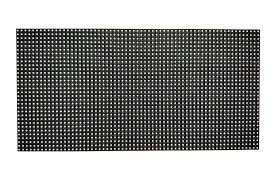
Pixel pitch — the distance between the centers of adjacent pixels — is critical to image clarity. A small pixel pitch (sub-1mm in MicroLED displays, 0.9-2.5mm in fine-pitch LED LCDs) enables high resolution even at close viewing distances, enhancing readability and sharpness. Conversely, larger pitch displays (greater than 3mm) are suited for outdoor or large-format signage, where viewing distance exceeds several meters.
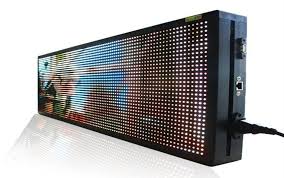
The recent development of chip-scale packaging (CSP) and flip-chip bonding has enabled reduced pixel sizes and improved uniformity. Data from leading manufacturers show that displays with 0.7mm pixel pitch can deliver 4K resolution at screen sizes under 100 inches, accommodating commercial and residential applications alike.
Brightness and Contrast
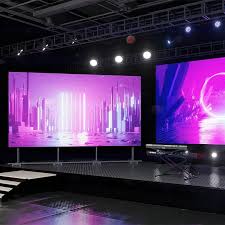
One of the major advantages of LED technology is superior brightness output. High-brightness LED backlights can achieve luminance levels upwards of 1000 nits for indoor displays; outdoor LED displays often exceed 5000 nits to overcome ambient sunlight. Technological advances like dynamic brightness adjustment based on ambient light sensors contribute to better visibility and lower power consumption.
Contrast ratio is enhanced by the combination of LED backlighting and liquid crystal modulation. Techniques such as local dimming—selectively dimming LED zones—boost perceived contrast up to 5000:1 or higher, critical for displaying vivid images and true blacks, especially in HDR (High Dynamic Range) content. Research from the Society for Information Display (SID) supports the trend toward integrating advanced dimming controls for next-generation LED displays.
Color Accuracy and Gamut
LED displays display colors by mixing red, green, and blue diode emissions. The spectral purity and stability of LEDs directly affect color gamut and accuracy. Most contemporary displays achieve coverage over 90% of the DCI-P3 color space, with some premium panels reaching or exceeding Rec. 2020 color standards, vital for professional video and broadcasting applications.
A critical development has been the use of quantum dot enhancement films (QDEF) in LCD backlighting units, which convert LED blue emission to highly saturated green and red light, enhancing color gamut without sacrificing efficiency or lifespan. This technology finds wide adoption in commercial UHD displays.
Viewing Angle and Uniformity
Wide viewing angles remain an engineering challenge for LED LCDs, primarily because the liquid crystals inherently modulate light directionally. Innovations such as IPS (In-Plane Switching) and VA (Vertical Alignment) panels combined with LED backlights have enlarged the horizontal and vertical viewing angles to over 178 degrees, as certified under IEC 61966-2-1 color management protocols.
Uniformity of brightness and color across the entire screen is essential for professional use cases such as control rooms or high-end advertising. Manufacturing processes now include advanced binning of LEDs, uniform heat dissipation designs, and multidimensional calibration to limit luminance variance to under 3%, surpassing typical market thresholds.
Reliability and Lifespan
LEDs exhibit long lifespans of up to 100,000 hours under ideal conditions, greatly exceeding traditional CCFL backlights. However, factors such as thermal management, drive current, and environmental exposure can impact durability. State-of-the-art LED display modules incorporate active cooling systems, temperature sensors, and adaptive driving circuits to maintain optimal operating environments.
Certifications like UL (Underwriters Laboratories) and CE (Conformité Européenne) ensure compliance with safety and performance standards throughout production. Accelerated aging tests—conducted per JEDEC JESD22-A108—predict long-term reliability and inform warranty guarantees.
Manufacturing Advances
Recent manufacturing breakthroughs include automated pick-and-place robots for precise LED component placement, use of flexible printed circuit boards (FPCBs) for curved and foldable displays, and application of nano-coatings for moisture resistance and scratch protection.
Cleanroom environments and process control are vital to achieving high yields and defective pixel rates as low as 1 part per million. Inline inspection systems employing machine vision identify soldering defects and alignment errors real-time, ensuring consistent module quality.
Future Directions: MicroLED and Beyond
MicroLED technology—featuring microscopic LEDs as individual pixels—promises the ultimate combination of high brightness, infinite contrast (due to self-emission), wide color gamut, and ultra-low latency. Despite fabrication complexity and current cost barriers, industry leaders project mass adoption within five years in sectors such as augmented reality (AR), virtual reality (VR), and premium TVs.
Integration of AI-based calibration and real-time diagnostics will further enhance display performance and automate maintenance. Meanwhile, energy efficiency trends push developments toward low-voltage, high-efficacy LEDs meeting ENERGY STAR specifications for displays.
Conclusion
LED LCD screen technology today embodies a marriage of sophisticated semiconductor engineering, advanced optical materials, and rigorous manufacturing discipline. By understanding and optimizing core parameters such as pixel pitch, brightness, color accuracy, and durability, engineers ensure LED displays meet the increasing demands of diverse applications, from retail signage to cinematic displays.
The ongoing evolution of LED displays hinges on interdisciplinary innovation, adherence to global standards such as IEC 62717 and JEDEC JESD22, and industry collaboration to overcome remaining hurdles like cost-efficiency and scalability. For manufacturers and end-users alike, these advances translate into more vibrant, reliable, and versatile screens that are reshaping how visual content is experienced worldwide.
References:
1. International Electrotechnical Commission (IEC) 62717 – LED modules for general lighting — Performance requirements
2. Society for Information Display (SID) Display Week Conference Proceedings, 2022
3. JEDEC Solid State Technology Association JESD22-A108 – Temperature Cycling
4. UL Certification Guidelines for LED Devices
5. ENERGY STAR Program Requirements for Displays
6. NAB Show 2023 Technical Papers on LED Display Innovations













