

Advancements and Best Practices in LED LCD Display Manufacturing: Technical Insights and Industry Standards
The LED LCD display industry has witnessed significant technological advancements over the past decade, driven by continuous innovation in materials, manufacturing processes, and electronics integration. As a professional LED display engineer with extensive experience, this article aims to offer an authoritative and practical overview of LED LCD manufacturing, focusing on key technical parameters, materials, industry standards, quality control measures, and emerging trends.
Core Technical Parameters of LED LCD Displays
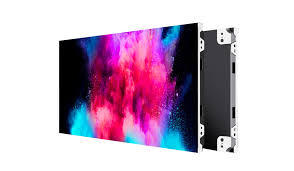
Understanding critical specifications is essential for both manufacturers and end-users to gauge display performance. In LED LCD technology, the backlight unit uses LEDs (Light Emitting Diodes), providing superior brightness control, energy efficiency, and color reproduction compared to traditional CCFL (Cold Cathode Fluorescent Lamp) backlights.
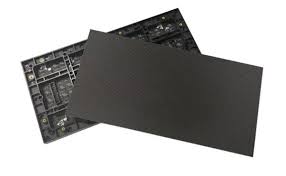
- Resolution and Pixel Density: Modern LED LCD panels achieve resolutions from HD (1280×720) up to 8K (7680×4320). Pixel density ranges between 100 to over 400 PPI (Pixels Per Inch), depending on the application—from large outdoor displays to small mobile screens.
- Brightness and Contrast Ratio: Typical brightness for standard LED LCDs is 300-500 cd/m², with high-end commercial displays reaching up to 1000 cd/m² or more to ensure outdoor visibility. Contrast ratios have improved to 5000:1 or higher, leveraging advanced local dimming and quantum dot enhancements.
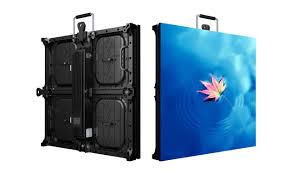
- Color Gamut and Accuracy: Utilizing wider color gamuts like DCI-P3 or AdobeRGB ensures vivid and accurate color reproduction. Delta E values below 2 are considered excellent for color fidelity.
- Response Time and Refresh Rate: Typical response times fall under 5 ms, while refresh rates may reach 120 Hz or beyond for applications such as gaming and professional video to reduce motion blur.
Materials and Manufacturing Process Innovations
The manufacturing of LED LCD displays involves precisely layering components—namely, the LCD panel, LED backlight, driver ICs, and protective glass. Key materials and process aspects include:
- LED Backlight Modules: Transitioning to mini-LED and micro-LED backlighting has enabled higher precision in local dimming zones, improving contrast and power efficiency.
- Quantum Dot Enhancement Film (QDEF): Integrating QDEF layers enhances color saturation and brightness, adhering to standards from the Society for Information Display (SID).
- Thin-Film Transistor (TFT) Array: Manufacturing TFT arrays on glass or flexible substrates requires photolithography under cleanroom conditions to ensure pixel accuracy and uniformity.
- Assembly and Testing: Automated Optical Inspection (AOI) and High Dynamic Range (HDR) calibration are critical for defect detection and color consistency. Industry standards such as ISO 9241 (Ergonomics of Human-System Interaction) guide quality assurance.
Industry Standards and Quality Control
Compliance with international standards guarantees product reliability and safety:
- IEC 62368-1: Governs safety requirements for electronic audio/video equipment, including LED LCD displays, ensuring protection against electrical hazards.
- RoHS and REACH: Environmental directives limiting hazardous substances in manufacturing.
- MIL-STD-810G: Military-grade testing for rugged displays used in harsh environments, covering shock, vibration, and temperature extremes.
Manufacturers implement Six Sigma methodologies combined with Statistical Process Control (SPC) to minimize defects during production runs.
Emerging Trends and Future Outlook
Several industry trends are reshaping LED LCD manufacturing:
- MicroLED Integration: Though currently costly, micro-LEDs promise superior brightness, dynamic range, and lifespan without the need for traditional LCD panels.
- Flexible and Transparent Displays: Innovations in flexible substrates and indium tin oxide (ITO) replacements offer new form factors for automotive and wearable applications.
- AI-Driven Manufacturing: Machine learning algorithms optimize production yields and enable predictive maintenance in display fabrication plants.
- Sustainability: Manufacturers increasingly use recyclable materials and reduce energy consumption throughout the product lifecycle, aligning with global climate targets.
Conclusion
The LED LCD display sector remains dynamic, benefiting from significant advances in materials engineering, manufacturing automation, and quality control. By adhering to stringent international standards and embracing next-generation technologies like mini-LED and micro-LED, manufacturers can deliver high-performance, reliable, and energy-efficient displays. For professionals in the industry, continuous learning and adaptation ensure competitiveness and innovation in this evolving landscape.
References:
- Society for Information Display (SID) – Display Industry Standards
- IEC 62368-1 Safety Standard Documentation
- RoHS Directive 2011/65/EU and REACH Regulations
- MIL-STD-810G Environmental Testing Methods
- Recent IEEE Transactions on Display Technology Articles (2022-2024)













