

Advanced Engineering and Manufacturing of LED LCD Screens: Technical Insights and Industry Standards
The evolution of LED LCD screen technology has profoundly transformed display applications, spanning consumer electronics, commercial signage, and industrial systems. As an experienced LED display engineer, I aim to provide an authoritative overview of the manufacture and technical parameters of LED LCD screens, underscoring key engineering principles and industry standards essential for producing reliable, high-performance displays.
Introduction
LED LCD screens integrate light-emitting diodes (LEDs) as backlighting sources with liquid crystal display (LCD) technology. This hybrid approach delivers better brightness, contrast, and energy efficiency compared to traditional CCFL (cold cathode fluorescent lamp) LCD backlighting. As display demand grows for larger sizes, higher resolution, and enhanced color reproduction, manufacturing LED LCDs requires precision engineering and rigorous quality control aligned with global standards such as IEC 60950-1 and ISO 9241 for safety and ergonomics.
Main Body
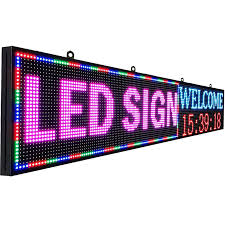
1. Architecture of LED LCD Screens
At the heart of LED LCD technology lies a layered structure:
- Liquid Crystal Layer: Modulates incoming light to form images.
- Polarizing Filters: Control light polarization, enhancing image contrast.
- Color Filters: Generate specific RGB colors.
- LED Backlighting Module: Provides uniform illumination through an array of LEDs, either in edge-lit or direct-lit (full-array) design.
Edge-lit LED backlights use LEDs mounted on edges with light guides, enabling ultra-thin panels but sometimes compromising uniformity. Full-array backlighting places LEDs directly behind the panel, supporting local dimming zones for improved contrast management.
2. Key Technical Parameters
- Brightness: Ranges from 250 to over 1000 nits (cd/m²), depending on application; HDR displays usually require 600+ nits.
- Resolution: From HD (1280x720) to 8K (7680x4320), with pixel density exceeding 300 PPI in high-end mobile displays.
- Contrast Ratio: Dynamic local dimming can achieve ratios exceeding 100,000:1, essential for deep blacks and vivid imagery.
- Color Gamut: Typical gamut covers about 72% NTSC; premium models exceed 100% AdobeRGB or DCI-P3 standards for wide color reproduction.
- Response Time: Measured in milliseconds (ms), often 1-8 ms, critical to avoid motion blur in video.
3. Manufacturing Processes and Quality Control
- LED Selection and Binning: LEDs are sorted by luminance, wavelength, and voltage to ensure uniform backlighting intensity and color temperature (usually 6500K).
- Assembly Environment: Cleanroom conditions (Class 1000 or better) prevent particle contamination that can damage LCD cells.
- Backlight Module Integration: Precision alignment ensures uniform light diffusion; light guides and diffuser films are engineered to minimize hotspots.
- Calibration: Post-assembly calibration using spectroradiometers and colorimeters adjusts white balance, gamma curves, and luminance uniformity.
- Testing Standards: Comprehensive testing includes electromagnetic compatibility (EMC), thermal cycling, shock/vibration resistance, and burn-in tests to guarantee durability.
4. Case Studies and Industry Applications
Prominent manufacturers, including Samsung Display and LG Display, have implemented advanced quantum dot-enhanced LED LCDs to achieve superior brightness and color purity meeting UHD Alliance standards. The automotive sector demands conformal LED LCD screens with IP67-rated water and dust resistance, temperature tolerance (-40°C to 85°C), and anti-glare coatings validated per ISO 9267.
5. Challenges and Future Directions
Challenges include managing power consumption while scaling screen size, mitigating LED aging effects, and improving refresh rates beyond traditional TN and IPS panels. Emerging technologies like mini-LED and micro-LED backlighting promise finer local dimming control and higher efficiency, albeit with increased fabrication complexity.
Conclusion
Manufacturing high-quality LED LCD screens involves integrating sophisticated optical engineering, rigorous process control, and adherence to international safety and performance standards. Understanding and optimizing technical parameters such as brightness, contrast, and color gamut, combined with strategic LED selection and meticulous assembly, are crucial for producing durable, vibrant, and energy-efficient displays. Continued innovations in LED technologies and backend electronics will further redefine display quality benchmarks, catering to diverse industries worldwide.













