

Advanced LED Display Technology: Practical Applications, Challenges, and Emerging Trends
In the rapidly evolving field of display technology, LED (Light Emitting Diode) displays have become the cornerstone for a broad range of applications, replacing traditional LCD and plasma screens due to their superior brightness, energy efficiency, and longevity. As a professional LED display engineer with extensive experience, this article explores the practical applications of LED displays, outlines their technical advantages, addresses common challenges, and highlights the latest trends shaping the industry.
Technical Overview and Parameters
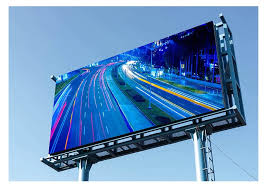
LED displays consist of arrays of light-emitting diodes, with each diode capable of producing specific colors by controlling the intensity of red, green, and blue sub-pixels. Typical parameters include:
- Pixel Pitch: The distance between the centers of two adjacent LEDs, generally ranging from 0.7mm (fine pitch) for indoor displays to over 10mm for large outdoor screens. A smaller pixel pitch yields higher resolution.
- Brightness: LED displays can achieve luminance levels up to 5000 nits for outdoor applications, essential for visibility under direct sunlight. Indoor models usually range from 800 to 1500 nits.
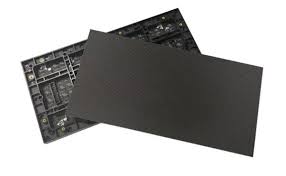
- Viewing Angle: Modern LED displays provide wide viewing angles (up to 160° horizontally and vertically), ensuring uniform image quality from various perspectives.
- Refresh Rate: High refresh rates (above 1920Hz) reduce flicker and provide smooth video playback, critical for broadcast and live events.
- Color Accuracy & Calibration: Advanced LED modules support 10-bit or higher color depth, enabling over 1 billion colors for vivid image reproduction.
Practical Applications
1. Advertising and Digital Signage: LED displays are ubiquitously used in commercial advertising, retail stores, and public spaces. Their brightness and contrast ratios outperform alternatives, making advertisements visible even in bright daylight, enhancing customer engagement.
2. Sports Arenas and Stadiums: Large-scale outdoor LED screens provide fans with close-up views, replays, and live scoring. Panels are designed to withstand weather elements and varying light conditions, often complying with IP65 or higher ingress protection ratings.
3. Transportation Hubs: Airports, train stations, and subways utilize LED displays for real-time scheduling and information dissemination. Their high reliability and clarity improve passenger flow and communication efficiencies.
4. Broadcast Studios and Control Rooms: Fine pixel pitch, high-resolution LED video walls create immersive backgrounds for live television production. Their uniformity and color precision are critical for high-definition content.
5. Corporate and Educational Settings: LED screens serve as dynamic presentation tools, replacing traditional projectors by offering sharper images and better contrast under various lighting conditions.
Advantages
- Energy Efficiency: LEDs consume significantly less power compared to LCD and plasma displays, leading to operational cost savings.
- Long Lifespan: Typical LED modules last 50,000 to 100,000 hours, reducing maintenance and replacement frequency.
- Durability: Robust construction enables operation in extreme environments, ranging from sub-zero to high-temperature conditions.
- Flexibility: Curved, transparent, and flexible LED display designs allow creative architectural integration.
- Fast Response Time: Temporal responsiveness surpasses LCDs, crucial for interactive applications and minimizing motion blur.
Common Challenges
Despite these advantages, LED displays face certain challenges:
- Heat Dissipation: High brightness and density generate heat requiring efficient thermal management, often solved by heat sinks and active cooling systems.
- Uniformity Issues: Discrepancies in LED brightness or color aging can cause non-uniformity. Rigorous factory calibration and on-site maintenance are vital.
- Cost: High-resolution indoor LED displays with sub-millimeter pixel pitch are still costly compared to LCD counterparts.
- Environmental Interference: Outdoor screens are vulnerable to rain, dust, and electromagnetic interference, necessitating robust IP ratings and shielding.
- Pixel Failure & Repair Complexity: Dead pixels or module failures can degrade image quality; modular designs ease maintenance but require skilled technicians.
Emerging Trends
The LED display industry continuously adapts to technological innovations:
- Mini-LED and Micro-LED Integration: Mini-LED backlighting has enhanced LCD contrast and brightness, while Micro-LED technology promises self-emissive displays with superior color accuracy and scalability for next-gen devices.
- HDR and Wide Color Gamut: Implementing High Dynamic Range (HDR) capability expands luminance ranges, coupled with Rec. 2020 and DCI-P3 color spaces for more realistic imagery.
- AI and Smart Displays: Integration of AI-driven image processing optimizes picture quality in real-time based on ambient lighting and content type.
- Energy Harvesting and Sustainability: Developments in low-power LEDs and recyclable materials focus on environmental footprints.
- Flexible and Transparent Displays: Expanding use in automotive HUDs (Heads Up Displays), immersive retail environments, and public installations.
Industry Standards and Quality Compliance
Compliance with standards such as IEEE 1789-2015 for flicker mitigation and IEC 60598 for LED luminaires ensures safe, consistent, and eye-friendly displays. Moreover, adherence to environmental standards like RoHS and REACH guarantees eco-friendly manufacturing.
Conclusion
LED display technology represents a pivotal advancement in visual communication, distinguished by flexibility, brightness, and resilience. Understanding the practical applications alongside inherent challenges enables engineers and businesses to optimize deployment, maintenance, and innovation. With continuous advances in pixel technology, energy efficiency, and AI integration, LED displays will remain central to the future of digital visualization across industries worldwide.
Authoritative References
- "LED Display Technologies: Fundamentals and Trends," Journal of Display Technology, IEEE, 2022.
- National Electrical Manufacturers Association (NEMA) Standards for Display Devices.
- International Electrotechnical Commission (IEC) Compliance Reports on LED Signage.
- Case Study: Samsung Micro-LED Video Walls in Broadcast Studios, NAB Show 2023.













