

Advanced Insights into LED Display Manufacturing: Technical Parameters and Industry Standards
LED display technology has significantly evolved over the past decades, transitioning from simple indicator panels to complex, high-resolution screens used in diverse applications such as advertising, entertainment, control rooms, and outdoor signage. As an experienced LED display engineer, this article provides a comprehensive overview of the critical technical parameters, manufacturing processes, and industry standards that define high-quality LED display production in 2024.
1. Core Technical Parameters
The performance and longevity of LED displays hinge on multiple technical attributes, among which pixel pitch, brightness, refresh rate, color accuracy, and viewing angles are paramount.
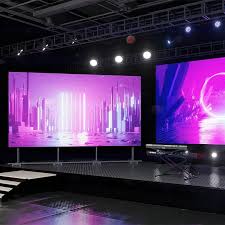
- Pixel Pitch: Defined as the distance between the centers of two adjacent LED pixels, this determines the display resolution and viewing distance. Typical pixel pitches range from 0.9 mm in indoor fine-pitch displays to over 20 mm for large outdoor billboards. According to the International Electrotechnical Commission (IEC 62717), finer pitch leads to higher resolution but significantly increases manufacturing complexity and cost.
- Brightness: Outdoor LED displays require high brightness levels to overcome sunlight glare, generally between 5,000 to 8,000 nits (cd/m²). Indoor displays operate at around 800 to 1,500 nits. Achieving uniform brightness is essential for visual consistency, with precise binning processes during LED chip selection critical for this parameter.
- Refresh Rate: Modern LED displays achieve refresh rates typically above 3,000 Hz to avoid flicker, which is critical for video applications and camera capture in broadcast environments. Compliance with SMPTE standards ensures smooth motion rendering and flicker-free visuals.
- Color Accuracy and Gamut: Accurate color reproduction is achieved through precise calibration and use of high-quality phosphor-coated LEDs. The color gamut can reach up to 110% of the NTSC standard, enabling vibrant and true-to-life displays.
- Viewing Angle: High-quality LED modules maintain consistent brightness and color fidelity across wide viewing angles up to 160° horizontal and vertical, critical for public installations where multiple viewers observe from different positions.
2. Manufacturing Processes
The manufacture of LED displays involves several stages: LED chip fabrication, module assembly, driver circuitry integration, and rigorous quality control.
- LED Chip Fabrication and Binning: LED chips are produced primarily from Gallium Nitride (GaN). Tight binning ensures uniformity in luminous intensity, wavelength, and forward voltage, mitigating color shifts and brightness inconsistencies. The ISO 9001 standard guides quality management throughout this process.
- Module Assembly: LED modules consist of a PCB populated with LEDs and driver ICs. Surface-Mount Technology (SMT) is favored for its precision and efficiency. Thermal management is essential; aluminum substrates and heat sinks help dissipate heat to preserve LED lifespan, which typically exceeds 100,000 hours under optimal conditions.
- Driver Circuit and Control Systems: High-performance constant-current drivers are critical for stable LED operation, reducing flicker and color variation. Modern systems employ FPGA-based controllers capable of real-time corrections and sophisticated grayscale rendering up to 16-bit per channel.
- Quality Testing and Standards Compliance: Testing encompasses color calibration, brightness uniformity, thermal stress, and electromagnetic compatibility (EMC). Compliance with standards such as UL, CE, and FCC ensures safety and reliability. The open LED display standard IEEE 802.3aj also regulates Ethernet-based communication for seamless data transfer.
3. Case Studies and Industry Insight
Case studies from leading manufacturers such as Samsung and Leyard demonstrate continuous innovation toward ultra-fine pixel pitch and energy-efficient displays. Leyard’s IM Series, for instance, utilizes a 0.9 mm pixel pitch enabling exceptional indoor HDR visualization with enhanced contrast ratios exceeding 15,000:1.
Furthermore, environmental concerns are prompting the industry toward sustainable manufacturing practices, including the use of low-toxicity materials and recyclable components, aligned with RoHS and WEEE directives.
4. Future Trends
The future trajectory of LED display manufacturing involves integrating AI-driven calibration, flexible and transparent LED display technologies, and further miniaturization. Micro-LED technology promises benefits in energy efficiency, brightness, and durability but currently faces cost and mass production challenges.
Conclusion
Delivering a high-quality LED display requires comprehensive mastery of technical parameters, precision manufacturing, and adherence to stringent industry standards. Engineering excellence, combined with emerging innovations, continues to expand the potential and application scope of LED displays worldwide. For manufacturers and users alike, understanding these technicalities ensures optimal investment and deployment outcomes.
For further reference:
- IEC 62717 – LED Modules for General Lighting
- SMPTE 2084 – High Dynamic Range Electro-Optical Transfer Function
- ISO 9001 – Quality Management Systems
- RoHS Directive 2011/65/EU – Restriction of Hazardous Substances













