

Advanced Insights into LED LCD Screen Manufacturing: Technologies, Challenges, and Industry Standards
The manufacture of LED LCD screens represents a pinnacle of modern display technology, combining the vibrant illumination of light-emitting diodes (LEDs) with the precise image control of liquid crystal displays (LCDs). This fusion results in displays widely used across consumer electronics, professional visualization, signage, and industrial applications. As a seasoned LED display engineer, sharing deep insights into this field requires a focus on technical parameters, manufacturing processes, challenges, and adherence to global industry standards, all crucial for ensuring product excellence and longevity.
Introduction
The LED LCD technology hinges on backlighting an LCD panel using LEDs rather than traditional cold cathode fluorescent lamps (CCFLs). This switch has significantly enhanced display performance in terms of energy efficiency, color gamut, contrast ratio, and form factor flexibility. With the global demand for higher resolution and more vibrant screens pushing manufacturing boundaries, understanding the full production cycle and technical nuances becomes essential for manufacturers and designers alike.
Main Body
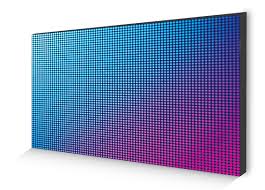
1. Fundamental Technology Overview
At the heart of LED LCD screens lies a liquid crystal matrix that modulates light passing through it, which the LED backlight provides. Modern LED backlighting comes in two principal forms:
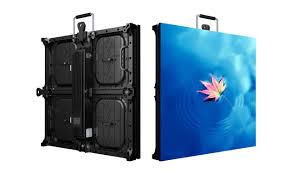
- Edge-lit LED Panels: LEDs are placed along the edges of the screen, often combined with light guides to distribute illumination evenly. Edge-lit designs enable thinner screens but require precise optical films to ensure uniform brightness.
- Direct-lit and Full Array with Local Dimming: LEDs are placed directly behind the LCD panel, divided into zones that can be dimmed independently. This results in improved contrast ratios and deeper black levels, crucial for high dynamic range (HDR) content.
The transition from CCFL to LEDs has allowed greater control over brightness (up to 1000 nits and beyond in premium models) and color rendering indexes surpassing 90, aligned with BT.709 and newer BT.2020 color standards.
2. Manufacturing Process Complexity
Producing high-quality LED LCD screens involves a multi-stage process that integrates precision engineering with cleanroom protocols:
- Panel Fabrication: Starts with substrate preparation, typically glass or flexible plastic for curved or foldable displays. Advanced photolithography patterns the thin-film transistors (TFTs) that drive each pixel.
- Backlight Assembly: Selection of LED type—SMD (Surface-Mounted Device) LEDs or mini-LED arrays—affects brightness, power consumption, and uniformity. Mini-LED technology, with thousands of tiny LEDs, improves local dimming precision but escalates manufacturing complexity and costs.
- Optical Enhancements: Integration of diffusers, prism sheets, and polarizers optimizes luminance distribution and viewing angles. Optical films like 3M’s Vikuiti technology are industry benchmarks for improving brightness and efficiency.
- Calibration & Quality Control: Automated optical inspection (AOI) and color calibration systems adjust for uniformity, gamma curves, and ensure conformance to industry standards, such as IEC 60950 for safety and IEC 62471 for photobiological safety.
3. Challenges and Solutions
Key challenges in LED LCD manufacturing include thermal management, uniformity, and longevity:
- Heat Dissipation: LED backlights produce heat that can degrade liquid crystals. Heat sinks and thermally conductive adhesives are employed to maintain optimal operating temperatures, enhancing lifespan.
- Light Uniformity: Variations in LED brightness or alignment can cause ‘hotspots’ or dim areas. Employing mini-LED arrays with local dimming zones reduces such irregularities, achieving contrast ratios exceeding 5000:1.
- Material Degradation: Prolonged exposure to blue LED light can deteriorate LCD materials. Innovations in quantum dot (QD) enhancement films improve color purity while reducing harmful wavelengths, extending panel life.
4. Industry Standards and Future Directions
Adherence to international standards is pivotal for market acceptance and safety assurance. Aside from IEC standards mentioned, compliance with RoHS directives limits hazardous substances. The Institute of Electrical and Electronics Engineers (IEEE) provides interoperability specs critical for signaling protocols.
Emerging trends include the integration of OLED layers with LED LCDs for hybrid displays and expansion of micro-LED technology, promising even greater efficiencies and pixel densities. Furthermore, variable refresh rates and HDR capabilities continue to evolve, directed by VESA’s DisplayHDR certification program.
Conclusion
The manufacture of LED LCD screens is a sophisticated convergence of materials science, optical engineering, and precision manufacturing. Technological advances like mini-LED backlighting and quantum dot enhancements have significantly elevated display performance, meeting the escalating requirements of modern applications. Nevertheless, challenges such as thermal management and uniformity require persistent innovation and strict adherence to industry standards. For manufacturers and engineers, staying abreast of these developments ensures production of high-quality, reliable LED LCD screens that meet global market demands and regulatory frameworks.
By leveraging deep technical expertise and proven manufacturing protocols, the LED LCD industry continues to provide displays that power the digital age’s visual experiences with unmatched clarity and efficiency.
References:
- International Electrotechnical Commission (IEC) Standards: IEC 60950, IEC 62471
- VESA DisplayHDR Certification Specifications
- 3M Optical Films Product Literature
- IEEE Display Standards Documentation
- Industry Case Studies from Samsung Display and LG Electronics Technical White Papers













