

Cutting-Edge Advances in LED LCD Screen Manufacturing: A Comprehensive Guide for Industry Professionals
In the rapidly evolving landscape of display technology, LED LCD screens continue to dominate a wide range of applications from consumer electronics to industrial and commercial uses. As an experienced LED display engineer, I will delve into the technical intricacies, latest manufacturing advancements, and quality standards that define modern LED LCD screen production. This article provides an authoritative and practical overview designed to equip industry professionals with essential knowledge for optimizing display performance and manufacturing efficiency.
Introduction
LED LCD (Light Emitting Diode Liquid Crystal Display) technology merges the benefits of backlit displays with the dynamic control of liquid crystals. It offers higher brightness, greater color accuracy, and improved energy efficiency compared to earlier CCFL (Cold Cathode Fluorescent Lamp) backlit displays. Understanding the manufacturing process, quality control measures, and technological advancements is crucial for ensuring top-tier displays that meet diverse global market demands.
Main Body
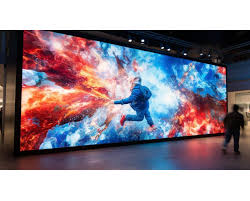
1. Fundamentals of LED LCD Screen Manufacturing
At its core, an LED LCD panel consists of a liquid crystal layer sandwiched between two polarized glass substrates, illuminated by an LED backlight. The manufacturing process involves several critical steps:
- Substrate Preparation: High-purity glass substrates must be precisely cleaned and coated with conductive films, typically indium tin oxide (ITO), to form transparent electrodes.
- Liquid Crystal Injection and Sealing: Liquid crystals are carefully injected between substrates in a vacuum environment to avoid contamination. The cell is then sealed with adhesive materials that must withstand thermal cycling.
- Alignment Layer Formation: Polyimide layers are rubbed to create microscopic grooves, aligning liquid crystal molecules and ensuring consistent viewing angles and optical performance.
- Backlight Assembly: The LED array is engineered to deliver uniform luminance across the panel. The use of quantum dot technology and mini-LEDs has recently enhanced color gamut and brightness, elevating standards beyond conventional edge-lit or direct-lit LEDs.
2. Technical Parameters and Quality Considerations
Performance metrics for LED LCD screens hinge on precise control over several parameters:
- Brightness: Modern LED LCDs achieve peak brightness levels between 300 to 1500 nits, depending on application—higher for outdoor or HDR (High Dynamic Range) displays.
- Contrast Ratio: Achieving contrast ratios exceeding 5000:1 is possible by optimizing liquid crystal response times and LED dimming algorithms.
- Color Accuracy: Standards such as DCI-P3 and Rec. 2020 guide color calibration, with quantum dot-enhanced backlights helping meet stringent requirements.
- Viewing Angles: IPS (In-Plane Switching) technology ensures consistent color and luminance over angles of 178° horizontally and vertically.
- Power Efficiency: Advances in low power LEDs and driver ICs reduce consumption by up to 30% compared to conventional models, vital for battery-powered mobile devices.
3. Manufacturing Innovations and Processes
Recent industry breakthroughs have introduced:
- Mini-LED and Micro-LED Integration: These smaller LEDs allow for localized dimming zones, dramatically improving contrast without sacrificing brightness.
- Automated Optical Inspection (AOI): Employing machine vision systems enhances defect detection at micron-level precision, reducing failure rates and improving yield.
- Flexible and Transparent LED LCDs: Innovations in flexible substrates like polyimide have enabled curved and foldable displays. Transparent displays find growing uses in automotive heads-ups and retail.
- Environmental Compliance: Adhering to directives such as RoHS and REACH ensures materials used are free from hazardous substances, supporting sustainability goals.
4. Standards and Testing
Quality assurance follows international benchmarks including:
- ISO 9241-307 for ergonomic requirements of visual display terminals,
- JEITA standards specifying reliability testing parameters,
- MIL-STD-810 for ruggedness in military-grade displays,
- DisplayHDR certifications for high dynamic range performance validation.
Testing procedures cover thermal cycling, humidity resistance, luminance uniformity, and color gamut accuracy.
Conclusion
The manufacturing of LED LCD screens embodies a sophisticated interplay of material science, photonics engineering, and precision assembly. Leveraging cutting-edge technologies such as mini-LED backlighting, advanced liquid crystal alignments, and AI-driven inspection can significantly enhance performance and reliability. Compliance with international standards safeguards product quality and global market acceptance. For professionals engaged in display engineering and manufacturing, staying informed about these developments is essential to maintaining competitiveness and driving innovation.
As the LED LCD industry progresses, integrating new materials and processes will be pivotal in meeting escalating demands for brighter, more efficient, and versatile displays across all sectors. A thorough grasp of both fundamentals and innovations informs strategic decision-making, ultimately delivering superior products that satisfy an increasingly discerning global clientele.













