

Advancements and Best Practices in LED LCD Screen Manufacturing for Superior Display Performance
In today’s rapidly evolving display technology landscape, LED LCD screens have become a cornerstone of visual communication, spanning from consumer electronics to large-scale commercial applications. As a seasoned LED display engineer with extensive hands-on experience, this article explores the critical technical parameters, manufacturing advances, and industry best practices that define the current state-of-the-art in LED LCD screen production. It also highlights key insights and standards critical to delivering superior performance, reliability, and cost-efficiency.
Understanding LED LCD Technology
LED LCD screens combine the liquid crystal display (LCD) technology with LED backlighting to offer improved brightness, contrast, and energy efficiency relative to traditional CCFL (cold cathode fluorescent lamp) panels. The LED backlight illuminates the liquid crystal layer, which modulates light to create images. Integral technical components of LED LCD manufacturing include the choice of LED type (edge-lit vs direct-lit), liquid crystal panel quality, and driver electronics that ensure optimal synchronization.
Key Technical Parameters
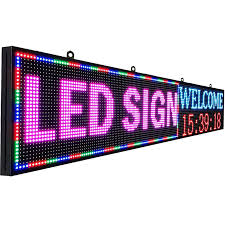
1. Pixel Pitch and Resolution: The pixel pitch—distance between adjacent pixels—directly affects resolution and image sharpness. High-definition LED LCD panels typically feature pixel pitches from 0.5 mm to 1.2 mm for close-viewing environments, while larger outdoor displays employ pitches of 2.5 mm and above. The precise alignment and uniformity of pixels govern the fidelity of the visual output, crucial for applications like medical imaging or high-end broadcast monitors.
2. Brightness and Contrast Ratio: LED backlighting enables brightness levels upwards of 1000 nits in commercial displays, with professional-grade screens pushing beyond 1500 nits for high ambient light conditions. The contrast ratio—the luminance ratio between the brightest white and darkest black—often exceeds 1000:1 in modern LED LCDs, helped by local dimming technologies which selectively control LED zones to reduce light bleed and improve black levels.
3. Color Gamut and Accuracy: Utilizing LED backlights with quantum dots or RGB LEDs can extend the color gamut up to 95-100% of the DCI-P3 standard, enhancing color richness and accuracy. Factory calibration and integration with hardware color management systems ensure adherence to industry standards such as sRGB, Adobe RGB, or Rec. 2020, necessary for cinematography and professional graphic design.
4. Refresh Rate and Response Time: For applications involving motion—gaming displays or digital signage—refresh rates of 120 Hz and above, coupled with response times under 5 ms, are pivotal to avoiding motion blur and input lag. Specialized driver ICs and firmware optimizations play a vital role here.
Manufacturing Insights and Industry Standards
Successful LED LCD manufacturing merges precision engineering with stringent quality control. Key process phases include substrate cleaning, thin-film transistor (TFT) array formation, color filter deposition, cell assembly, backlight integration, and module encapsulation. Inline inspection techniques such as Automated Optical Inspection (AOI) and electroluminescence (EL) testing ensure defect detection at micron levels, predictive of longevity and reliability.
Adherence to international standards like the International Electrotechnical Commission (IEC) 62717 for LED modules and ISO 9241-307 for visual ergonomics in display devices ensures product safety and ergonomic compliance. Additionally, compliance with energy efficiency certifications such as ENERGY STAR impacts product acceptance in global markets.
Emerging Trends and Practical Considerations
The industry is increasingly embracing mini-LED and microLED backlighting, significantly reducing pixel size and enabling finer local dimming zones, which enhance dynamic contrast beyond traditional LED LCDs. Integration of AI-driven factory automation and machine learning in inspection phases also drives yield improvement and reduces production costs.
From a practical standpoint, engineers must balance material costs, panel durability (EMI/RFI shielding, moisture resistance), and end-user performance expectations. Selecting high Grade A+ TFT substrates and implementing rigorous thermal management—such as use of heat spreaders—promotes both lifespan and visual stability in fluctuating environments.
Conclusion
Mastering LED LCD screen manufacturing requires a synergistic approach combining deep technical knowledge, robust process control, and adherence to global standards. Industries ranging from medical imaging to outdoor advertising benefit immensely from these displays, which continuously evolve with advancements in LED backlighting and panel technology. Staying abreast of innovations and applying engineering best practices ensures delivery of high-quality, reliable displays that meet stringent performance and durability benchmarks demanded by international markets.
References:
- International Electrotechnical Commission (IEC), IEC 62717: LED Modules for General Lighting
- ISO 9241-307: Ergonomics of human-system interaction – Displays
- ENERGY STAR Program Requirements for Displays, U.S. EPA
- Samsung Display Technical Whitepapers
- SID (Society for Information Display) Proceedings, 2023-2024













