

Advanced Technologies and Best Practices in LED LCD Screen Manufacturing
The LED LCD screen manufacturing industry has witnessed remarkable advancements in recent years, driven by innovations in materials science, display technologies, and manufacturing processes. As a professional LED display engineer with extensive experience, this article aims to provide an authoritative overview of the critical aspects of LED LCD screen manufacturing—emphasizing technological sophistication, manufacturing precision, and quality assurance—to support international industry stakeholders in making informed decisions.
LED LCD (Light Emitting Diode Liquid Crystal Display) combines the backlighting advantages of LED technology with the visual benefits of LCD panels. Unlike traditional CCFL (Cold Cathode Fluorescent Lamp) backlights, LED backlighting offers superior brightness uniformity, energy efficiency, and enhanced color gamut, making LED LCDs the predominant choice in consumer electronics, professional monitors, and large outdoor displays.
Materials and Components
Key to manufacturing high-quality LED LCD screens is the selection of materials and components. The LCD panel itself consists of two polarized glass substrates sandwiching a liquid crystal layer, with an active matrix layer typically composed of thin-film transistors (TFT) controlling pixel illumination. The backlighting layer consists of either edge-lit or direct-lit LED arrays, with the latter preferred for higher-end, local dimming displays. Modern production increasingly relies on Quantum Dot enhancement films (QDEF) to boost color accuracy and brightness, achieving NTSC color gamut coverage rates exceeding 90%, judged by the CIE 1931 chromaticity standards.
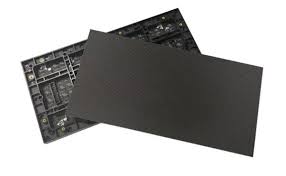
Another critical component is the LED backlight unit (BLU), which is designed for optimal luminous efficacy and thermal management. LED size, typically in SMD (Surface-Mounted Device) formats such as 2835 or 5050, influences brightness and power consumption. Industry standards such as IEC 62368-1 ensure that LEDs meet reliability and safety requirements during long operational lifespans, which often exceed 50,000 hours in quality panels.
Manufacturing Processes
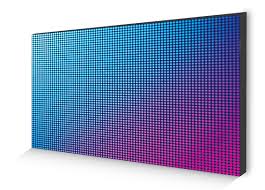
High-precision manufacturing processes are essential for producing defect-free LED LCD screens. Critical steps include the deposition of thin-film transistors through photolithography, application of liquid crystals via precise alignment layers, and bonding of polarization films. The integration of the LED backlighting array demands uniform placement to achieve even luminance across the screen surface, as non-uniformities cause poor image quality or visible hot spots.
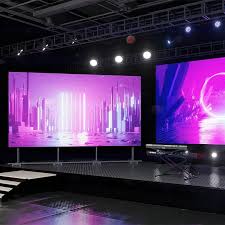
Automated optical inspection (AOI) systems are standard to detect microscopic defects such as dead pixels, uneven backlighting, or polarity errors. Many manufacturers employ Cleanroom environments (ISO Class 5-7) to minimize contamination during assembly, crucial for maintaining high yields and reducing return rates.
Technical Parameters and Quality Control
Advanced LED LCD screens are characterized by multiple technical parameters that define their performance and suitability for various applications:
- Resolution: Modern panels range from Full HD (1920x1080) to Ultra HD (3840x2160) and beyond, supporting 4K and 8K displays.
- Brightness: Typical brightness ranges from 300 cd/m² for indoor monitors, up to 1500 cd/m² or more for outdoor or HDR displays.
- Contrast Ratio: Static contrast ratios above 1000:1 are common, with local dimming enhancing dynamic contrast to over 5000:1.
- Color Gamut: Standards such as sRGB, AdobeRGB, and DCI-P3 are achieved through LED backlighting enhancements and precise color calibration.
- Response Time: For gaming and professional use, response times below 5 milliseconds reduce motion blur.
- Viewing Angle: Wide viewing angles (>178° horizontally and vertically) are achieved via IPS (In-Plane Switching) technology rather than TN (Twisted Nematic).
Quality control adheres to standards like ISO 9001 and IEC 60825 to ensure product consistency, safety, and durability. Reliability testing includes thermal cycling, humidity resistance per IEC 60068, and mechanical stress tests. A notable case is Samsung Display’s adoption of Gen 8.5 glass substrates to scale up panel size while maintaining pixel uniformity, reducing production costs without compromising quality—a major industrial advancement recognized in industry reports (Source: DisplayMate Technologies, 2023).
Emerging Trends and Future Perspectives
The LED LCD industry is gradually converging with emerging display technologies, including micro-LED and mini-LED backlighting. These innovations provide significantly improved contrast ratios, brightness per watt, and localized dimming zones. Mini-LED backlights feature thousands of dimming zones, increasing dynamic range and enabling better HDR content display, which is now a standard in high-end professional monitors and premium TVs.
Moreover, manufacturers are increasingly employing sophisticated AI-driven inspection systems and machine learning algorithms to identify manufacturing defects and optimize processes in real-time, pushing yields closer to 99% and reducing waste.
Sustainability concerns are reshaping material selection and energy efficiency standards. EU regulations and RoHS directives encourage the elimination of hazardous substances, while energy star ratings incentivize producing displays with reduced power consumption without sacrificing brightness or color performance.
Conclusion
LED LCD screen manufacturing demands robust expertise spanning materials science, precision engineering, and rigorous quality standards. The synergy of advanced backlighting technologies, meticulous manufacturing protocols, and enhanced quality assurance frameworks defines the competitive edge of modern LED LCD displays globally. Staying abreast of technological innovations, regulatory compliance, and sustainability goals will empower manufacturers and end-users alike to meet evolving industry requirements.
For practitioners and decision-makers in the international LED display sector, understanding these nuances is pivotal for deploying reliable, high-performance, and cost-effective LED LCD displays in diverse applications ranging from consumer electronics to professional and industrial domains.













