The Strategies for Maintaining LED Display Screens in Winter Environments
The country is experiencing a period of cooling. How can LED displays effectively handle the challenges posed by low temperatures in the harsh winter environment?
From December 16th to 17th, our country is currently experiencing the most intense cold wave of this winter, which has significantly impacted numerous regions. Some areas in North China and along the Huanghuai River are expected to reach or approach historical record lows for this period. Meanwhile, many southern regions are only seeing temperatures slightly above freezing point. The Central Meteorological Observatory has issued its first low temperature warning of the year. Given our vast territory and prolonged winter season in many areas, outdoor LED display screens face considerable environmental challenges when operating under extremely cold conditions. This necessitates LED display manufacturers to ensure their products possess robust cold-resistant capabilities and perform regular maintenance during usage to guarantee uninterrupted operation.
1. The outdoor LED display has evolved into a prominent representation of the city's identity and commercial prowess.
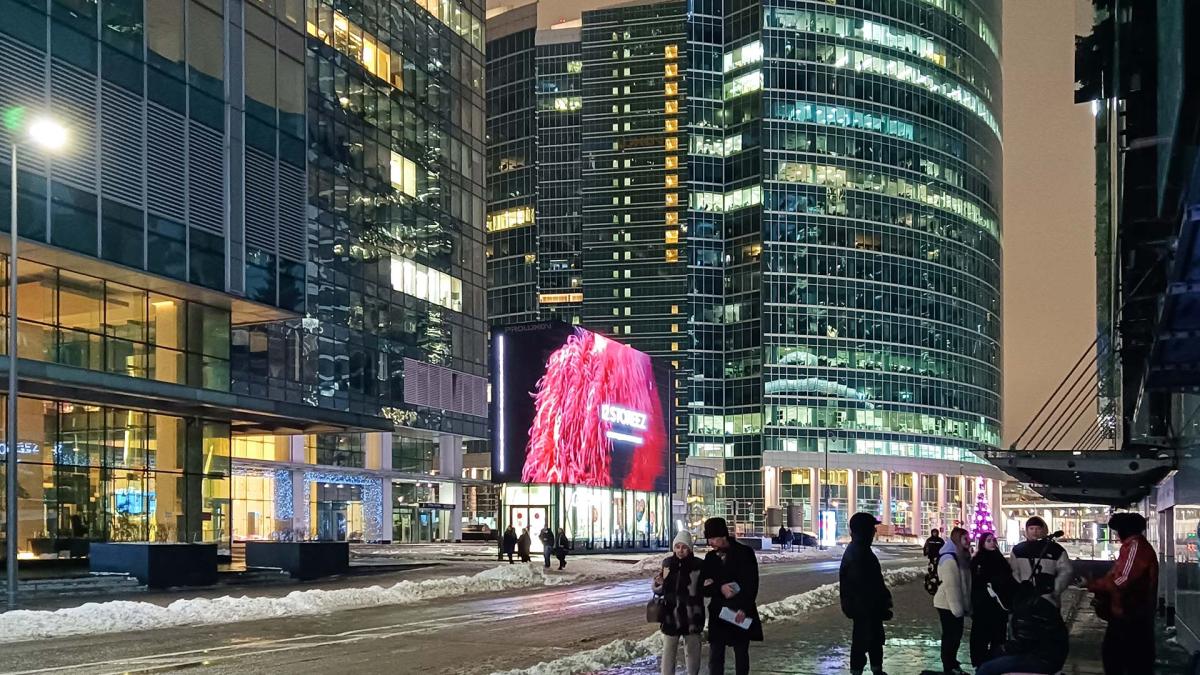
Nowadays, due to the growing demand for large-scale and high-definition displays, outdoor LED displays are increasingly being utilized in various outdoor settings. As a promising form of outdoor media, these displays offer numerous advantages including high brightness, impactful visual presence, wide viewing angles, and exceptional color reproduction capabilities. Consequently, they can be commonly observed throughout urban streets and alleys.
The addition of outdoor LED displays is essential for urban development in the new era due to their ability to integrate technologies such as naked-eye 3D, three-dimensional objects, dynamic sound effects, and environmental factors. By fully utilizing the media scene environment and space, a wide range of on-site expression methods can be employed to create comprehensive and immersive sensory experiences, foster innovative and aesthetic products, and enhance the city's image.
On the contrary, supported by smart city policies, my country's smart light poles have experienced exponential growth. LED light pole screens, as one of the embodiments of smart light poles, possess diverse capabilities for displaying media content and hold significant commercial value. The LED light pole screen itself boasts high definition and seamless splicing characteristics. Leveraging 5G technology, outdoor LED light pole screens can be seamlessly integrated with the Internet to fulfill additional requirements such as real-time playback of outdoor advertising media. Advertisers can achieve this through cluster publishing, thereby enhancing advertising effectiveness through simultaneous multi-screen playback.
As one of the important communication carriers, outdoor LED display screens are full of vitality in modern cities and have become a hot product. However, there are some countries and regions in the world that are in a low temperature state all year round. For example, the coldest area in Siberia, Russia, has a temperature of minus 73 degrees Celsius. The record low temperature of Yukon River Snag in Canada has reached minus 63 degrees Celsius. This temperature is also the highest in the North American continent. The lowest temperature ever officially recorded. On January 22 this year, the lowest temperature measured at the Jintao Weather Station in Amul Town, Mohe City, Heilongjiang Province, was -53°C, breaking the record for the lowest temperature in my country's history. The low temperature environment will affect the operation of the LED display, so when choosing an LED display, full and comprehensive considerations must be made.
2. What factors should be considered when utilizing outdoor LED displays during winter?
In cold winter conditions, outdoor LED screens are required to operate for extended periods in outdoor environments. Therefore, LED display manufacturers must consider the challenges faced by the screen in low-temperature environments during the design phase to ensure optimal functionality of the LED display screen throughout its lifespan. The recommended operating temperature range for most outdoor LED displays is -20°C to 60°C. This is because excessively low temperatures can negatively impact the performance and even prevent proper startup of certain semiconductor components. Hence, it is crucial to have a clear understanding of both the installation location and environment when selecting an LED electronic display screen.
In regions such as Russia or Canada, where winter temperatures can plummet to as low as -30 degrees, LED displays necessitate specialized materials to meet the demanding requirements. When exposed to temperatures below -20°C, conventional power supplies fail to initiate screen functionality due to the solidification of the liquid medium within their electrolytic capacitors. Consequently, a low-temperature-resistant power supply becomes imperative in frigid areas. Should the LED display fail to start due to excessively low temperatures, auxiliary equipment like air conditioning or heating systems must be employed for temperature elevation. Once thawed, the power supply capacitor will resume normal operation.
For LED displays installed outdoors, the thermal expansion and contraction of various components, such as masks, PCBs, module kits, and box frames, can cause physical inconsistencies in dimensional changes due to different shrinkage coefficients in low-temperature environments. This may result in breakage of the box connection structure or installation frame and other issues. Additionally, the lamp beads on the module may shrink and desolder, leading to display failure. Extreme low temperatures can also cause malfunctioning of internal electronic equipment. The waterproof rubber ring of the box loses its elasticity at low temperatures, reducing sealing effectiveness and increasing the risk of water intrusion.
Condensation poses a significant threat to LED displays as well. While outdoor displays are typically waterproofed, condensation refers to the formation of small droplets resulting from the condensation of water vapor in the air, which can adhere to the surface of both the PCB board and module of the display. Inadequate waterproofing measures may lead to corrosion of these components, ultimately reducing their lifespan or even causing damage to the LED display. Therefore, it is advisable to opt for a display that features a coated waterproof coating.
The presence of static electricity poses a significant threat to the longevity and functionality of LED displays. Not only does it diminish their lifespan, but it also jeopardizes the integrity of the electronic components housed within the screen. To ensure utmost safety for the display screen, it is imperative to incorporate a grounding wire and for operators to wear electrostatic bracelets as precautionary measures against potential damage caused by static electricity.
3.The utilization of cutting-edge technology is employed to address low temperature testing.
With the continuous innovation and advancement of technology, LED display manufacturers in my country have relied on cutting-edge technology and exquisite craftsmanship to overcome challenges and create numerous successful outdoor LED display products and cases that can operate efficiently even under low temperatures. Particularly during the highly anticipated opening ceremony of the Beijing Winter Olympics, LED display equipment such as snowflake screens, ground screens, and ice waterfalls delivered exceptional performance, offering a captivating visual experience to people worldwide while showcasing China's remarkable achievements in the LED display industry.
The opening and closing ceremonies of the Winter Olympics are major global performances. Audiences around the world focus on them, and there is no room for any mistakes. The main venue for the opening ceremony is located in the National Sports Center - the Bird's Nest, a large outdoor open-air stadium. On the day of the opening ceremony on February 4, 2022, the temperature in Beijing reached -5°C at its coldest, which places high requirements on the low temperature resistance, ice and snow resistance of the display screen, and the anti-slip degree and response speed of the floor screen.
The most astonishing aspect of the Beijing Winter Olympics' opening ceremony was the world's largest LED three-dimensional stage at that time, featuring an ultra-large-scale LED floor screen main stage. This remarkable LED floor screen display system is composed of 46,504 unit boxes measuring 50 cm square each, covering a total area of 11,626 square meters.
It is noteworthy that aerospace quality management methods were incorporated by the technical team during the design and construction of the ground LED display system for the opening ceremony. Following extensive preliminary testing and verification, each LED display module and link cable have been proven capable of withstanding temperatures as low as -20°C in winter. This resilience enables them to withstand harsh conditions such as high-intensity rehearsals by actors, as well as potential damage from equipment and machinery, while consistently delivering a seamless ultra-8K high-definition video experience. Furthermore, this groundbreaking technology disrupts the spatial structure of traditional performance stages, enabling human-screen interaction and creating captivating digital multi-dimensional spatial special effects.
The floor of the Bird's Nest is incredibly vast. In the frigid winter of Beijing, with a ground screen system spanning over 10,000 square meters, ensuring "image quality synchronization" poses as the foremost challenge for multi-processor collaboration. Diverging from conventional programs, the digital video content of this opening ceremony adheres to production standards that achieve an impressive resolution of 16K and a frame rate of 50 frames per second, thereby further elevating the threshold for synchronization signal processing within the ground screen system. It can be asserted that for this Winter Olympics, the Bird's Nest ground screen system has established a new pinnacle in terms of technical difficulty within the industry concerning ultra-large screens, ultra-high-definition high-quality signal processing, and integrated splicing display. Moreover, it has also validated the unparalleled strength possessed by China's national large-screen signal processing system.
In the face of challenging cold environments, Chinese LED display companies fearlessly embrace difficulties and leverage their strengths to create a luminosity that is distinctive to ice and snow events, showcasing the ingenuity and enchantment of technology. Looking ahead, let us anticipate outdoor LED displays bringing forth heightened exhilaration while unlocking boundless possibilities.
Links: OUTDOOR DISPLAY | LED DISPLAY PRODUCTS | DOOH VIDEOS