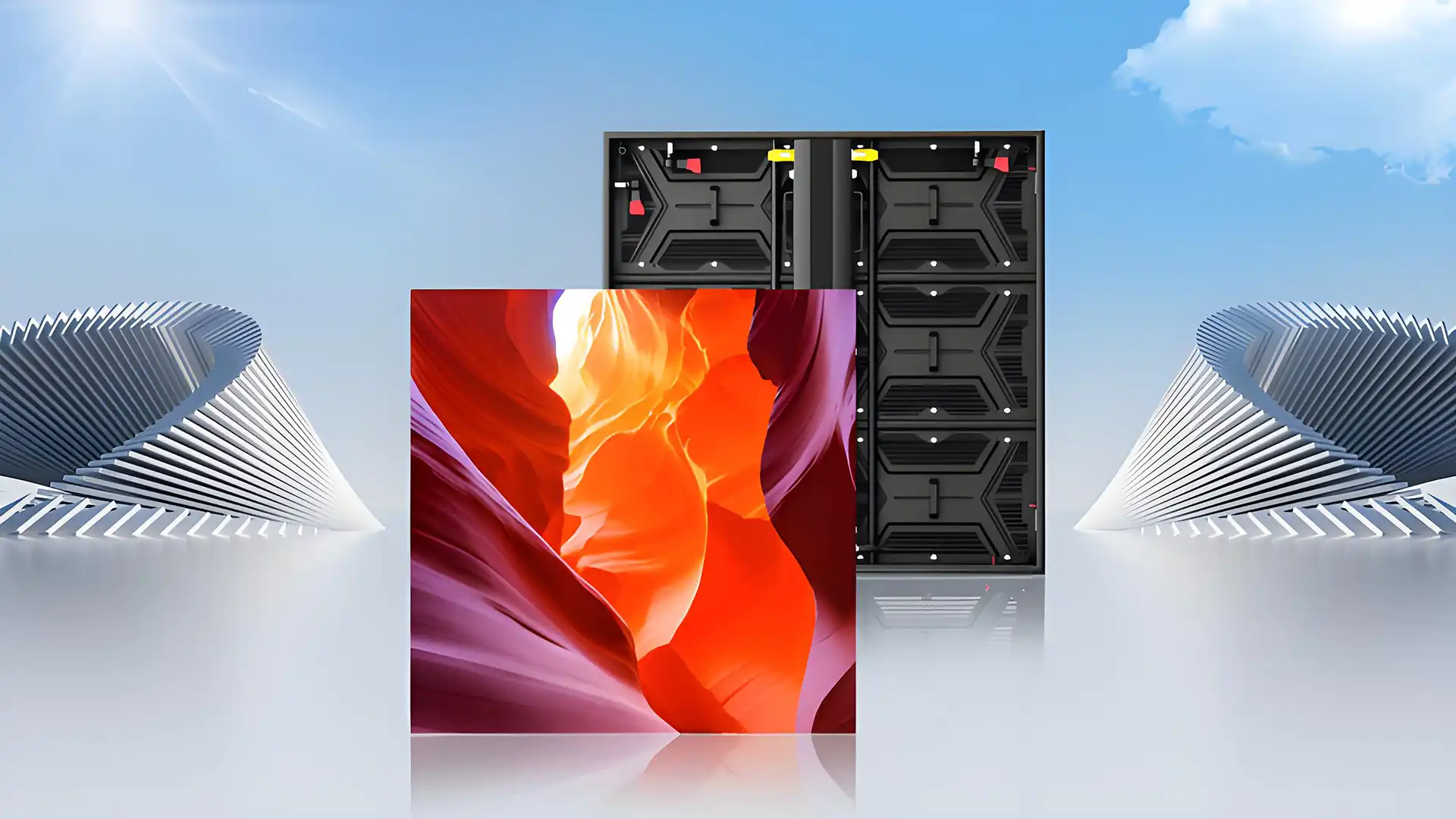
LED Video Walls For Movie Virtual Production Stage Filming Studios Showcases
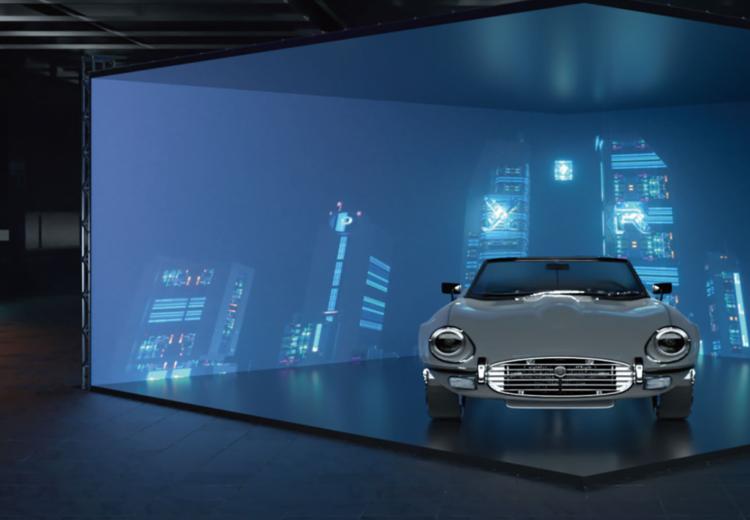
The development of LED movie virtual filming technology arises from the demand for real-time previews. In comparison to the traditional real-time preview method based on blue screen or green screen, the LED movie virtual filming system achieves a true "what you see is what you get" shooting effect by collaborating with various technical means such as LED display systems, high-performance computer graphics rendering systems, camera tracking systems, and synchronization technology. This advanced technology not only eliminates color spill issues that may arise from large areas of blue or green screens but also provides highly realistic dynamic ambient lighting for authentic scenes, ensuring accurate depiction of reflective or transmissive objects. Simultaneously, through pre-production of virtual production content and rapid switching between digital scene features, it offers filmmakers a captivating and immersive shooting experience while significantly optimizing and shortening the film production process to enhance efficiency. Consequently, this cutting-edge technology has emerged as a prominent development direction in the field of film virtual production.
However, with the gradual rise of the virtual production industry in the film sector, several key technical challenges have surfaced. These include issues related to high screen reflection during shooting, smearing problems with high-dynamic video sources, as well as pain points within the camera and scanning line domains. Additionally, inaccurate color reproduction has emerged as a significant obstacle, significantly diminishing the overall movie shooting experience.
The LED products offered by KSSDISPLAY contribute to the advancement of virtual film and television production.
KSSDISPLAY maintains a long-term and in-depth collaborative partnership with China Film Group, an authoritative organization for film and television production in China. Throughout the collaboration process, KSSDISPLAY continuously explores the virtual film and television production market as well as user requirements, ultimately earning accolades from both China Film Group and the majority of end users due to its exceptional product performance!
The accolades from numerous users notwithstanding, how do KSSDISPLAY's products contribute to the advancement of virtual film and television production?
01. Lower screen reflectivity: The quality of shots is directly influenced by the anti-reflective effect of the screen. In virtual film and television production, additional lighting instruments are used by the camera team to provide adequate lighting for actors. If the anti-reflective effect of the screen is poor, it can cause lens wear and tear. During shooting, KSSDISPLAY's product development focuses on achieving a diffuse reflectance ≤10% and specular reflectivity ≤1.6%. This is why KSSDISPLAY emphasizes its patented Mini four-in-one technology that incorporates a cross light-absorbing groove design to effectively absorb reflected light. Experimental tests have shown that this technology easily meets the requirements for screen reflectivity in film and television production.
02. Enhanced moiré suppression: During the virtual film and television shooting process, the occurrence of moiré significantly diminishes the overall lens adoption rate for the film. Moiré is caused by mutual interference between two distinct light sources. KSSDISPLAY believes that maximizing the luminous area of different light sources in their product will effectively mitigate the root cause of moiré to a great extent. Here, we compare KSSDISPLAY's patented Mini four-in-one technology with traditional SMD products in terms of light source. It can be observed that KSSDISPLAY's patented Mini four-in-one technology offers a light-emitting area twice as large as that of traditional SMD products for each individual light source, resulting in an almost doubled overall aperture ratio compared to traditional SMD products.
03. Enhanced camera image sensor compatibility: The number of LED scans is the parameter most directly related to the camera image sensor's compatibility during shooting. Using more driver ICs in the LED display screen results in more lit lamp beads at once, leading to a smaller denominator for the scanning number. This allows for faster refreshing of a complete image on the LED display screen, resulting in smoother images with fewer artifacts and greater compatibility with the camera image sensor. Most mainstream products have no less than 1/16 scan, but it is recommended to choose a display screen with no less than 1/16 scan and prioritize those with 1/8 scan or higher. KSSDISPLAY's XR2.315 can achieve a maximum scanning number of 1/6, making it currently the product with the highest scanning number at this point spacing! It provides visually friendly settings for cameras.
04. Higher refresh rate and frame rate: The higher refresh rate and frame rate are crucial factors when capturing high-speed moving backgrounds with a camera. Selecting a low frame rate LED display can result in excessively fast shutter speed, leading to flickering and blurred images in the captured footage. This smear problem significantly diminishes the overall lens adoption rate. KSSDISPLAY's products offer an impressive refresh rate of 7680Hz and a high frame rate of 250Hz, effectively resolving the aforementioned issues.

05. KSSDISPLAY full-view technology, wider shooting angle: In the process of virtual film and television shooting, in order to meet the camera's tilt angle requirements, it is essential to have a wide viewing angle, typically no less than 140°. This ensures a more versatile filming perspective. Alto's independently developed full-view technology achieves consistent visual effects from various angles, ensuring accurate color reproduction and image quality when shooting from above, as well as maintaining brightness and chroma consistency when shooting from the side. As a result, it provides enhanced flexibility and freedom for shooting options.
06. More accurate color restoration: The term "color gamut" refers to the range of colors that can be displayed by an LED display system, and it serves as a crucial indicator of the final film's quality. For virtual shooting processes, it is recommended to opt for products with a DCI-P3 color gamut coverage of no less than 90%. KSSDISPLAY's virtual shooting products achieve an exceptional 99.9% DCI-P3 high color gamut level, enabling true restoration of the shooting background. By seamlessly merging real-time rendering from game engines and camera tracking technology, the virtual and real images blend together so flawlessly that distinguishing between them becomes challenging.
07. KSSDISPLAY RGBW technology, better lighting effect: In the process of movie shooting, the canopy LED display plays an indispensable role. It not only replicates realistic sky scenes and achieves more authentic object projection effects, but also serves as a lighting source to provide fill light for actors/objects. The conventional LED display screen consists of three types of RGB chips, which tend to introduce color casts when used for lighting purposes. Consequently, the overall CRI value is low and fails to deliver lighting effects that closely resemble natural light. Recognizing this pain point, KSSDISPLAY has astutely developed RGBW technology to elevate the overall CRI value above 90 and offer a lighting effect that closely mimics natural light.
08. Support system frame reconstruction technology: The frame reconstruction technique can achieve two effects: frequency doubling and frame insertion. Frequency multiplication allows for an increase in the refresh rate of the LED display when the video source has a low frame rate. In such cases, scan lines are easily captured by the camera due to a lower refresh rate. By employing frequency doubling, the video source image can be refreshed and displayed multiple times on the LED display screen within a unit of time, thereby enhancing the refresh rate of the LED display screen. Frame insertion is particularly useful when shooting foreground content against different backgrounds using multiple cameras. It involves inserting multiple frames of video content within one frame's duration. By synchronizing cameras at various positions with Genlock technology integrated into the LED display system and adjusting camera phases accordingly, phase differences between cameras at different positions are introduced, resulting in distinct captured images (complementary color frames are also supported to prevent color distortion when inserting green screens). This technology not only improves overall shooting quality but also significantly increases error tolerance during filming. If a shot is taken incorrectly, actors do not need to reshoot scenes from scratch as they can be easily edited later.
The structure of the KSSDISPLAY virtual shooting system.
The system can be categorized into the following domains based on its functions.
01. LED large screen system: The processed virtual images are accurately conveyed to the photography team through the LED controller, serving as a carrier for their visualization. The proposed solution entails a curved large screen combined with a skylight screen design, aiming to create an immersive shooting experience.
02. The rendering system, also known as the virtual production server: The video server serves as the core component of virtual shooting, encompassing the responsibilities of rendering virtual images, controlling sub-screens, tracking camera positions, and integrating virtual reality. It seamlessly supports joint debugging with various software across the entire equipment set. In large-scale projects, built-in video frame synchronization cards ensure consistent output on multiple servers.
03. Target tracking system: The shooting targets can be tracked in real-time, enabling the picture to follow their movements accurately. These tracking targets include camera tracking, character position tracking, and prop position tracking. This advanced system ensures precise target tracking while generating a coherent relationship between the foreground scenery and background on a large screen.
04. Video production system: This term specifically pertains to 3D virtual digital asset production systems like UE, Unity, and Notch that play a crucial role in constructing immersive 3D virtual environments. In the realm of virtual film and television shooting, it is customary to create all necessary digital assets beforehand during the pre-production phase.
The aforementioned systems are synchronized via real-time data transmission, thereby constituting an integrated virtual shooting solution.
Links: XR LED Wall | Rental Display | Virtual Production Video